
Apr
okay so top down crochet sweaters
Right so I made my first top-down cardigan in spring 2022 and honestly it changed everything because I’d been making sweaters the regular way where you do all the pieces separately and then have to seam them and it’s just… anyway top-down means you literally start at the neck and work your way down which sounds backwards but makes so much sense once you try it.
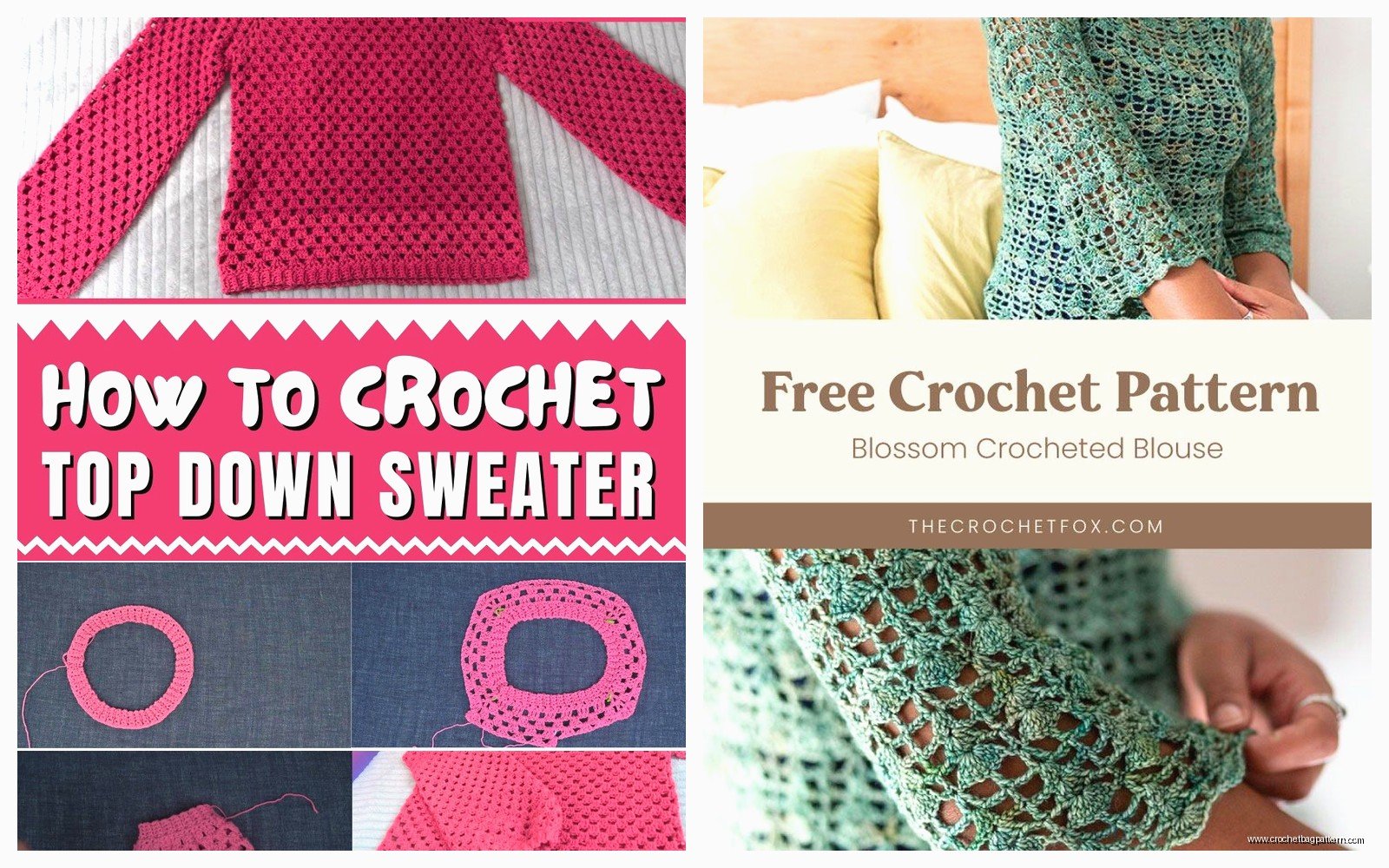
The main thing is you’re gonna start with a chain that goes around your neck. I used Lion Brand Wool-Ease for that first one, the Oxford Grey color, and the gauge was totally off but whatever. You chain enough to fit comfortably around your neck—like measure an existing sweater or just wrap the chain around your actual neck which feels weird but works. Then you join it into a circle and that’s your neckline done.
the raglan increase thing
So here’s where it gets specific. You need to mark four points on that neck circle for raglan increases. Think of it like this: you’ve got two points for your shoulders (left and right) and two points for the center front and center back. I usually put stitch markers at these four spots because otherwise you will absolutely lose track, trust me.
Each round you work, you increase at these four raglan lines. The typical way is to work two stitches in the same stitch right before and right after each marker. So if you’re doing double crochet, you’d do: dc up to one stitch before marker, 2dc in that stitch, dc in marked stitch, 2dc in next stitch, continue. Do this at all four raglan lines every round or every other round depending on how dramatic you want the angle.
I was watching Succession while making my second one in summer 2024 and kept losing count during the intense episodes so I had to rewatch like three episodes just to fix my stitch count which was annoying but also I got to see that one scene again so.
trying it on is crucial
Here’s what nobody tells you enough: you gotta try this thing on constantly. Like every few rounds. Because you’re building it on your body essentially, and what looks right laying flat might be completely wrong when you put it on. The yoke (that’s the shoulder/chest area) needs to be deep enough before you separate for the sleeves.
For me, I work the yoke until it’s about halfway down my bicep. Could be like 8-10 inches from the neck depending on your size. You’ll see the four sections getting bigger—two sections for the front and back body, two sections for the sleeves. The sleeve sections should line up with where your actual arms are, obviously.
separating the sleeves
Okay so this part stressed me out the first time but it’s actually pretty straightforward. When your yoke is deep enough, you literally just skip over the sleeve stitches. You’ll work across the back, and when you get to where the sleeve is, you chain across that gap (usually like 2-4 inches worth of chains, maybe 8-15 chains depending on your gauge and how much underarm ease you want). Then you continue on the front, chain across the other sleeve gap, and join back to the beginning.
Now you’ve got all your body stitches on one continuous round and your sleeve stitches are just hanging out waiting. The chains you made become the underarm.
One thing that really annoyed me about this process is that the underarm chains can look sloppy if you don’t get the tension right. My first cardigan had these weird puckered underarms and I had to go back and add some decreases in the next round to make it lay flat. Some people do increases instead of just straight chains, like they’ll work into the sleeve stitches a bit to create a more gradual curve, but honestly the chain method is faster even if it’s not perfect.
working the body
From here you just crochet in rounds (or rows if you’re making a cardigan and working flat) until the body is as long as you want. This is the easy part. You can try it on and see exactly how it’s fitting in real time. Too tight? Rip back and add some increases. Too loose? Add some decreases or switch to a smaller hook.
For cardigans specifically, you don’t join in a round—you work back and forth in rows with a front opening. I usually add a couple extra stitches on each front edge for the button bands but you can also crochet those on later.
I made a cardigan with Caron Simply Soft in like Plum Perfect or something during summer 2024 when it was way too hot to be making sweaters but I was stressed about work stuff and needed something to do with my hands. That yarn is super splitty which drives me crazy but it’s cheap and comes in good colors.
the sleeves
So now you go back to those sleeve stitches you left hanging. Attach your yarn at the underarm, work around the sleeve stitches, and also work into those chains you made for the underarm. You might need to adjust the stitch count here to make it even.
Sleeves usually need to decrease as you work toward the wrist. I do decreases every 5-6 rounds usually, just evenly spaced around. Mark your decrease points so they line up nicely. Work until the sleeve is as long as you want—try it on obviously—and then finish with some ribbing or just bind off.
My cat kept trying to lay on the sleeve I was working on and getting hair everywhere which is just par for the course I guess.
stitch patterns and modifications
You can use basically any stitch pattern for top-down. I’ve done simple double crochet, half double crochet for a denser fabric, even some lacy patterns. The key is just maintaining those raglan increases in whatever pattern you’re using.
If you’re doing a textured stitch, you might need to fudge the increases a bit to keep the pattern consistent. Like if you’re doing a shell stitch or something with a specific repeat, you’ll need to plan where those increases happen so they don’t mess up the pattern too much. Honestly sometimes I just do the increases in plain double crochet even if the rest is patterned, because it creates a nice raglan line and nobody really notices or cares.
gauge and sizing stuff
Okay so gauge matters but also it kind of doesn’t because you’re trying it on as you go. Like yes, you should do a gauge swatch to figure out what hook size to use, but if your gauge is a bit off it’s not the end of the world. You can adjust as you work.
For sizing, I usually start with the neck circumference and then figure out how many increases I need to get to my desired bust measurement. Math isn’t my strong point so I usually just wing it and add increases until it looks right. Each raglan increase adds 8 stitches per round (2 stitches at each of the 4 raglan lines), so you can calculate how many rounds you need to get from your neck measurement to your bust measurement but also you can just try it on and see.
The nice thing about top-down is you can customize the fit so easily. Want more room in the bust? Work a few extra rounds of increases. Want a more fitted waist? Add some decreases in the body section. It’s very forgiving.
yarn choices
I’ve used all kinds of yarn for top-down sweaters. That Lion Brand Wool-Ease I mentioned is good for beginners because it’s worsted weight and pretty forgiving. I also really like Knit Picks Brava for practice sweaters because it’s cheap and machine washable. Made one with Red Heart Super Saver once and it was incredibly stiff and unflattering but it was for practicing a new technique so whatever.
For nicer sweaters I’ve used Malabrigo Rios which is gorgeous but pricey, and also some local yarn store merino that I don’t remember the brand of. The fiber content matters more than the brand honestly—wool blends are great because they have good drape and breathability, cotton can be nice for summer cardigans but it’s heavy and can stretch out.
common problems
The shoulders can end up too tight if you don’t work enough increases in the yoke. If the raglan lines are pulling or creating puckers, you need more increases or a bigger hook. Alternatively if the yoke is too big and slouchy, you didn’t increase enough… wait no that’s backwards, you increased too much. See this is why trying it on constantly is important.
Another thing is the neckline can be too tight or too loose. If it’s too tight when you’re done, you can always add a round of increases around the neck edge. Too loose and it’ll fall off your shoulders which might be a look you want but probably not for a practical sweater.
Sleeves can be tricky to get the right length and width. I’ve made sleeves that were way too tight around the bicep because I didn’t separate early enough or didn’t chain enough stitches for the underarm. And I’ve made sleeves that were too baggy and looked like wizard sleeves which was actually kind of cool but not what I was going for.
finishing touches
For cardigans you’ll want to add buttons or a zipper or just leave it open. I usually crochet a simple single crochet border around all the edges to clean them up. Button bands can be crocheted directly onto the front edges or made separately and sewn on.
Blocking helps a lot with evening out the stitches and making everything lay flat. I’m lazy about blocking usually but when I do block a sweater it definitely looks better. Just wet it, shape it how you want it, and let it dry flat.
Weaving in ends is the worst part of any project but top-down sweaters don’t have as many ends as seamed sweaters so that’s a plus. Still gonna have ends from joining new yarn and finishing off sleeves though.
The whole process from start to finish takes me maybe 30-40 hours for a basic cardigan in worsted weight yarn. Could be faster if you’re more focused than me and not constantly watching TV or getting distracted. Could be slower if you’re using fingering weight or doing a complex stitch pattern.
Anyway that’s basically how top-down construction works. Start at the neck, increase at raglan lines, separate sleeves, work body, go back and do sleeves. Try it on a million times. The first one might be weird but the second one will be better and by the third one you’ll wonder why anyone makes sweaters any other way.
