
May
okay so hdc2tog is basically how you decrease when you’re working with half double crochet
So like the stitch itself sounds more complicated than it actually is but I remember making this baby blanket back in spring 2022 and I had to decrease on the edges to make this chevron pattern and I kept messing it up at first because I wasn’t paying attention to where my loops were sitting on the hook. The whole thing was supposed to be this gift for my cousin but honestly I was just trying to keep my hands busy after a really bad breakup and needed something repetitive to do.
The basic idea is you’re gonna combine two half double crochet stitches into one stitch so instead of having two separate stitches at the top you end up with just one. It makes your work narrower which is the whole point of decreasing right.
what you’re actually doing with your hook
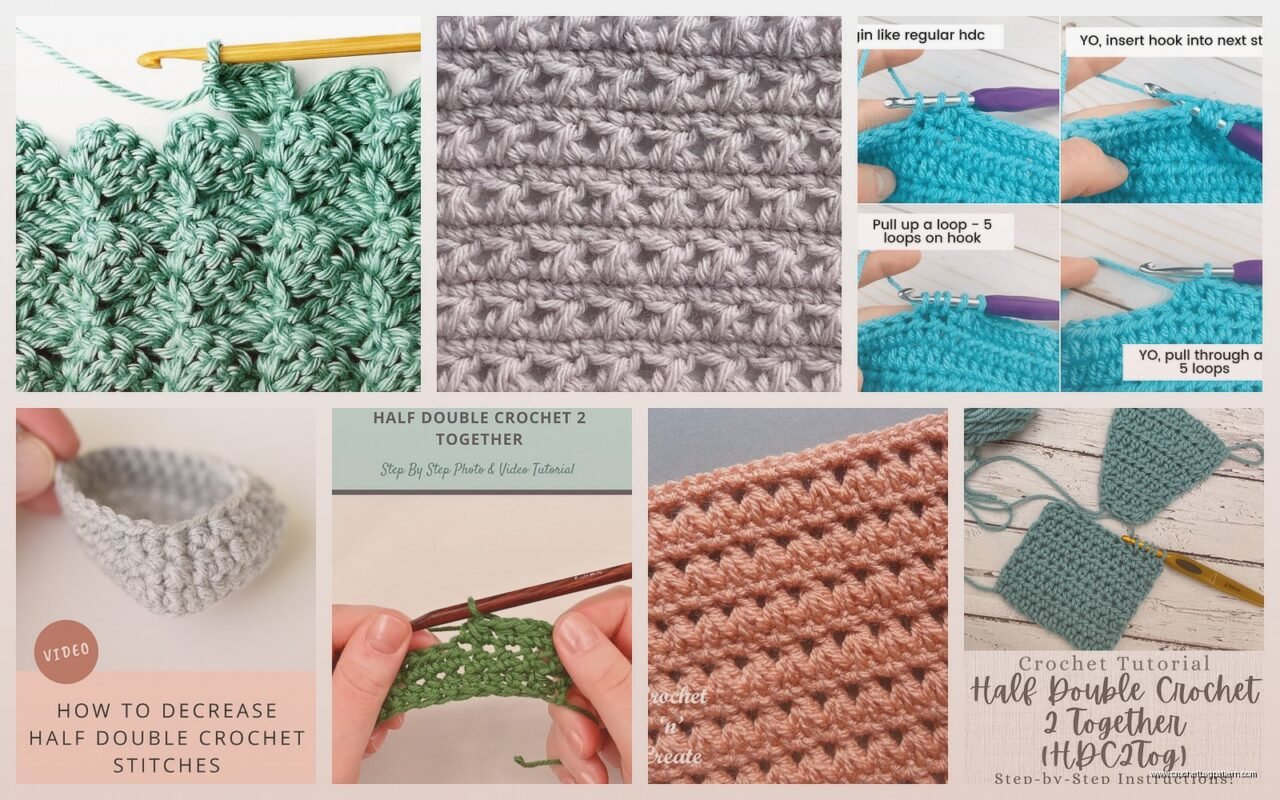
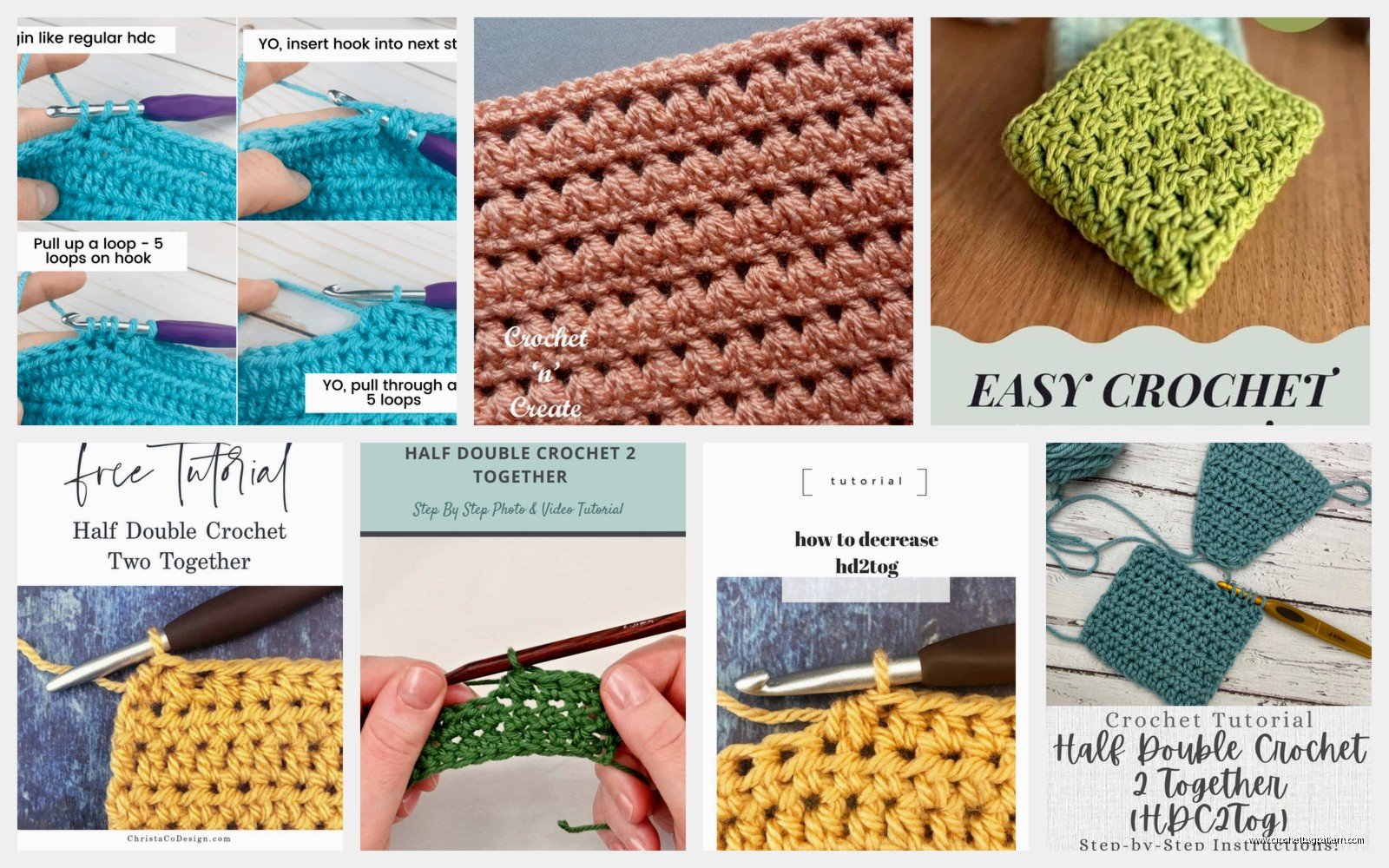
Okay so first you yarn over like you normally would for a half double crochet. Then you insert your hook into the next stitch and pull up a loop. So now you should have three loops on your hook total. Don’t finish the stitch yet though and this is where I kept screwing up at first because my hands just wanted to complete the motion.
Now yarn over again and insert your hook into the NEXT stitch over. Pull up another loop. You should have five loops on your hook now. I know it looks crowded and messy but that’s correct. My cat kept jumping on my lap during this whole learning process and I kept losing count of my loops which was super annoying.
Then you yarn over one more time and pull through ALL five loops at once. That’s the part that actually combines everything into one stitch. You end up with one loop left on your hook and you’ve successfully decreased by one stitch.
the thing that annoyed me SO much
The spacing gets weird when you’re doing hdc2tog and nobody really talks about this enough. Like your fabric gets tighter right at that decrease point and it can look kind of puckered if you’re not careful about your tension. I was using Red Heart Super Saver for that blanket because I was broke and needed a lot of yardage and that yarn does NOT forgive tension issues. It shows every little mistake.
I had to rip out like four rows at one point because the decreases were making this weird diagonal pull on the fabric that just looked wrong. The trick I figured out eventually was to keep my yarn tension a tiny bit looser right before I pull through all those loops. Not loose enough that it gets sloppy but just enough that the stitch doesn’t cinch up too tight.
when you actually use this stitch
Anytime you need to make something narrower basically. Hats are the obvious one because you’re decreasing toward the crown. I made this beanie last summer in 2024 using some Wool-Ease Thick & Quick in like a burgundy color and the decreases were pretty visible but in a good way because they created these spoke-like lines going up to the top.
Amigurumi uses a ton of decreases too but honestly for that I usually use single crochet decreases instead because they’re tighter and show less. But if you’re making something with half double crochet as your main stitch then you gotta stay consistent with hdc2tog for the decreases or the texture looks off.
Blankets with shaped edges need them. Shawls definitely. Any kind of triangular shape or chevron pattern. That spring 2022 blanket I mentioned was all chevrons and I had to do increases on one side and decreases on the other to make the zigzag pattern work.
the notation in patterns
Most patterns will write it as “hdc2tog” or sometimes “hdc dec” or “hdc decrease.” Some older patterns might say “draw up a loop in next 2 sts, yo and pull through all loops” which is just the long way of saying the same thing. I’ve also seen it written as “half double crochet 2 together” spelled all the way out which is kind of excessive but whatever.
If you’re following a pattern and it says to hdc2tog multiple times in a row like “hdc2tog 3 times” that means you’re doing three separate decrease stitches not combining six stitches into one. That would be hdc6tog which is a thing but pretty rare.
common mistakes I kept making
Finishing the first half double crochet before starting the second one. Your brain wants to complete that first stitch so bad but you can’t or it won’t be a decrease anymore it’ll just be two regular stitches. You have to leave those first three loops on the hook.
Losing track of which stitch you already worked into. This happened to me constantly especially if I was watching TV at the same time. I’d get to the end of a row and have too many or too few stitches and have to count back through all the decreases to figure out where I messed up. I was binging The Bear while making a market bag last fall and honestly that show is too stressful to crochet to.
Pulling the yarn too tight through all five loops. It’s tempting to really yank on it to make sure it goes through but then your stitch gets all pinched looking. You want a smooth pull-through with even tension.
Not counting the decrease as one stitch when you’re counting your total. Like if the pattern says you should have 30 stitches at the end of the row and you did 2 decreases you have to remember that each decrease counts as ONE stitch in that final count even though you worked into two stitches to make it. I don’t know why this confused me so much but it did.
different variations kinda
You can do invisible decreases with half double crochet too where you only grab the front loops or back loops but honestly I’ve never bothered with that because it doesn’t make that much difference with hdc. The stitch is already kind of medium-sized so decreases don’t show as obviously as they do with double crochet.
Some people do the decrease by yarning over and going into the first stitch and pulling up a loop then yarn over again and pull through two loops then yarn over and go into the next stitch and pull up a loop and then pull through all remaining loops. That’s technically a different method and it looks slightly different but most people can’t tell the difference in the finished piece.
I learned the five-loops-at-once method and that’s what stuck so that’s what I always do. The other way seems like more steps for the same result honestly.
what it looks like in different yarn weights
With bulky yarn like that Wool-Ease Thick & Quick the decreases are super obvious. You can really see where the fabric gets narrower and the decrease stitches are wider than regular stitches. It creates kind of a textured look which can be good or bad depending on what you want.
With fingering weight or sport weight yarn the decreases basically disappear. I made this little coin purse with some Caron Simply Soft in like 2023 and I used hdc2tog to shape the bottom corners and you literally cannot see where the decreases are unless you look really close. The yarn is fine enough that everything just blends together.
Worsted weight is somewhere in the middle. You can see the decreases if you’re looking but they’re not super obvious. Most of my projects are worsted weight because that’s just what I tend to grab and the decreases look fine. Not invisible but not distracting.
practicing this stitch
Honestly just make a simple triangle. Cast on like 30 stitches and then decrease one stitch at each end of every row until you’re down to nothing. It’s boring but you’ll do the decrease so many times that it becomes automatic.
I practiced on this random triangle using some Red Heart With Love in purple that I had lying around and I just kept going until my hands knew what to do without thinking about it. Took maybe like 20 minutes total? Then I frogged it and used the yarn for something else because what am I gonna do with a random practice triangle.
The muscle memory thing is real with crochet. Once your hands know the motion you don’t have to think about the steps anymore you just do them. But you gotta put in those initial reps for it to stick.
combining with other stitches
If you’re doing a row that has regular hdc and also hdc2tog the rhythm gets a little weird. Like you’ll be going along doing your normal stitches and then suddenly you have to do the decrease and it breaks up the flow. I still haven’t gotten super smooth with this honestly.
When you’re alternating between increases and decreases in the same row like for chevron patterns it’s even more stop-and-start. You really have to pay attention to where you are in the pattern repeat or you’ll put the decrease in the wrong spot and throw off the whole shape. I’ve done this approximately one million times.
If you’re mixing stitch heights like doing some rows in single crochet and some in half double crochet you need to use the appropriate decrease for each stitch type. Don’t use hdc2tog in a single crochet row because the height will be wrong and it’ll look lumpy. Ask me how I know this.
fixing mistakes
If you did the decrease in the wrong spot you pretty much have to frog back to that point and redo it. There’s not really a way to fudge it or fix it in place because the whole structure of the stitch is different from a regular stitch.
If you accidentally did a regular hdc instead of a decrease you’ll notice when you get to the end of the row and have one too many stitches. Then you gotta decide if you care enough to fix it or if you’re just gonna decrease an extra time in the next row to get back on track. I’ve definitely done the lazy option more than once.
Sometimes I’ve accidentally pulled through only four loops instead of all five and then I have this weird split stitch situation. Usually I don’t notice until I’m already on the next row and then I have to decide if it’s worth frogging back. If it’s on an edge that’s gonna get seamed or bordered I usually just leave it.
tension stuff that matters
Your tension on the final pull-through is what determines how the decrease looks. Too tight and it puckers. Too loose and you get this floppy wide stitch that doesn’t match the others. You want it to be just snug enough that all the loops blend together smoothly.
The tension on your initial yarn-overs matters less because those loops are gonna get pulled through anyway. But the working yarn tension does affect how easy it is to pull through all five loops at once. If your yarn is really gripped tight it’s harder to pull through and you end up yanking on it which makes everything too tight.
I’ve noticed my tension is different depending on what time of day it is and how stressed I am. Like morning crochet is looser than evening crochet for some reason. When I was working on that breakup blanket my tension was ALL over the place and you can kind of see it in the finished piece but whatever it’s a physical record of a weird time I guess.
Some yarns are more forgiving with tension than others. Acrylic blends like Red Heart or Caron are pretty forgiving. Wool can be less forgiving but it also blocks really well so you can even things out later. Cotton shows every tension inconsistency and does not block for shit so… good luck with that.
the actual mechanics in your hand
I hold my hook like a knife which I know some people think is wrong but it works for me. When I’m doing hdc2tog I kind of have to adjust my grip slightly because there are so many loops on the hook and it gets crowded near the throat of the hook.
Sometimes I push the loops back toward the working part of the hook with my left index finger to make room. Other times I just deal with them being bunched up. It doesn’t really matter as long as you can pull through them all at the end.
The motion of pulling through five loops at once is different from pulling through two or three. You need a longer pull and sometimes I kind of help it along by pushing the loops off the hook with my left hand while pulling the yarn with my right. It’s not like an official technique or anything it’s just what works when the loops are being stubborn.
My hands cramp up less with hdc2tog than with sc2tog because the loops are bigger and there’s less grip strength needed. But more than dc2tog because you’re pulling through more loops. It’s like the middle option in terms of hand strain.
Okay I think that covers most of the important stuff about how to actually do this decrease and what to watch out for and when to use it and all that.
