
Jun
So you need a crochet hook set
Okay so last summer—like June 2024—I was sitting on my porch trying to figure out why I had literally fifteen different hooks scattered in three different bags and none of them matched, and I realized I should’ve just bought a proper set from the beginning. But here we are.
The thing about hook sets is that they seem expensive upfront but you’re gonna end up spending the same amount buying individual hooks anyway. Trust me on this. I spent like eight months buying random hooks from Michaels whenever I needed a new size and ended up spending way more than if I’d just gotten a decent set.
What actually matters in a hook set
The size range is the first thing. Most sets come with hooks from like 2mm to 6mm or sometimes bigger. You want at least B/1 (2.25mm) through J/10 (6mm) if you’re doing regular projects. Some sets go smaller for thread work but honestly unless you’re specifically into that, you probably won’t use the tiny ones much. I have a 1.5mm hook that I’ve used exactly once.
Material is weird because everyone has opinions but it really depends on your hands. Aluminum hooks are the standard—they’re smooth, they’re affordable, they last forever. I used Susan Bates aluminum hooks for years and they’re fine. Clover Amour hooks are aluminum with these rubber grip handles and people LOVE them. Like obsessively love them. They’re pricey though.
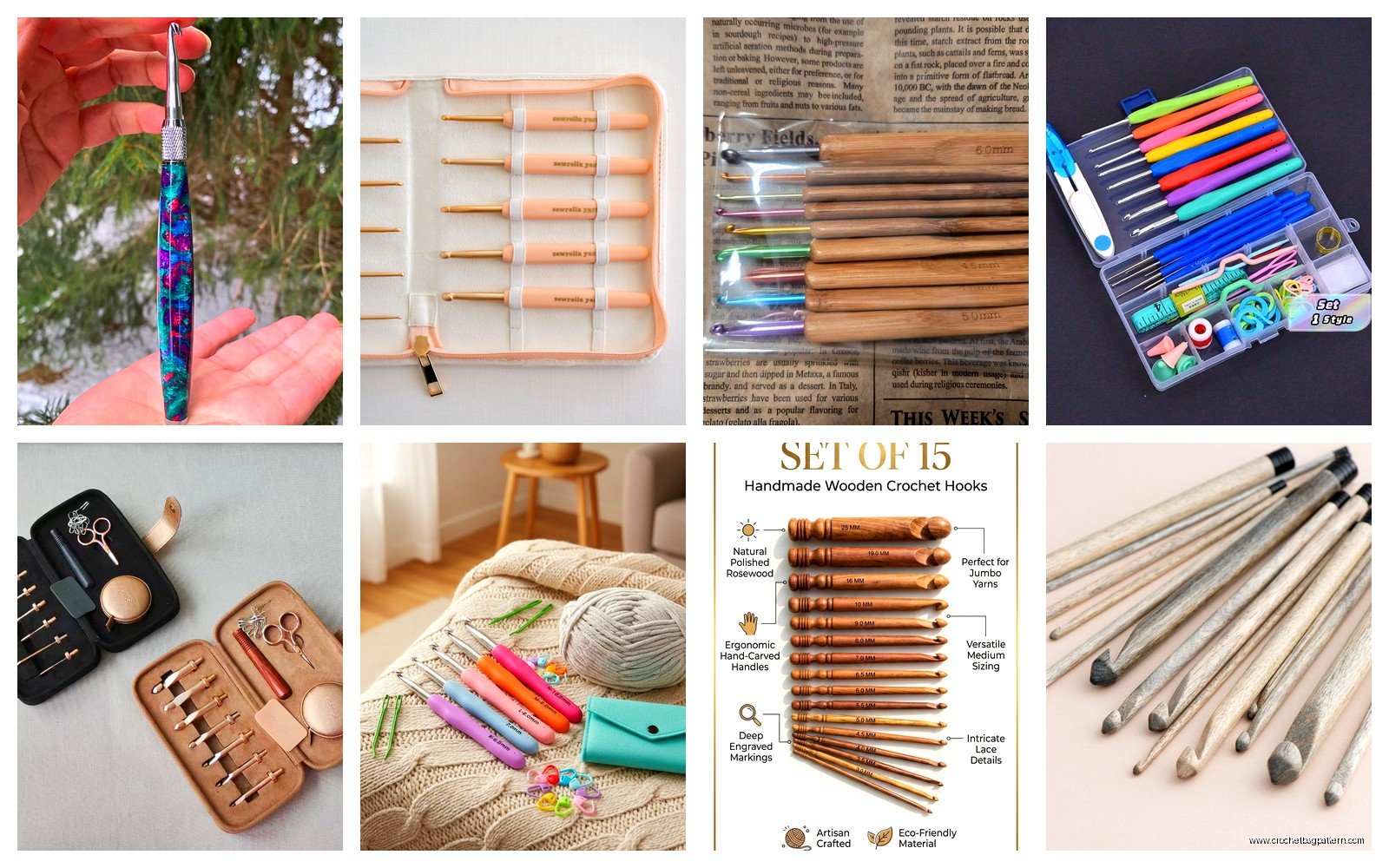
Then there’s bamboo or wood hooks which are warmer in your hand and have more friction. Some people swear by them, especially if you’re working with slippery yarn like Red Heart Super Saver in those shiny colors. The friction helps. But they can break if you’re rough with them or if your dog decides to chew on your project bag, which happened to me with a 5mm bamboo hook last year.
Ergonomic vs regular handles
This is where it gets personal. Regular hooks are just straight with maybe a flat thumb rest area. They work fine if you don’t crochet for hours at a time. Ergonomic hooks have these chunky handles—rubber or plastic usually—that are supposed to reduce hand strain.
I thought ergonomic handles were marketing nonsense until I tried to make a blanket in one weekend and my hand cramped so bad I couldn’t hold a coffee mug the next day. Got a set of Clover Amour hooks after that and yeah, they actually help. The grip thing makes a difference when you’re working on bigger projects.
But some people hate the fat handles because they feel clunky or weird. You really have to try them to know. If you can, go to a craft store and just hold different hooks before buying a whole set online.
Inline vs tapered hooks and why this annoyed me
Okay so this is the thing that drove me crazy when I was learning. There are two throat styles—inline and tapered—and nobody tells you this matters until you’re trying to figure out why your stitches look different with different hooks.
Inline hooks (Boye style) have a pointier head and the hook part is more in line with the shaft. Tapered hooks (Susan Bates style) have a rounder head and the hook is more curved. Inline hooks are supposedly more precise, tapered hooks are supposedly faster.
I learned with whatever random hook I grabbed first, which was tapered, so now inline hooks feel wrong to me. But people who learned with inline think tapered hooks are weird. It’s just what you get used to. The annoying part is that most hook SETS don’t tell you which style they are. You have to look at the brand and then google it or look really closely at the product photos.
Clover Amour are inline. Susan Bates are tapered. Most cheap sets on Amazon are… who knows, honestly. Sometimes they’re inconsistent within the same set which is super annoying.
Sets I’ve actually used
Susan Bates Silvalume set is like the standard recommendation. It’s aluminum, tapered throat, comes in a little vinyl case. I think mine was like $25 for eight or nine hooks? They’re lightweight, smooth, and they work. Nothing fancy but nothing wrong with them either. The case is whatever—it’s functional but not gonna last forever.
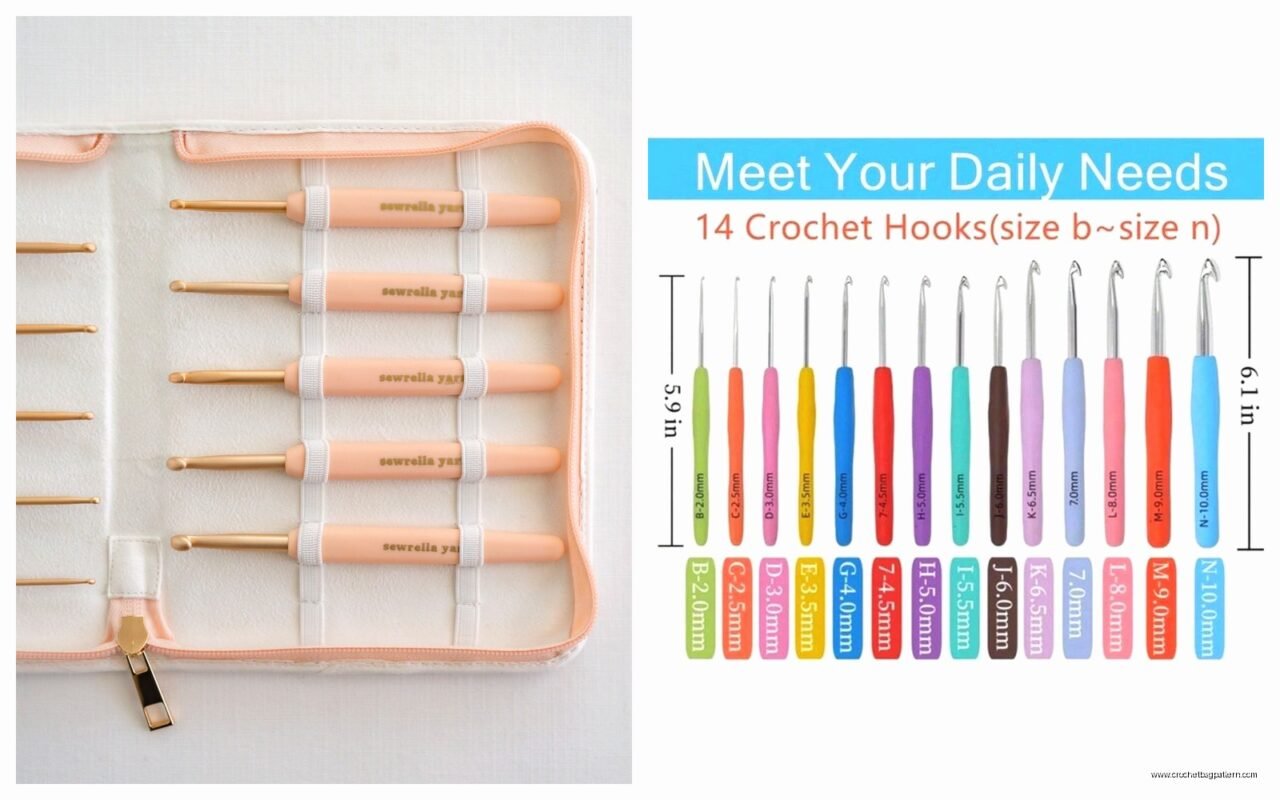
Clover Amour set is the upgrade version. I got mine in spring 2023 when I was making a bunch of amigurumi with Bernat Blanket yarn and regular hooks were killing my hands. The set is expensive—like $60-70 for ten hooks—but the rubber handles actually make long sessions way more comfortable. They come in a nice zippered case. The hooks are inline style and really smooth. My only complaint is that the size labels wear off the handles after a while, which is annoying.
I tried a bamboo set once, I think it was Clover Takumi, because I was working with this super splitty Lion Brand Homespun yarn and needed more grip. The bamboo helped with the yarn control but the hooks felt fragile. I was always worried about snapping them. They’re nice for specific projects but I wouldn’t want them as my only set.
The cheap Amazon sets
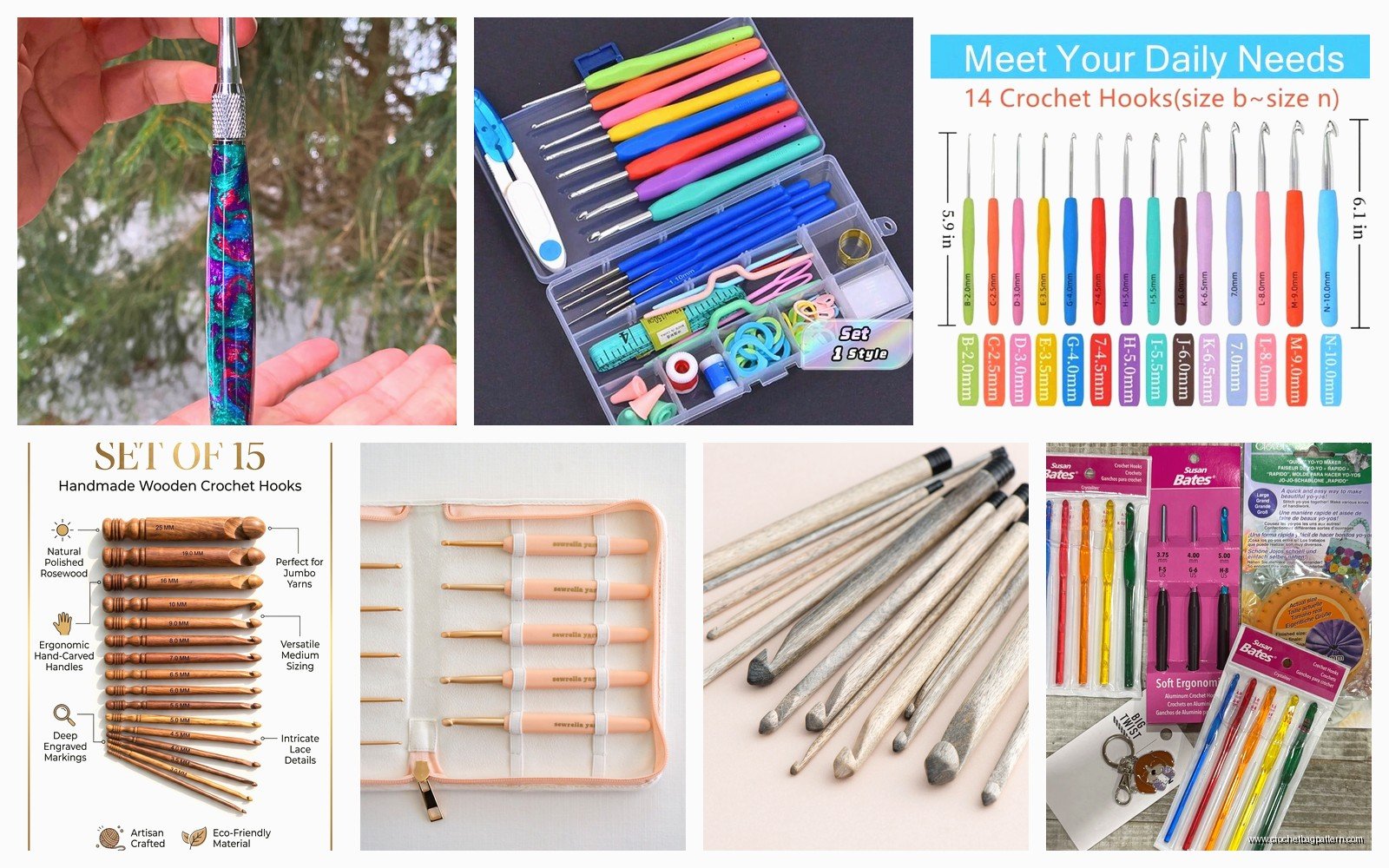
Look, I’m not gonna pretend I haven’t bought the $15 sets with like 20 hooks in rainbow colors. They’re fine for starting out or if you just want to try different sizes. The quality is inconsistent—some hooks are smooth, some have rough spots that catch on yarn. The cases usually fall apart. But if you’re not sure you’ll stick with crochet or you need a specific size right now and don’t wanna wait, they work.
I used a cheap set when I was making dishcloths with Sugar’n Cream cotton yarn and honestly it was fine for that. Cotton is forgiving and dishcloths are small. But when I tried to use the same hooks for a wearable with Caron Simply Soft, the rough spots kept snagging and it was frustrating.
Interchangeable sets are a thing
These are sets where the hook part detaches from the handle, so you can have like three handles and ten different hook sizes. Furls makes fancy wood ones. Knitter’s Pride has more affordable versions.
I tried the Knitter’s Pride Waves set because I liked the idea of not having fifteen different handles taking up space. The concept is good but in practice I found it annoying to have to unscrew and swap hooks mid-project. Also the connection point sometimes worked loose while I was crocheting, which made me paranoid the hook would fall off.
Some people love them though, especially if you do a lot of tunisian crochet where you need longer cables. For regular crochet I prefer fixed hooks.
What about tunisian and specialty hooks
Most regular hook sets don’t include tunisian hooks, which are longer and have a stopper on the end. If you want to try tunisian you’ll need to buy those separately or get a specific tunisian set. Same with really large hooks for bulky yarn—most sets stop at 6mm or maybe 8mm, but if you want to make those chunky blankets with Wool-Ease Thick & Quick you’ll need hooks up to 12mm or bigger.
Steel hooks for thread crochet are also usually separate. Those are the tiny ones with numbers instead of letters, like size 7 or size 10. I have a few but I don’t use them much because thread work makes my eyes hurt.
Storage matters more than you think
The case that comes with your set actually matters. I had a set that came in one of those folding vinyl cases with elastic loops for each hook, and the elastic stretched out after like six months so hooks would just fall out. Now I use a pencil case from Target because it actually stays closed.
Some sets come in tins or hard cases which are nice but bulky. The zippered fabric cases are usually the best compromise—they protect the hooks but don’t take up a ton of space. The Clover Amour case is actually pretty good.
I keep my hooks in a basket on my coffee table now anyway because I got tired of putting them away. My cat likes to knock them on the floor while I’m watching whatever’s on Netflix but that’s a different problem.
Do you need a set or should you buy individually
If you’re just starting out and don’t know what sizes you’ll use most, a mid-range set makes sense. Like the Susan Bates Silvalume or a decent Amazon set. You’ll have the common sizes and can figure out what you like.
If you already crochet and know you mostly use like three sizes, just buy good individual hooks in those sizes. I use H/8 (5mm) for like 70% of my projects because that’s what works with worsted weight yarn, which is what I use most. I have a really nice Furls wooden H hook that I bought separately and it’s my favorite tool.
But if you make lots of different things—amigurumi in one size, blankets in another, wearables in another—a set means you always have what you need. I got tired of starting a project and realizing I didn’t have the right size hook and having to run to the store or wait for shipping.
Brands that keep coming up
Clover Amour—expensive, comfortable, inline, very popular. Worth it if you crochet a lot.
Susan Bates—affordable, reliable, tapered, been around forever. Good starter set.
Boye—similar to Susan Bates, inline style, aluminum, basic and functional.
Furls—fancy wooden hooks, expensive, gorgeous, ergonomic. People either love them or think they’re overpriced. I have two individual Furls hooks and they’re beautiful but I wouldn’t buy a full set at that price.
Tulip Etimo—Japanese brand, ergonomic cushion grip, inline, really smooth. Less common than Clover but people who use them are devoted.
Knitter’s Pride—affordable ergonomic options, interchangeable sets, good middle ground between cheap and premium.
What I’d actually buy if I was starting over
Honestly? I’d get the Susan Bates Silvalume set for regular use and then add one or two Clover Amour hooks in the sizes I use most for longer projects. That way you have everything covered without spending a fortune, but you also have the comfortable hooks when you need them.
Or if hand strain is already an issue, just go straight for the Clover Amour set and accept that it’s an investment. They last forever and the comfort is worth it if you’re gonna be crocheting regularly.
The cheap Amazon sets are fine for testing things out but you’ll probably end up replacing them eventually. I still have mine in a drawer somewhere as backups.
Random things that matter
The hook throat needs to be smooth—run your finger along it and if you feel any rough spots or burrs, that hook will snag your yarn. Some cheaper hooks have rough spots where the manufacturing wasn’t great.
The size marking should be permanent. Nothing’s more annoying than having hooks where the size has worn off and you have to guess or measure them.
Weight matters if you crochet for long periods. Heavier hooks make your hand tired faster. Aluminum is lighter than steel, wood is somewhere in between.
Some hooks have flat spots on the handle for your thumb and finger, which helps with control. Others are round. Flat is usually better but it’s personal preference.
Yarn pairing stuff nobody tells you
Slippery yarn like Red Heart Super Saver or acrylic blends work better with hooks that have a little friction—bamboo or hooks with matte finishes. Super smooth aluminum hooks can make stitches slip around too much.
Sticky or splitty yarn like mohair blends or some cotton yarns need really smooth hooks so they don’t catch. Aluminum or polished wood works better than bamboo.
Chunky yarn like Bernat Blanket needs bigger hooks obviously, but also the weight of the yarn matters—lighter hooks can feel weird with really heavy yarn. I prefer hooks with chunkier handles when I’m working with bulky yarn just because the balance feels better.
I was making this scarf last winter with some Wool-Ease that I grabbed on sale and kept using the wrong hook size because I was too lazy to switch and it turned out way too tight, but that’s more about following the pattern than the actual hook quality.
Anyway the point is hook sets are worth getting if you’re serious about crochet, but you don’t need to spend a fortune unless comfort is a big issue for you. Start with something mid-range, figure out what you like, and upgrade from there if you want to. Don’t overthink it too much because honestly most hooks work fine once you get used to them.
