
May
What Mosaic Crochet Actually Is
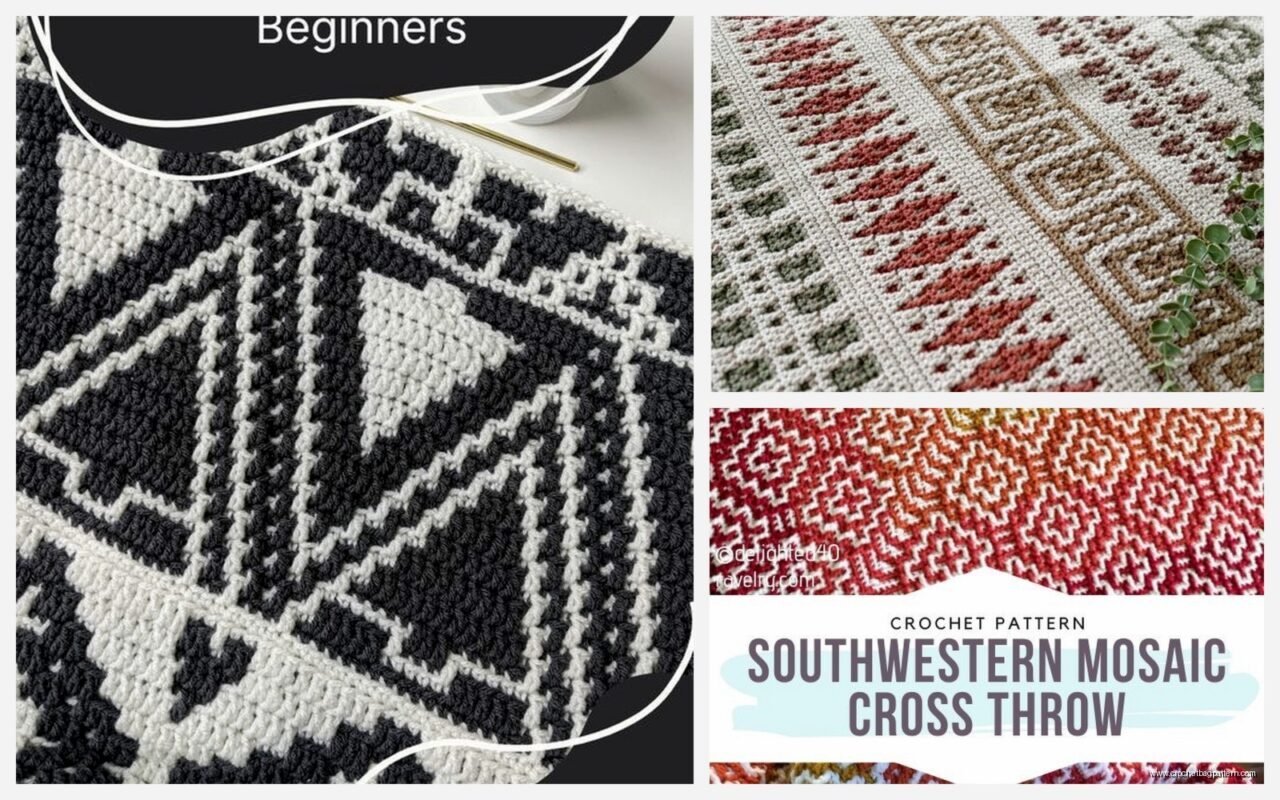
So mosaic crochet is basically when you work with two colors but you’re only using one color per row which honestly makes it way less annoying than regular colorwork where you’re carrying yarn and getting tangled. The overlay technique specifically means you’re working into rows below the current row to create the pattern.
I made my first mosaic piece in spring 2022 when I was supposed to be cleaning out my garage and obviously procrastinated by starting a whole blanket instead. Used Red Heart Super Saver in that medium grey and some cream color because that’s what I had lying around and wasn’t gonna go buy fancy yarn for an experiment.
Why It’s Good for Beginners
The thing about mosaic is you only deal with one color at a time. You work a full row in color A, then a full row in color B, back to A, etc. The pattern emerges because sometimes you’re working regular stitches and sometimes you’re reaching down into previous rows to pull up those overlay stitches.
You don’t need to know anything complicated. If you can chain and do a double crochet you’re basically set. Single crochet works too but I think double crochet looks better for most mosaic patterns because it’s taller and the design shows up more clearly.
Reading Mosaic Patterns
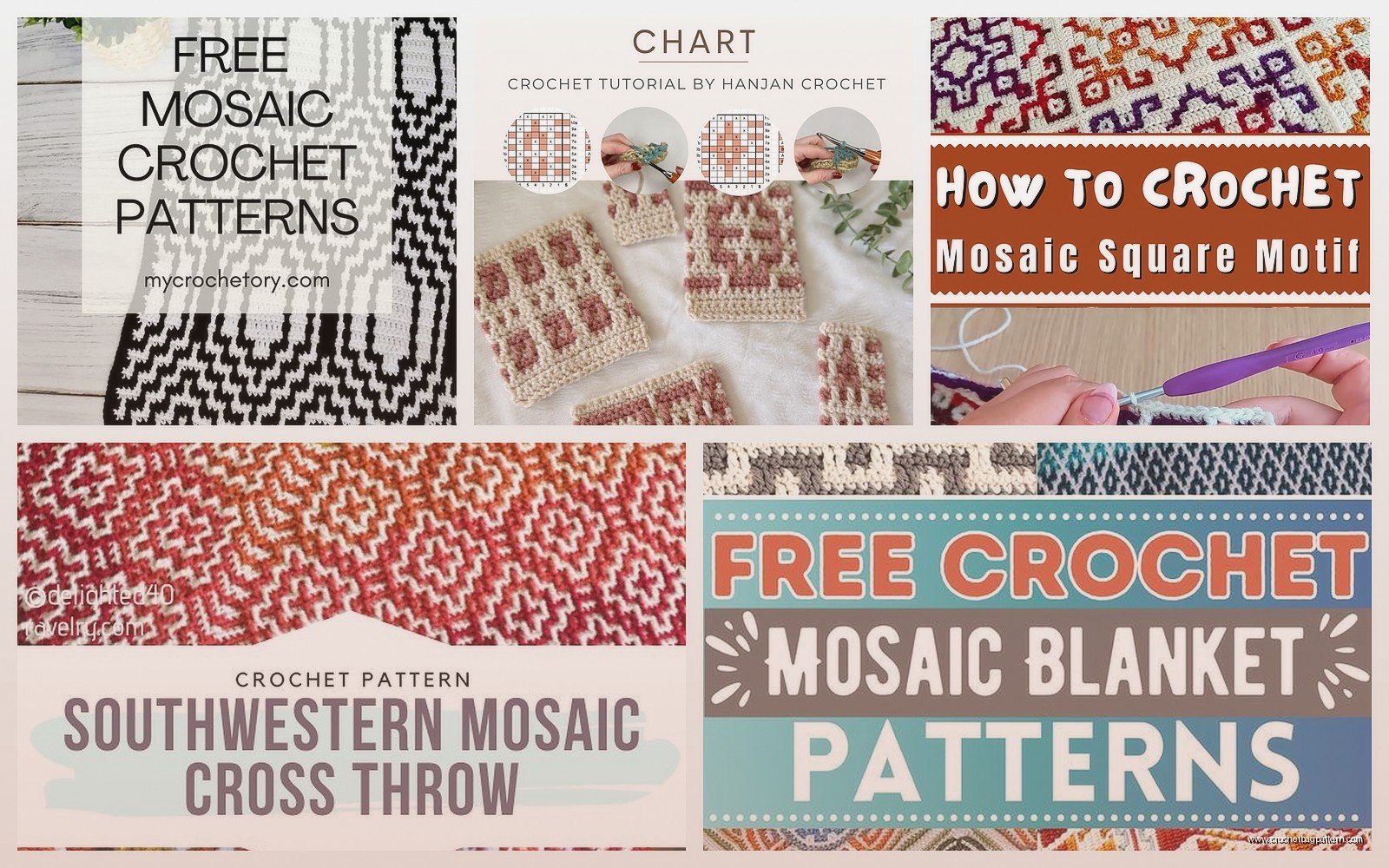
Most free patterns show you a chart with colored squares. Each row on the chart is actually TWO rows of crochet – one row going across and one row coming back. The pattern will tell you which color to use for each pair of rows.
When you see a square in the chart that matches your current working color you make a regular stitch. When you see a square that’s the OTHER color you skip that stitch on the current row and work into the row below instead. That’s the overlay part.
Honestly the first time I read a mosaic chart I thought it was gonna be impossible but once you do like three rows you realize it’s pretty repetitive.
Materials You Actually Need
Two colors of the same yarn weight. I cannot stress enough that they need to be the same weight and ideally the same brand because different yarns have different amounts of stretch and it’ll make your tension weird.
I’ve used:
- Red Heart Super Saver (cheap and works fine)
- Caron One Pound (also cheap, slightly softer)
- Paintbox Yarns Cotton DK when I wanted to make a washcloth and feel fancy
- Bernat Blanket yarn which was actually a mistake because it’s so thick you can’t really see the mosaic detail but whatever it’s warm
Hook size depends on your yarn but generally go up one size from what the yarn label recommends. Mosaic gets dense and you don’t want it to be stiff as cardboard.
Starting Your First Project
Pick a simple pattern with just two colors and a small repeat. Dishcloths are perfect because they’re small and if you mess up who cares it’s cleaning dishes. I found a free pattern on Ravelry called something like “Simple Mosaic Dishcloth” that was just a basic diamond pattern.
Chain your starting chain in Color A. The number needs to match your pattern obviously. Then work your first row which is usually just a plain row of double crochet or whatever stitch the pattern uses as the base.
Here’s where it gets specific – when you finish that first row you DON’T turn your work yet. You’re gonna drop Color A and pick up Color B but keep it attached. Some people cut their yarn between color changes but that’s annoying and you end up with a million ends to weave in later.
The Actual Overlay Technique
So you’ve got your foundation row done in Color A. Now you pick up Color B and chain whatever the pattern says (usually 2 or 3 for double crochet).
The pattern chart will show you which stitches to work normally and which ones to overlay. When you need to do an overlay stitch you literally skip the stitch on the current row and insert your hook into the corresponding stitch one or two rows below. Pull up Color B yarn and complete your double crochet like normal except it’s taller because you went down further.
The skipped stitch on the current row just sits there. You’ll work into it on the next color change when you come back with Color A.
One thing that really annoyed me about this process is that the back looks absolutely terrible. Like a complete mess of long floats and crossed stitches. I kept thinking I was doing it wrong because every photo tutorial shows the nice front side but nobody warns you the back is chaos. It’s supposed to look like that though so don’t panic.
Tension and Common Problems
Your overlay stitches need to be loose enough that they don’t pull the fabric but tight enough that you don’t have giant loops. This is entirely a feel thing that you learn by doing.
First mosaic project I made was too tight and it curved like a bowl. Had to frog it and start over which was frustrating because I was like four inches in and my cat kept trying to attack the yarn ball while I was winding it back up.
If your edges are wonky that’s normal at first. The overlay stitches at the ends of rows can pull weird. Some patterns have you work regular stitches for the first and last stitch of every row to keep edges stable.
Carrying Colors Up The Side
Instead of cutting yarn when you switch colors you can carry it up the side of your work. When you finish a row with Color A just drop it and pick up Color B. When you come back to Color A it’s right there waiting.
Every few rows you can twist the waiting color around your working yarn to secure it against the edge. Or don’t, honestly it stays fine either way for small projects.
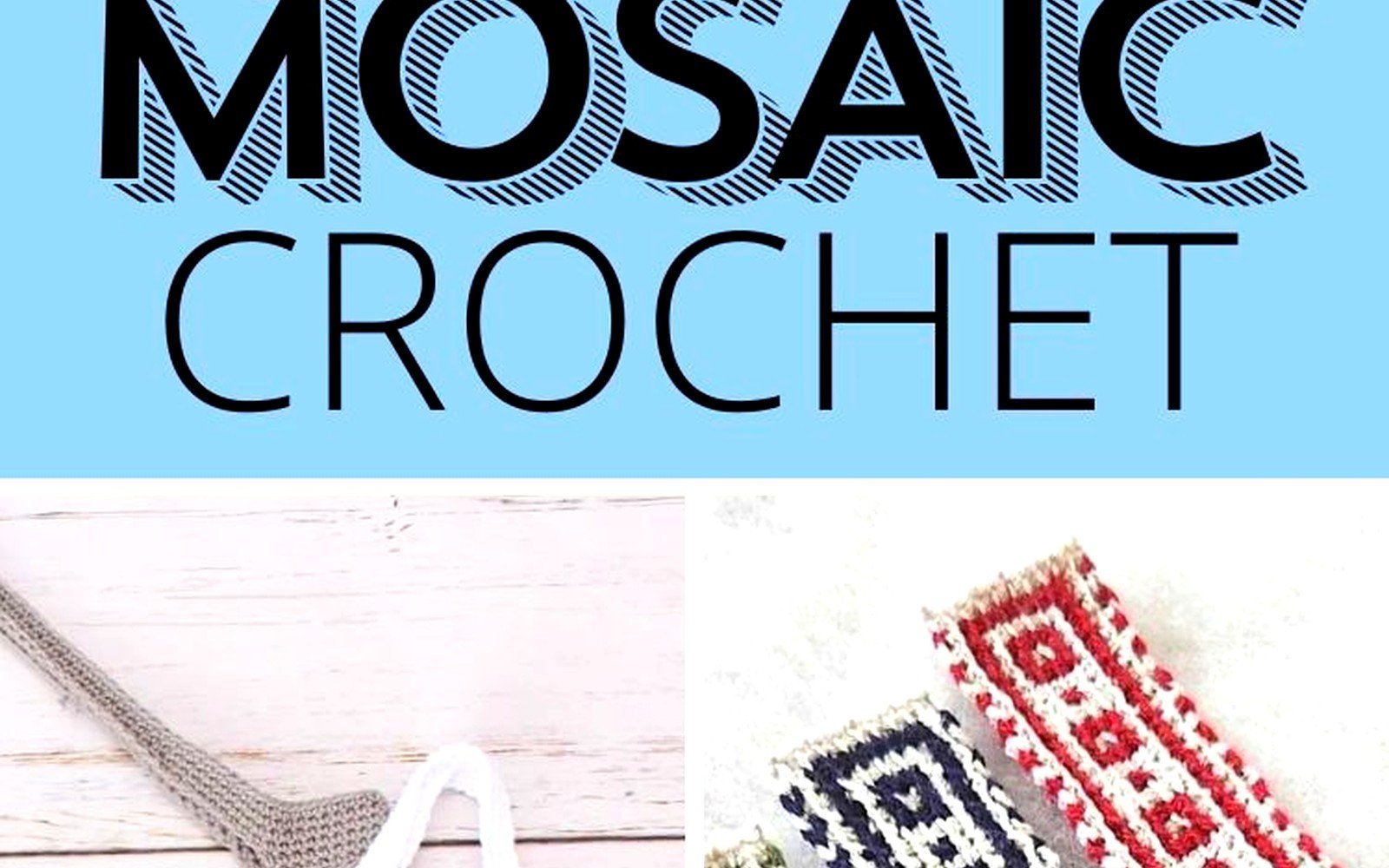
For bigger projects like blankets you might want to use separate balls for each color especially if there’s a lot of rows between color changes because carrying yarn up like 10 rows looks messy.
Free Pattern Resources
Ravelry has tons of free mosaic patterns if you search “mosaic crochet” and filter by free. Some designers I remember seeing a lot:
- Tinna Thorudottir Thorvaldar has geometric stuff
- Lily / Sugar’n Cream has free dishcloth patterns that are good starter projects
- Random blog tutorials that show up on Pinterest though half the links are broken
YouTube is honestly better for learning the actual technique than written patterns. Watching someone do the overlay stitch makes it click way faster than reading “insert hook into corresponding stitch two rows below” fifty times.
There’s a creator called Tinna Thorudottir who has video tutorials and she explains it clearly without being all cutesy about it which I appreciate.
My Actual Experience Making These Things
That first blanket I started in spring 2022 I never actually finished because I got bored halfway through and the colors were ugly together. It’s still in a bag somewhere.
But I made a mosaic cushion cover in summer 2024 using Paintbox Cotton Aran in navy and mustard yellow. Watched the entire first season of The Bear while making it which was probably why I kept miscounting stitches because that show is stressful.
The cushion actually turned out decent though. The pattern was called “Retro Diamonds” or something and it was just diagonal lines that created diamond shapes. Took maybe 8 hours total spread over a week of sitting on the couch in the evening.
The thing with mosaic is it works up slower than regular crochet because you’re doing two rows to create one row of pattern. But it’s also kind of mindless once you get the rhythm which makes it good for watching TV or listening to podcasts or whatever.
Color Choice Actually Matters
High contrast between your two colors makes the pattern way more visible. Like black and white or navy and cream. When I tried doing two shades of blue that were close together you could barely see the mosaic pattern and it just looked like slightly textured fabric.
Variegated yarn is a mistake for mosaic unless you’re using it as one color and pairing it with a solid. Two variegated yarns together just looks like confusion.
Solid colors are your friend here. This is not the place for that fancy gradient cake yarn even though it’s pretty.
Gauge Doesn’t Matter Much
For stuff like blankets and scarves you don’t really need to worry about gauge. It’ll be whatever size it ends up being. Just make sure your stitches are consistent so the pattern doesn’t look warped.
If you’re making wearables then yeah you gotta do a gauge swatch but who’s making a mosaic sweater as their first project anyway.
Fixing Mistakes
If you mess up the color pattern you usually don’t notice until you’re a few rows past it. At that point you gotta decide if it’s worth frogging back or if you’re just gonna live with it.
I’ve definitely left mistakes in projects because frogging mosaic is extra annoying when you’ve got two colors woven through everything. For a dishcloth or blanket nobody’s inspecting it that closely anyway.
If you lose your place in the pattern the easiest thing is to look at the row you just finished and compare it to the chart. The pattern repeats so you can usually figure out where you are.
Project Ideas That Actually Work
Dishcloths and washcloths are perfect first projects. Small, quick, functional, and cotton yarn is cheap. Plus if you mess up it’s not a big deal.
Pillow covers are good next step. They’re flat so you don’t have to worry about shaping and they’re big enough to really see the pattern but not so big you’ll give up.
Scarves work but they take forever because they’re long. Blankets are a commitment but if you pick a simple repeating pattern they’re actually pretty mindless.
I wouldn’t recommend bags or baskets for your first mosaic project because the construction gets complicated and you’re trying to learn the stitch technique already.
The Learning Curve Is Real But Short
First three rows you’ll be confused and checking the pattern every single stitch. Rows four through ten you’ll start seeing the pattern develop and it gets easier. After that it’s pretty automatic.
The muscle memory for where to insert your hook develops fast. Your hands figure out the difference between a regular stitch and an overlay stitch without you thinking about it.
I’d say give yourself one small practice project to learn on and then your second project will go way smoother. Don’t start with something huge and precious that you’ll be devastated to mess up.
Finishing and Blocking
Mosaic fabric tends to curl a bit at the edges especially if your tension is tight. Blocking helps flatten it out. Just wet it spray it whatever your blocking method is and pin it square.
I usually don’t block dishcloths because they’re gonna get wet and scrunched up anyway. Blankets and wearables yeah definitely block those.
Weaving in ends is the same as any crochet project except you’ve got twice as many because two colors. I weave them in as I go now because doing them all at the end is the worst.
When Mosaic Doesn’t Work
Some patterns just don’t translate well to mosaic. Really detailed pictures or complex curves don’t work because you’re limited by the grid structure and the overlay technique.
Geometric patterns work best. Diamonds chevrons boxes stripes that kind of thing. Traditional Fair Isle type patterns adapt well to mosaic.
If you’re trying to make a portrait of your dog or something mosaic is not the technique for that no matter how much you want it to be.
Also mosaic creates a thick dense fabric so it’s not great for lightweight summer tops or anything that needs drape. It’s better for structured items that benefit from being sturdy.
