
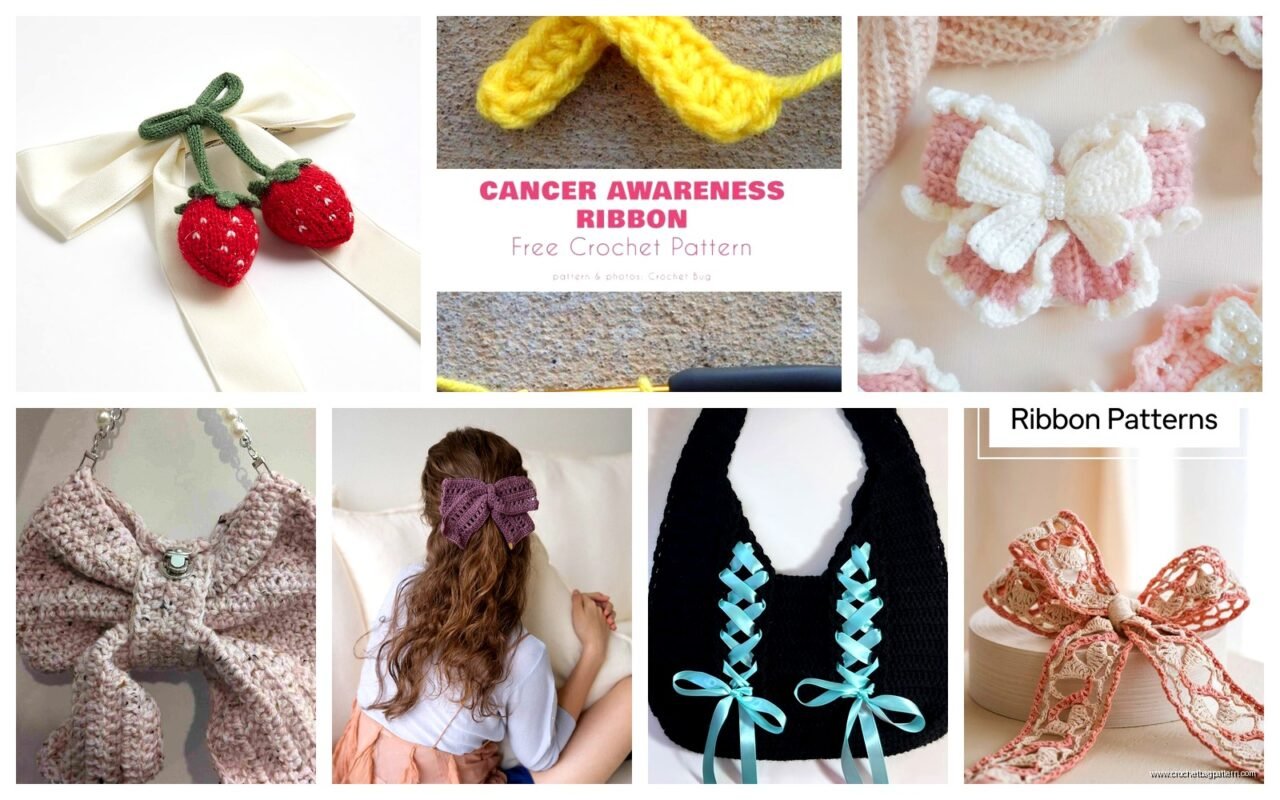
May
Getting Started With the Basic Chain
So the ribbon pattern is basically just working into chain spaces instead of individual stitches which sounds complicated but it’s really not once you get the hang of it. I made one last summer 2024 for a tank top I was trying to salvage and honestly it turned out way better than the actual shirt deserved.
You’re gonna start with a foundation chain that’s divisible by 4 plus 2. So like 30 chains, 46 chains, whatever fits your project. I usually use Red Heart Super Saver because it’s cheap and I can find it everywhere, though sometimes I grab the Caren Simply Soft if I’m feeling fancy or it’s on sale at Michael’s.
The foundation row is just single crochets across. Nothing special. Chain 1, turn, and work back with single crochets in each stitch. This gives you a stable base because if you try to work the ribbon pattern directly into a starting chain it gets all wonky and twisty.
The Actual Ribbon Part
Okay so here’s where it gets interesting. Row 1 of the pattern: Chain 5 (this counts as a double crochet plus a chain 2 space), skip 3 stitches, then do a double crochet in the next stitch. Chain 2, skip 3, double crochet. You’re basically creating these little arches across the whole row.
When you get to the end you’ll have one stitch left usually, just dc in that last stitch. Chain 3 and turn.
Row 2 is where the ribbon effect actually shows up. You’re gonna work (2 dc, chain 2, 2 dc) all in each chain-2 space from the previous row. So you’re not working into the double crochets at all, just into those arch spaces. This creates these little shell-looking things but more rectangular than actual shell stitch.
The thing that really annoyed me about this pattern is that counting the chain spaces is weirdly hard? Like you’d think it would be obvious but when you’re working across sometimes you lose track of whether you already worked in a space or not, especially if you’re using a dark yarn. I was watching The Bear while making that tank top trim and kept having to recount because I’d get distracted by the kitchen scenes.
Adjusting the Width
If you want a wider ribbon you can do chain 3 spaces instead of chain 2, and then work (3 dc, ch 3, 3 dc) into each space. Makes it more dramatic. I used Bernat Blanket yarn once for a really chunky ribbon trim on a baby blanket and did the wider version, looked pretty good actually.
For a narrower delicate trim you can do chain 1 spaces with (1 dc, ch 1, 1 dc) in each space. This works better with fingering weight or sport weight yarn. I tried it with some random Patons lace weight I had laying around and it made a nice edge for a cotton scarf.
Adding the Ribbon to Finished Projects
So if you’re adding this as trim to something you already made, you gotta attach it properly or it’ll just flop around weird. What I do is work a row of single crochet along the edge of whatever I’m trimming first. This gives you a clean edge to attach the ribbon pattern to.
Make sure your single crochet row has a stitch count that works with the pattern (divisible by 4 plus 2, remember). If it doesn’t, you can fudge it by doing a few increases or decreases in that foundation row. Nobody’s gonna notice an extra stitch here or there.
Then you just start the ribbon pattern directly into that single crochet row. I usually use the same color for the foundation as the project, then switch to a contrast color for the actual ribbon part. Like if I’m trimming a white tank top I’ll do white single crochets then switch to navy or something for the ribbon.
Corner Problems
Corners are honestly just a mess with this pattern. You can’t really do a neat corner turn because the ribbon structure doesn’t… it just doesn’t work geometrically or whatever. What I do is either stop the ribbon before the corner and start fresh on the next side, or I work a couple regular double crochets in the corner space to kind of bridge it.
Another option is to do a chain-3 or chain-5 space at the corner instead of the regular chain-2, then work extra stitches into it on the next row. Makes it fan out a bit but at least it lays flat.
Edging Variations That Actually Work
You can add a picot edge to the ribbon which makes it look more finished. After you complete a ribbon row, chain 1 and work single crochet, chain 3, single crochet into each chain space. The chain-3 makes little picots along the edge.
Or do a reverse single crochet (crab stitch) along the edge if you want texture without the picot look. I personally think reverse single crochet is kind of ugly but some people love it so whatever works for you.
There’s also this thing where you can weave actual ribbon through the chain spaces after you finish crocheting. Like satin ribbon from the craft store. I did this for a friend’s wedding gift last year, crocheted a white cotton ribbon trim on some hand towels then wove pale pink satin ribbon through. Looked fancy, took like 10 minutes of extra work.
Multi-Color Ribbon Effects
If you alternate colors every row or every two rows you get this cool striped ribbon effect. I used Lily Sugar’n Cream in like four different colors once for kitchen towel edging, worked the foundation in white then alternated between blue, yellow, green, and pink for the ribbon rows.
You could also do an ombre effect if you have yarn in gradual shades. Start with light pink, then medium pink, then dark pink or whatever. I haven’t actually tried this because I never have that many coordinating colors sitting around but it would probably look cool.
Tension and Gauge Issues
The ribbon pattern can get really tight if you crochet with high tension. The chain spaces need to be loose enough that you can fit your hook plus the 2 or 3 double crochets into them comfortably. If you’re a tight crocheter maybe go up a hook size.
I usually use a G hook (4.0mm) with worsted weight yarn for this pattern. Some people use H (5.0mm) if they want it looser and more drapey. For thicker yarn like the Bernat Blanket I mentioned earlier, I used a K hook (6.5mm) I think? Maybe J. Somewhere in that range.
My cat knocked my whole hook organizer off the table once while I was in the middle of a ribbon project and I had to just guess which hook I’d been using. Ended up with slightly different tension on one side versus the other but honestly you couldn’t really tell unless you looked close.
Blocking Makes a Difference
I’m not usually a big blocker of things but the ribbon pattern actually benefits from it. The chain spaces can get a little twisted or uneven while you’re working, and blocking straightens everything out. Just pin it to your blocking board or a towel on the floor or whatever, spray it with water, let it dry.
If you’re using acrylic you can steam block it with an iron on low heat, just don’t touch the iron directly to the yarn or you’ll melt it. Ask me how I know. Actually don’t, it was embarrassing and I ruined a perfectly good… anyway just hover the iron above the work and let the steam do its thing.
Using Different Stitch Heights
You don’t have to use double crochet for the ribbon. Half double crochet makes a shorter, more compact ribbon. Treble crochet makes it taller and more open. I made a bookmark once with treble crochet ribbon pattern and it was actually too tall, looked weird and floppy.
The formula stays basically the same regardless of stitch height. Chain spaces should be about half the height of whatever stitch you’re using. So if you’re doing treble (which is taller than double crochet) you’d do chain-3 spaces instead of chain-2.
For half double crochet you could even do chain-1 spaces, though that gets pretty tight and compact. Better for something like a belt or strap where you want stability.
Joining Ribbon Strips
If you make multiple ribbon strips you can join them side by side to create a wider fabric. This is good for making scarves or table runners or whatever. To join them, lay two strips next to each other and single crochet through both edge stitches at once.
Or you can do a more decorative join by chaining between the strips. Like single crochet in the edge of strip one, chain 3, single crochet in the edge of strip two. Creates a little gap between them which can look interesting depending on what you’re making.
I started making a whole vest out of joined ribbon strips back in spring 2022 but never finished it because the project was way more ambitious than my attention span. The strips are still in a bag somewhere, maybe I’ll finish it eventually but probably not.
Length Considerations
The ribbon pattern doesn’t have much stretch to it, so if you’re using it as trim on something stretchy like a t-shirt or tank top, you might have problems. The trim won’t stretch with the fabric and it’ll either pull and distort or the shirt will bunch up under it.
You can add a little stretch by working looser or using a stretchy yarn, but honestly if you need serious stretch this isn’t the right pattern. Better to use something like ribbing or a stretchy shell stitch.
For non-stretchy projects though it’s perfect. I put it on the edges of a denim jacket and it worked great because the denim doesn’t stretch anyway. Used some chunky wool blend yarn, can’t remember the brand but it was gray and kind of tweedy looking.
Fixing Mistakes
If you mess up a stitch or skip a chain space by accident, you can usually fudge it by adding an extra chain or working two groups into one space. The pattern is forgiving enough that small inconsistencies don’t really show unless you’re looking for them.
If you completely lose your place though you might need to rip back to the beginning of the row. I know that’s annoying but trying to fix a major mistake in the middle of a ribbon row is usually more work than just starting over.
The worst is when you don’t notice the mistake until several rows later. Then you gotta decide if it’s worth ripping out or if you can just live with it. I almost always just live with it because I’m lazy and also because most people won’t notice anyway.
Practical Applications
This pattern works for pretty much any edge that needs decorating. I’ve used it on blankets, towels, clothing, bags, pillow cases, even a lampshade once though that was kind of experimental and didn’t turn out amazing.
It’s especially good for kitchen textiles because it lays flat and doesn’t catch on stuff. Like if you put it on a dish towel it’s not gonna snag on your dishes or whatever. Some edging patterns create loops that catch on everything but the ribbon pattern is smooth enough to avoid that.
For wearables I like it on hems and necklines. Sleeve edges too though you gotta be careful with the circumference measurement. Make sure your foundation chain will fit around the sleeve opening before you start working the pattern.
Yarn Weight Recommendations
Worsted weight is probably the most versatile for this pattern. Big enough to show the ribbon structure clearly but not so chunky that it gets bulky. I’ve used Red Heart, Caron, Lion Brand, whatever’s available really.
DK weight works nice for lighter projects. Makes a more delicate trim. Sport weight or fingering weight can work too but you gotta use a smaller hook and the whole thing takes longer because the stitches are tiny.
Bulky or super bulky yarn makes a statement trim that’s really chunky and textured. Good for things like winter scarves or heavy blankets. Just make sure your hook is big enough that the stitches don’t get too tight.
Cotton yarn is my go-to for kitchen stuff or summer clothing because it’s washable and doesn’t get weird in heat. The Lily Sugar’n Cream I mentioned earlier is perfect for this, comes in a million colors and it’s cheap.
