
Apr
okay so mandala patterns
Right so you start with a magic ring which honestly I didn’t even know what that was until like 2022 when I made my first real mandala during that weird spring when everything was melting early and I was watching too much Succession. The magic ring is basically just this adjustable loop that you can tighten after you work your first round so you don’t have that stupid hole in the middle. You wrap the yarn around your fingers twice, pull through, chain one, then work like 12 or 16 double crochets into the ring depending on the pattern.
The thing about mandalas is they’re all about rounds and you’re gonna be doing a lot of joins and chain spaces. Most patterns follow this structure where each round builds on the previous one but adds more stitches to keep it flat. If your mandala starts cupping or ruffling you either have too few or too many stitches for that round.
yarn choices that actually matter
I used Red Heart Super Saver for my first one because that’s what I had laying around but honestly it’s not great for mandalas because it’s so stiff. The mandala I made in summer 2024 I used Caron Simply Soft in like four different colors and it was SO much better. The drape is nicer and it actually looks delicate instead of like a pot holder. I’ve also used Lion Brand Mandala yarn which is confusing because it’s literally called Mandala but it’s this gradient cake yarn that works really well for these patterns.
You want something that’s got a nice hand to it, not too splitty. Sport weight or DK works better than worsted honestly but worsted is fine if that’s what you have. I tried doing one with some cheap acrylic from Michaels once and it was just… the definition split constantly and I wanted to throw it across the room.
the actual structure of how these work
So most mandala patterns are written in rounds and they follow this general pattern even though every single one is different:
- Round 1: Magic ring with your starting chains and double crochets
- Round 2: Usually increases in every stitch or every other stitch to double your stitch count
- Round 3-onwards: This is where the actual design happens with chain spaces, clusters, shells, whatever
The math of it is that you need to increase by roughly the same number of stitches each round to keep it flat. Like if round 1 has 16 stitches, round 2 should have around 32, round 3 around 48, etc. But this isn’t exact because chain spaces and different stitch types take up different amounts of space.
common stitch combos you’ll see
Shells are everywhere in mandala patterns. That’s usually 5 or 7 double crochets worked into the same stitch or space. They create these fan shapes that radiate out from the center. Clusters are the opposite where you work multiple stitches but join them at the top so they come together into one point.
V-stitches show up a lot too which is just dc, chain 1 or 2, dc all in the same stitch. Creates a little V shape obviously. Popcorn stitches are in some of the fancier patterns and those are annoying because you have to work like 5 dc in one stitch then pull your hook out and reinsert it to cinch them together. They’re bumpy and textured.
Chain spaces are probably the most important thing to understand. When a pattern says “ch 3, skip 2 sts, dc in next st” you’re creating a little gap that the next round will work into. The next round will say something like “3 dc in ch-3 space” and you literally just work into that gap, not into the actual chain stitches.
reading patterns vs winging it
I learned crochet by just watching people and messing around so reading written patterns was really confusing at first. The abbreviations are annoying – dc means double crochet in US terms but treble in UK terms which like why. Ch is chain, sc is single crochet, hdc is half double, tr is treble. Sl st is slip stitch which you use to join rounds.
Most mandala patterns are written out round by round and they’ll look something like:
Round 4: Sl st to ch-2 space, ch 3 (counts as dc), 2 dc in same space, *ch 2, 3 dc in next ch-2 space; rep from * around, ch 2, join with sl st to top of beginning ch-3.
That asterisk means you repeat everything after it until you get back to the beginning. The semicolon usually means there’s a different section coming up. It’s its own weird language.
But honestly once you understand the structure you can kinda make up your own mandalas. I do that sometimes where I’ll just start with a magic ring and then each round I decide if I want to add shells or chain spaces or whatever. They don’t always turn out great but it’s more fun than following someone else’s pattern exactly.
the thing that drove me absolutely insane
Okay so the most annoying part of mandala patterns is counting stitches. You think you’re doing fine and then you get to the end of the round and you have like 3 stitches left when you should have 5 and you have to figure out where you messed up. And because it’s circular you can’t just fudge it like you can with a straight project because it’ll be obvious that one section is different.
I spent probably two hours on round 8 of this one mandala trying to figure out why my stitch count was off and my cat kept walking across it and I finally realized I had accidentally skipped a chain space like four rounds back. Had to rip out so much work. That’s the worst feeling.
Stitch markers help but also they fall out or you forget to move them and then they’re useless. I use the locking kind that look like tiny safety pins and I put one at the beginning of each round so I know where to join.
color changes and joining new yarn
This is where mandalas get really pretty because you can change colors every round or every few rounds. The easiest way to change colors is to work the last stitch of the round until you have two loops on your hook, then pull through with the new color. Fasten off the old color and weave in the end later.
Some people do the invisible join thing where you cut the yarn and use a needle to mimic the last slip stitch so there’s no visible seam. I’ve tried this and it’s finicky but it does look cleaner. You basically thread the yarn end through a tapestry needle, go under both loops of the first stitch of the round, then back through the center of the last stitch you made. It’s hard to explain without showing you.
For the mandala I made last summer I used this color scheme I saw on Pinterest with teal, coral, cream, and gold. Used Caron Simply Soft like I mentioned and it turned out actually really nice. I think I did like 12 rounds? It was probably 20 inches across when I finished. I was gonna make it into a wall hanging or something but it’s just been sitting in my closet.
different mandala styles
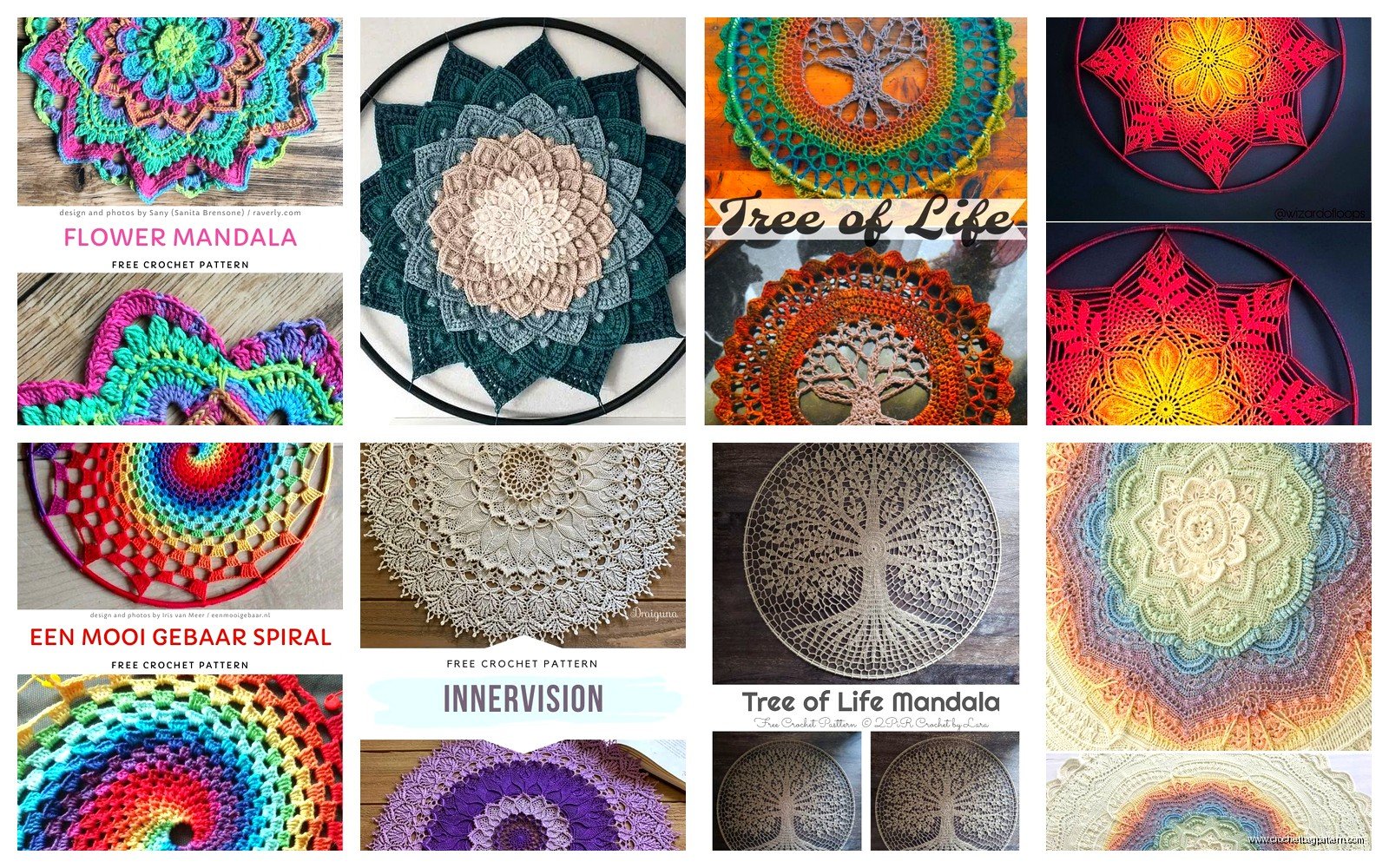
There’s like the basic circular mandala that’s just round and symmetrical. Then there’s square mandalas which start circular but then you work into corners to make it square – those are good for blanket squares. Hexagon mandalas too, same concept.
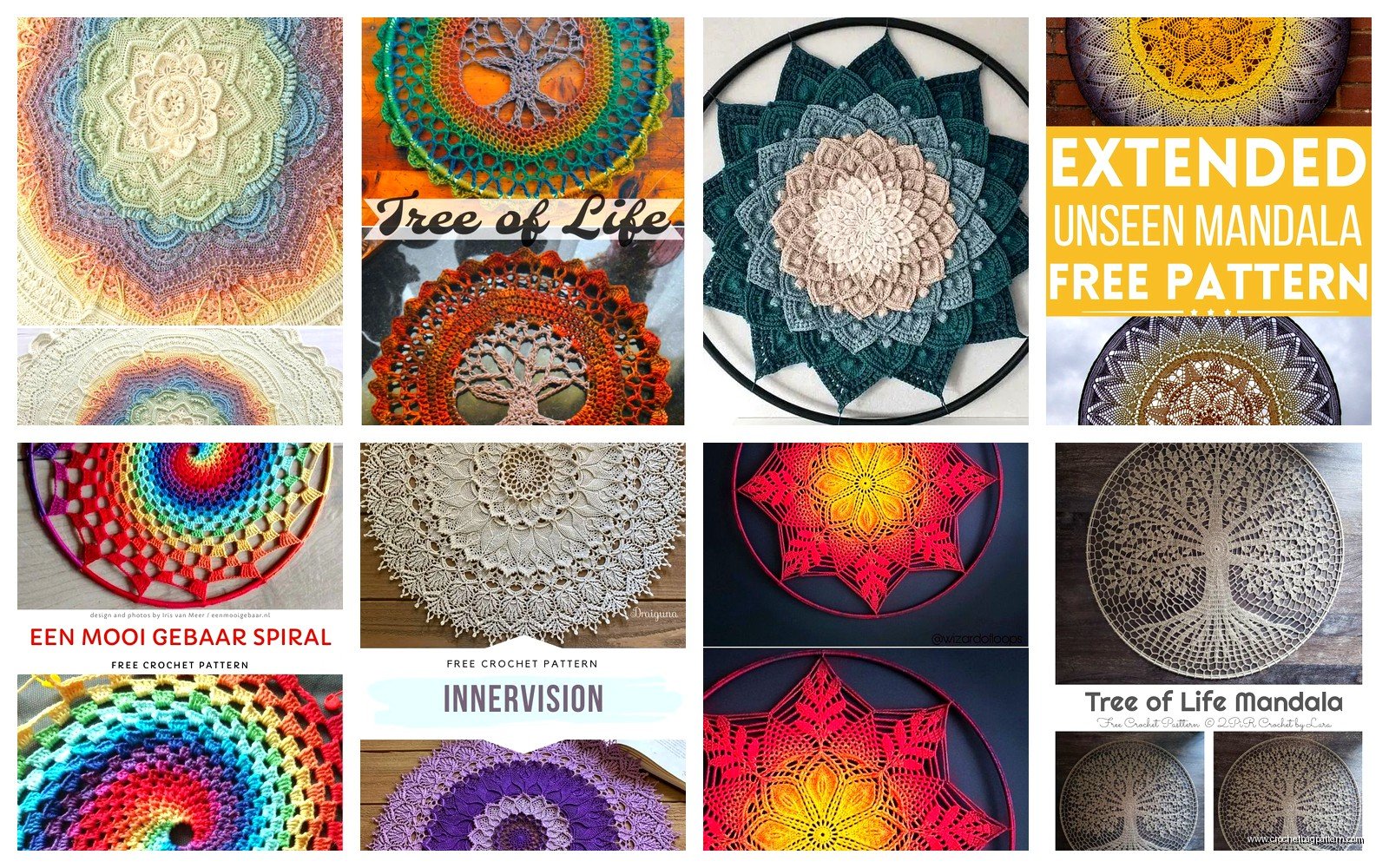
Some patterns have this really intricate lacy look with lots of chain spaces and minimal solid stitches. Others are more solid and dense with lots of texture from popcorns and bobbles. The overlay mandala thing is cool where you work a base round in one color then go back and surface crochet or overlay crochet another color on top of it but that’s more advanced.
African flower motifs are kind of mandala-adjacent. They’re hexagonal and have this flower shape in the middle with color changes. People make those into blankets or stuffed animals by joining a bunch of them together.
tension and blocking
Your tension matters more with mandalas than with like a scarf or whatever because if you’re crocheting too tight it’ll cup and if you’re too loose it’ll ruffle. I tend to crochet pretty tight naturally so I have to consciously loosen up when I’m working on these.
Blocking makes a huge difference. Like HUGE. You wet the finished mandala or use a spray bottle to dampen it, then pin it out on a blocking board or foam mat in a perfect circle, and let it dry. This evens out all your stitches and makes the whole thing lay flat and look professional. I use those foam puzzle mat things from the dollar store as blocking mats.
You can also starch mandalas if you want them really stiff for like doilies or decorations. Just dilute some fabric starch with water, soak the mandala, pin it out, and let it dry. It’ll dry hard and hold its shape.
what hooks to use
I usually use whatever hook size the yarn recommends or one size larger. For worsted weight that’s like a H/5.0mm or I/5.5mm hook. For sport weight maybe a G/4.0mm. The Clover Amour hooks are really comfortable if you’re gonna be working on a big mandala for a while because they have those squishy rubber grips.
Some people swear by ergonomic hooks for repetitive projects like this. I have some cheap ones from Amazon that are okay but the really nice ones from like Furls are expensive and I can’t justify that when my regular hooks work fine.
common mistakes and how to fix them
If your mandala is cupping upward like a bowl, you don’t have enough stitches in your outer rounds. You can try going up a hook size for the next round or adding more increases. If it’s ruffling and waving like a frilly edge, you have too many stitches and need to work fewer increases or go down a hook size.
Losing track of where you are in the pattern happens to everyone. I write on sticky notes and move them down the pattern as I go. Or take a picture of the pattern on your phone and mark it up with the markup tools.
Uneven tension shows up more in mandalas than other projects because you can see the whole thing at once. Try to keep your stitches consistent and don’t crochet when you’re tired or distracted because that’s when tension gets wonky.
what to do with finished mandalas
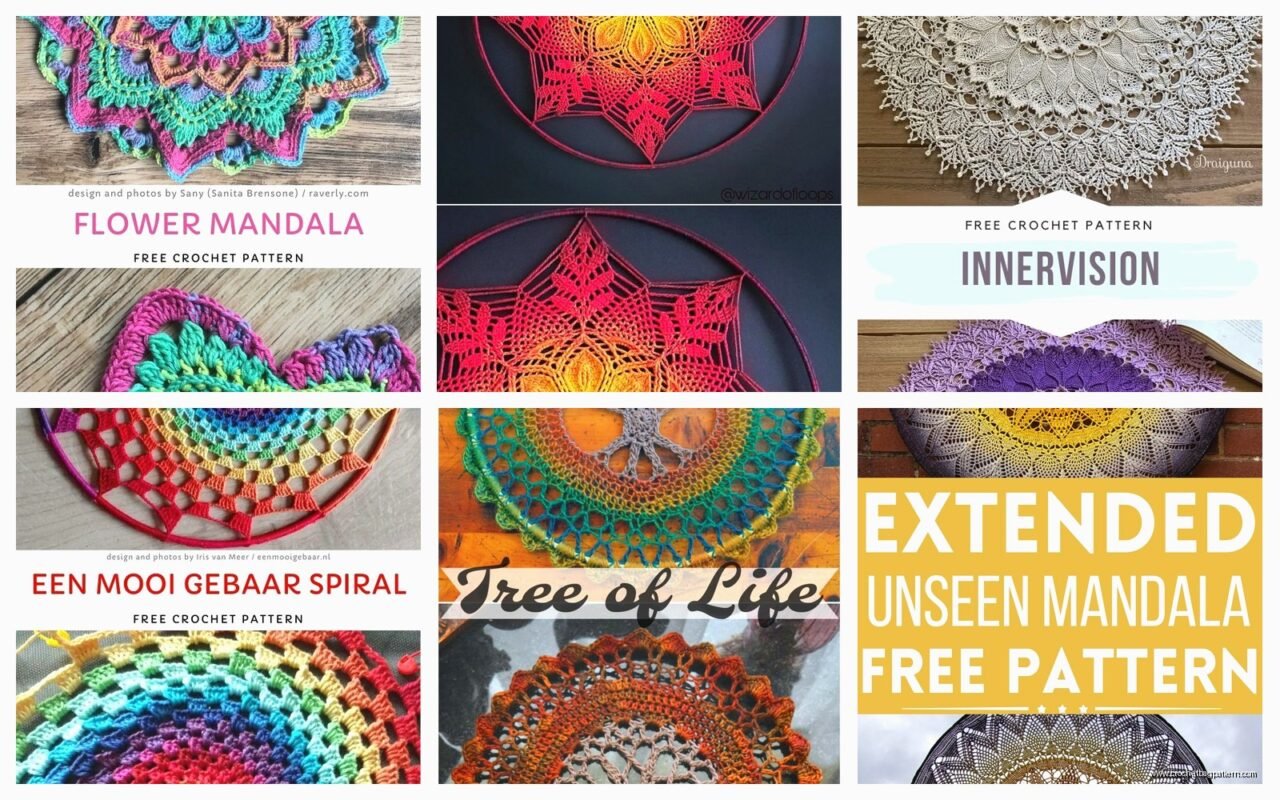
People frame them, make them into wall hangings, use them as table decorations, sew them onto bags or pillows. You can make a bunch of small ones and join them into a blanket. Some people make them into dreamcatchers by stretching them over embroidery hoops.
I’ve seen people stiffen them really hard and use them as bowls for holding jewelry or keys which is kinda cool. Or make coasters out of small ones. The possibilities are like… there’s a lot you can do I guess.
The one I made in spring 2022 I actually gave to my sister because I didn’t know what else to do with it and she has it on her coffee table I think. It was purple and white and probably 8 rounds? Not my best work but she liked it.
finding patterns and resources
Ravelry has thousands of mandala patterns, free and paid. You can filter by difficulty and yarn weight. Pinterest has a ton too but you gotta watch out for broken links or patterns that are just pictures with no actual instructions.
YouTube is honestly the best for learning the actual techniques because you can see how stitches are supposed to look. Bella Coco and Jayda InStitches have good mandala tutorials. There’s also this book called “Mandalas to Crochet” by Haafner Linssen that has really beautiful geometric patterns if you want something more structured.
Some patterns use charts instead of written instructions which are easier once you understand the symbols. Each symbol represents a stitch type and you read the chart from the center outward following the rounds.
Just start with something simple like a basic 6 or 8 round mandala before you try the super complicated ones with 20 rounds and six color changes. Build up to the hard stuff.
