
Mar
Basic Supplies and Getting Started
So you’re gonna need a hook obviously, I used a 5mm for most of mine but honestly it depends on your yarn weight. I made my first pair back in spring 2022 when I was binge-watching Severance and just needed something to do with my hands that wasn’t scrolling through my phone. Started with Red Heart Super Saver in that heather grey color because it was cheap and I wasn’t sure if I’d even finish them.
The thing about arm warmers is they’re basically just tubes with a thumb hole, which sounds simple until you actually have to figure out where the thumb hole goes. I screwed this up twice before getting it right. You want to measure from your wrist to wherever you want them to end—some people do just past the elbow, I prefer stopping mid-forearm because otherwise they bunch up weird under jacket sleeves.
Choosing Your Pattern Approach
There’s basically three ways to make these and each one has its annoying parts. You can work in the round from the bottom up, you can make a flat piece and seam it, or you can work top-down. I usually do bottom-up in the round because seaming is the worst and I’m impatient.
For working in the round you need to know your wrist circumference. Mine’s about 6 inches around so I chain enough to get that measurement when working in my chosen stitch. With the Red Heart yarn and 5mm hook that was like 24 chains, then I joined with a slip stitch being careful not to twist it. That’s important—if you twist your foundation chain you’ll end up with this mobius strip situation and have to start over.
Foundation and First Rounds
I usually do ribbing at the wrist because it looks more finished and actually stays put instead of sliding down your hand. The easiest ribbing for beginners is just alternating front post and back post double crochet. So you’d go: chain 24, join, then do FPDC around one stitch, BPDC around the next, repeat all the way around. Do maybe 8-10 rounds of that.
One thing that annoyed me SO much about this process was keeping track of where my rounds started. I’d lose my stitch marker constantly—my cat Pepper kept batting them off the couch—and then I’d have to count stitches to figure out where I was. Just use a different colored yarn as a marker if you’re like me and can’t keep track of the plastic ones.
The Body Section
After ribbing you can switch to whatever stitch you want for the main part. I’ve done half double crochet, regular double crochet, even tried a shell stitch once but it made the fabric too holey and didn’t keep my arms warm at all which kind of defeats the purpose. HDC is probably your best bet—it works up faster than single crochet but isn’t as loose as double.
Just keep going in the round, same stitch in every stitch, spiral up your arm. Try them on every few rounds to check the length. This is where you’ll work until you get to where your thumb starts, which is usually about 2-3 inches from the wrist ribbing depending on your hand size.
Creating the Thumb Opening
Okay so here’s where it gets slightly complicated but not really. When you reach thumb height, you’re gonna chain across a gap instead of crocheting into the stitches. For me that’s usually chaining 6 and skipping 6 stitches underneath. Then on the next round you work into those chains like they’re regular stitches and continue spiraling up.
I made a pair in summer 2024 using Caron Simply Soft in that dark plum color and I made the thumb hole too small because I wasn’t thinking about the fact that my thumbs are weirdly thick I guess? Had to frog back three rounds and make it bigger. So try sticking your thumb through the hole before you continue too far past it.
Different Stitch Patterns to Try
If you want texture, moss stitch is really nice and still functional. That’s just alternating single crochet and chain 1 across, then on the next row you SC into the chain spaces and chain over the SC stitches. Creates this bumpy fabric that’s got some stretch.
I tried doing cables once after watching a tutorial and honestly it was… fine? Looked cool but took forever and the fabric was really stiff. Not great for something you want to actually wear while typing or whatever. The post stitches required for cables also ate up way more yarn than I expected. Started with a full skein of Bernat Softee Chunky and barely finished one arm warmer.
Granny squares could work if you want that vintage look but then you’re back to seaming which, I already said I hate that. Plus getting the thumb hole placement right with squares seems like a geometry problem I don’t wanna solve.
Length and Ending Options
Keep working until you reach your desired length. I like mine to end about 8 inches from the wrist but you might want longer or shorter. The longer they are the more likely they’ll slouch down though, just so you know.
For finishing you can do more ribbing at the top to match the wrist, or just do a round of single crochet and bind off. I usually do 3-4 rounds of SC because it creates a nice rolled edge that doesn’t curl weird. Some patterns tell you to do a picot edge or something decorative but like… why? These are arm warmers not a doily.
Yarn Choices That Actually Matter
So Red Heart Super Saver is cheap and works fine but it’s acrylic and can feel kinda plasticky. Good for a first attempt though because you won’t feel bad if you mess up. I’ve also used Lion Brand Wool-Ease which is a wool blend and actually keeps your arms warmer but some people are itchy about wool.
Caron Simply Soft is my go-to now because it’s still affordable, comes in a million colors, and it’s soft enough that I’ll actually wear the finished thing. Made a pair in grey for my sister and she wears them to her office because the AC is ridiculous year-round.
Avoid anything too chunky unless you want arm warmers that look like you’re wearing pool noodles. I tried Bernat Blanket yarn once thinking it’d be SO cozy and warm, which it was, but they were also like 2 inches thick and I couldn’t fit my arms into my coat sleeves. Total fail.
Sizing Adjustments
If you’re making these for someone else you gotta get measurements. Wrist circumference, forearm circumference at the widest part, and length from wrist to wherever they want them to end. Most arms aren’t perfect cylinders so you might need to add stitches as you go up.
To increase gradually, just work two stitches into one stitch every so often. Like if you need to add 4 stitches over a round, space them out evenly—increase in stitch 1, then work normal stitches for a while, increase again, etc. Don’t do all the increases bunched together or you’ll get this weird lumpy section.
For decreasing (if you’re working top-down I guess) just do the opposite—skip a stitch or work two together periodically.
Common Problems I’ve Run Into
The arm warmers twist while you’re working: This usually means your tension is uneven or you’re pulling tighter on one side. Try to keep consistent tension and make sure you’re not accidentally working into the back loops only or something weird like that.
They’re too tight: Ugh this happened with my first pair. Either rip out and start with more chains, or switch to a bigger hook. Sometimes blocking helps a little but not if they’re REALLY too tight.
They’re too loose and slide down: Add more ribbing sections or switch to a smaller hook or… honestly just make new ones. I know that’s annoying but trying to fix loose fabric is harder than starting over.
The thumb hole is in the wrong spot: Been there. You can try rotating the whole arm warmer so the hole lines up better, but if it’s really off you’ll have to frog back. This is why I try them on constantly while working now.
Working Flat Instead of in the Round
Some people prefer making a flat rectangle and seaming it up the side. I get it—working flat is easier to follow if you’re used to regular back-and-forth crochet. You’d just chain enough for your arm circumference plus wrist ribbing depth if you’re doing that, then work rows until you reach the right length.
For the thumb hole in a flat piece, you’d work to where the thumb should be, chain across that gap (same as before, maybe 6 chains), skip the same number of stitches, and continue across the row. Next row you work into those chains.
Then you seam up the side with mattress stitch or whip stitch or whatever seaming method doesn’t make you want to throw the project across the room. I use a yarn needle and just kind of… stitch it together. It’s not pretty on the inside but who cares, it’s the inside.
Adding Details Without Getting Annoying
If you want buttons or something you can add them to the ribbing section but make sure they’re not where they’ll dig into your wrist bone. I sewed three small buttons onto a pair once just for decoration and they looked cute but kept catching on my sleeves so I ended up cutting them off.
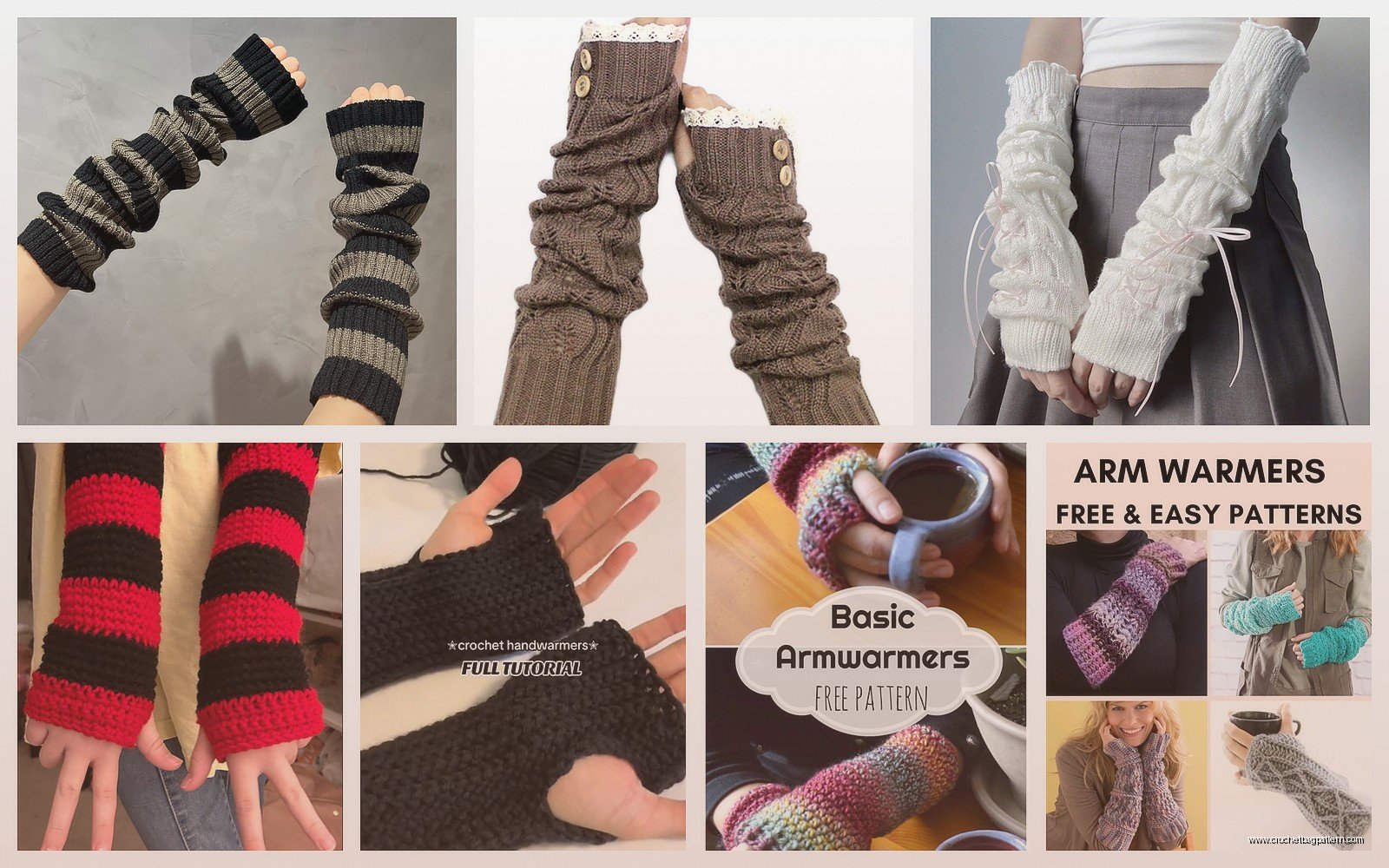
Stripes are easy—just change colors every few rounds. Carry the unused color up the inside if you’re doing narrow stripes, or cut and weave in ends if you’re doing wider sections. Weaving in ends is tedious but it’s gotta be done or your arm warmers will fall apart after one wash.
Surface crochet can add texture after the fact. Like if you finish plain arm warmers and decide they’re boring, you can go back and surface crochet some lines or designs on them. I did this with a pair in black—added some white surface crochet stripes and they looked way less plain.
Actually Wearing These Things
They’re good for typing when your office is cold, wearing under jacket sleeves for extra warmth, or just like… fall weather when it’s not quite cold enough for full gloves but your wrists are freezing. I wear mine around the house a lot honestly because my apartment has terrible heating.
They do stretch out over time especially if you’re pulling them on and off a lot. Acrylic stretches more than wool blends. You can reshape them by wetting and laying flat to dry but I usually just make new ones when the old ones get saggy.
Washing: I throw acrylic ones in the machine on gentle and air dry them. Wool blends I hand wash because I’m paranoid about felting even though Wool-Ease probably wouldn’t felt that easily. Better safe than sorry though.
Time Investment and Yarn Amounts
A basic pair takes me maybe 3-4 hours total if I’m not watching TV and getting distracted. Could probably do it in 2 hours if I really focused but when does that ever happen. If you’re slower or newer to crochet maybe plan for 6-8 hours.
Yarn-wise, one skein of worsted weight is usually enough for a pair. I’ve made three pairs from one big skein of Red Heart Super Saver before. If you’re doing really long ones or using a chunky yarn you might need more. Better to have extra than run out 3/4 of the way through the second one and have to find matching dye lot.
That’s basically it I think? Make a tube, add thumb hole, finish the edges, done. You can make them as simple or complicated as you want but honestly the simple ones are just as functional and take way less time. I’ve got like eight pairs now in different colors and the plain HDC ones are the ones I actually reach for most often.
