
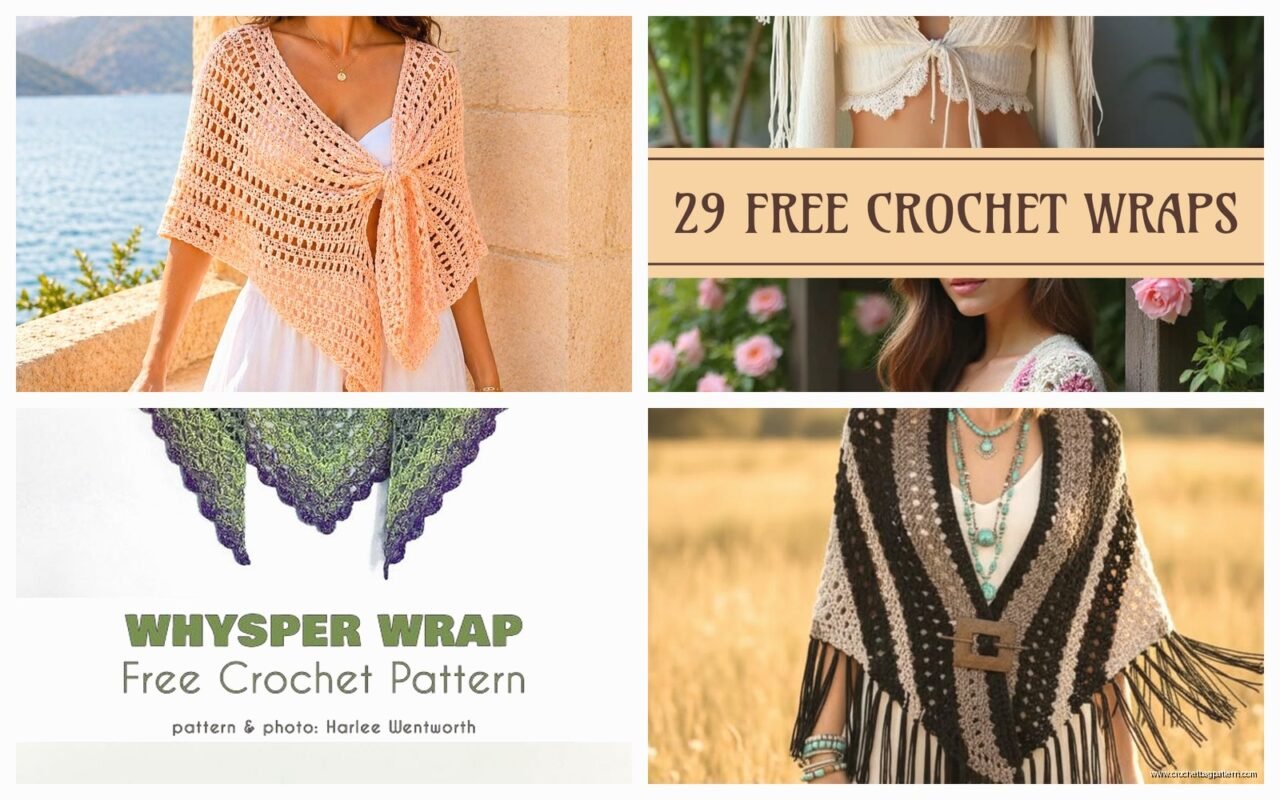
May
Getting Started With Wrap Patterns
So basically wraps are just triangles or rectangles that you wear and people call them different things depending on size but honestly the difference between a shawl and a scarf is kinda arbitrary. I made my first actual wrap in spring 2022 when I was stuck at home with nothing to do and my sister kept posting pictures of her fancy knitted shawls on Instagram which annoyed me enough to try crochet versions.
The easiest way to start is with a simple triangle shawl because you’re literally just increasing on every row and there’s not much thinking involved. You can use any yarn weight but I’d say start with worsted weight because it works up faster and you can actually see your stitches. I used Red Heart Super Saver in that ugly burgundy color they have because it was what I had lying around and honestly it turned out fine.
Basic Triangle Shawl Method
Start with like 4 chains. Then do 2 double crochets in the 4th chain from hook or whatever, that makes your first little triangle point. The next row you’re gonna chain 3 (counts as first dc), then do 2 dc in the same stitch, then 1 dc in the next stitch, then 3 dc in the last stitch. That middle stitch is your increase point.
Every row after that you just chain 3, do 2 dc in the same stitch, dc across until you hit the middle stitch, put 3 dc in that middle stitch, dc across to the end, then 3 dc in the last stitch. You keep doing this until it’s as big as you want. The annoying thing about this method is that you have to count to find the middle stitch every single time and I always lost count while watching TV.
I was watching that show Severance while making my first one and kept having to recount because the plot was actually interesting enough to distract me. My cat also kept sitting on the growing shawl which didn’t help.
Yarn Choices That Actually Matter
For wraps you want something that drapes well which means not acrylic if you can avoid it but also acrylic is cheap so like, do what you want. I’ve used Lion Brand Wool-Ease which is a blend and it’s pretty good for the price. The Caron Simply Soft is another option if you’re sticking with acrylic because at least it’s soft and has decent drape.
If you wanna get fancy, try a fingering weight yarn but be warned that it takes FOREVER. I attempted one in summer 2024 with some Knit Picks Palette yarn and gave up after like three weeks because I could barely see progress. Fingering weight is better for lace patterns anyway and those require concentration I don’t usually have.
The sock yarn section at craft stores is actually great for shawls because those yarns are designed to be durable and soft. Just grab whatever’s on sale honestly.
Rectangle Scarves Are Easier Actually
If the triangle thing seems complicated just make a rectangle scarf. Chain like 30 or 40 or whatever width you want, then just double crochet back and forth until it’s long enough to wrap around your neck twice. That’s it. You can add a border later if you want it to look more finished.
The thing that annoyed me most about rectangle scarves is that they’re boring to make. Like mind-numbingly boring. Row after row of the same stitch gets old real fast. But they work up relatively quick compared to shawls and you can actually wear them more often because they’re less dramatic.
Making It Less Boring
You can do stripes with different colors which at least gives you something to look forward to every few rows. Or try a different stitch pattern like the moss stitch (single crochet and chain 1 alternating) or that waffle stitch everyone was obsessed with a couple years ago. Waffle stitch eats up yarn though so budget accordingly.
I made a moss stitch scarf with Red Heart With Love in that seafoam green color and it turned out really squishy and textured. Took me maybe two weeks of casual evening crocheting which isn’t bad.
Actual Patterns To Try
The virus shawl pattern is everywhere online and it’s basically a triangle with a lacy fan pattern. Looks complicated but it’s just repeating the same section over and over. You start from the center point and work outward in rounds instead of rows which means no turning and that’s actually kinda nice. The pattern uses double crochets and chains mostly so it’s not technically difficult just requires paying attention to where you are in the repeat.
There’s also the granny triangle which is literally just granny squares but in triangle form. You can look up “granny triangle shawl” and find a million versions. These work up fast because the stitches are grouped together and there’s lots of chain spaces so you’re not doing as many actual stitches.
The C2C Method For Wraps
Corner to corner isn’t just for blankets you can totally make a wrap this way. You start with one tile in the corner and increase by adding tiles diagonally until it’s as wide as you want, then decrease the same way. Creates this cool diagonal texture and you can do color changes easily because you’re working in small sections.
I tried this once with I think it was Bernat Blanket yarn which was way too thick for a wearable item but I was committed to using up the yarn I had. It turned into more of a couch blanket than a wrap but whatever.
Border Situations
Most wraps look better with some kind of border even if it’s just a simple single crochet around the edge. This cleans up any wonky edges and gives it a finished look. For triangles you gotta figure out how many stitches to put in the point corners so it lays flat – usually like 3 or 5 stitches in the same spot works.
If you want something fancier you can do a picot border which is just sc, chain 3, sc in same stitch repeated around. Or a shell border which is like 5 dc in the same stitch, skip a few stitches, sc, skip a few, repeat. These add nice detail without being super complicated.
The annoying part about borders is going around the entire edge of something large takes way longer than you think it will. I always underestimate this and end up spending an entire evening just doing the border.
Blocking Makes A Difference
Okay so blocking sounds intimidating but it’s just getting your finished piece wet, stretching it into shape, and pinning it while it dries. For wraps this actually matters because it opens up any lace patterns and makes the whole thing drape better.
You can use a spray bottle to get it damp or just dunk the whole thing in water with a little wool wash if it’s natural fiber. Then lay it flat on a towel or blocking mat and pin it into shape. For triangles you want to really stretch out the points and make sure the edges are even. Let it dry completely before unpinning.
I usually block on my bed because I don’t have a big enough table and just throw a towel down. Works fine as long as you remember it’s there before trying to sleep.
When Blocking Doesn’t Work
If you used 100% acrylic blocking with water doesn’t do much because acrylic doesn’t have memory the same way natural fibers do. You can try steam blocking where you hover a hot iron over it and let the steam relax the stitches but honestly I’ve never noticed a huge difference with cheap acrylic.
This is why people say to use natural fibers for shawls but again, budget is a thing and acrylic wraps are perfectly fine for everyday wear.
Size Guidelines Nobody Tells You
For a triangle shawl that actually covers your shoulders you want it to be at least 60 inches across the top edge and about 30 inches deep from that edge to the point. Smaller than that and it’s more of a decorative thing than functional. Bigger is fine too just takes more yarn and time.
Rectangle scarves can be whatever but a good wearable size is like 8-12 inches wide and 60-80 inches long. That gives you enough length to wrap it around your neck and have the ends hang down nicely or do that loop-through thing.
I made one that was only like 40 inches long once and it was basically useless because it just hung there limply and didn’t keep my neck warm at all. Had to frog it and start over which was frustrating but taught me to actually measure things.
Yarn Amount Estimates
This depends so much on your gauge and yarn weight but generally for a worsted weight triangle shawl you’re looking at 400-600 yards. For a fingering weight one you might need 800-1000 yards because you’re making a bigger piece even though the yarn is thinner.
Rectangle scarves need less, maybe 200-400 yards for worsted weight depending on dimensions. I always buy an extra skein though because running out of yarn when you’re almost done is the worst feeling and then you gotta try to match dye lots or just have a weird color shift at the end.
The website for whatever yarn you’re using usually has yardage on the label so do the math before you start. Or just wing it like I usually do and hope for the best.
Using Up Scrap Yarn
Wraps are actually great for using up random leftover yarn if you don’t mind a scrappy look. You can do stripe patterns or just change colors whenever one runs out. The virus shawl pattern works especially well for this because each round is a different color anyway in a lot of versions.
I made one entirely from sock yarn scraps and it turned into this rainbow chaos thing that I actually wear more than my planned-out projects because it goes with everything somehow.
Common Problems And Fixes
If your triangle shawl is curling at the edges you’re probably crocheting too tight. Try going up a hook size or consciously loosening your tension. Or just block it really aggressively and hope that fixes it.
If one edge is longer than the other you’re adding or losing stitches somewhere. Count your stitches every few rows at first until you get the hang of where increases should go. I still mess this up sometimes when I’m not paying attention.
For scarves if the edges are wavy you might be adding stitches accidentally or your tension is inconsistent. The turning chain counts as a stitch so make sure you’re not working into it AND the first stitch – pick one method and stick with it.
Wearability Stuff
Triangle shawls stay on better if you add a button or shawl pin closure at the front. You can crochet a little loop on one point and sew a button on the other side. Or just use a safety pin if you’re lazy like me.
Rectangle scarves don’t need closures but you can add fringe to the ends if you want that extra movement. Just cut yarn pieces twice as long as you want the fringe, fold in half, pull the loop through the edge, then pull the ends through the loop. Do this evenly spaced across both ends.
The weight of the yarn matters for wearability too – super chunky yarn makes a heavy wrap that pulls on your neck after a while. Fingering or sport weight is more comfortable for all-day wear but takes forever to make like I mentioned earlier so there’s always a tradeoff.
Anyway those are the main things I’ve figured out about making wraps. The best way to learn is honestly just to start one and see what happens because you can always frog it if it’s going terribly. Most patterns are way more forgiving than they look at first.
