
Feb
When I Actually Made My First Granny Square Top
So I made my first granny square shirt in spring 2022 and honestly it was because I had like seven partial skeins of Red Heart Super Saver lying around and didn’t know what else to do with them. I’d been watching this show about people flipping houses and just needed something to do with my hands that wasn’t scrolling through my phone.
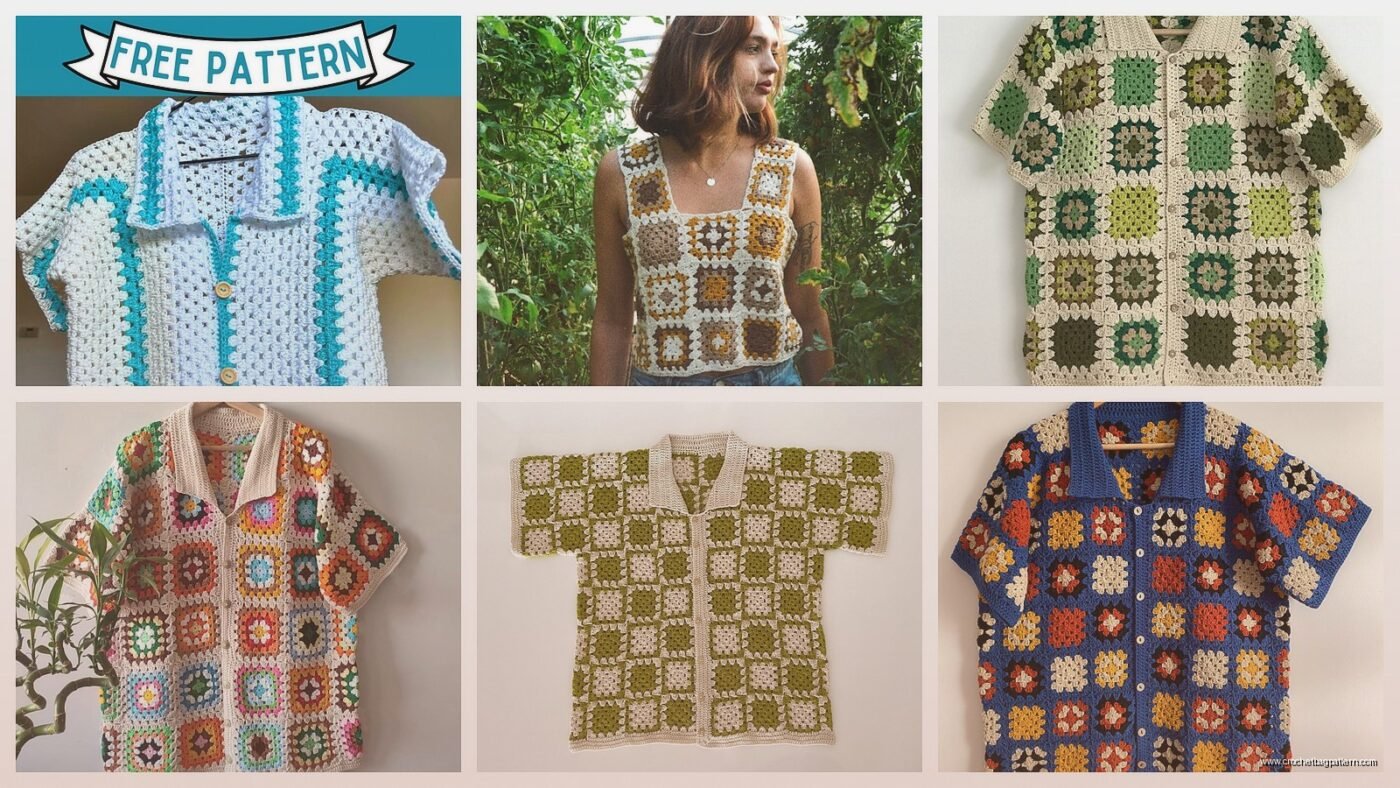
The whole concept is actually way simpler than those fancy pattern sites make it seem. You’re basically making a bunch of granny squares—whatever size you want—and then sewing them together in a shirt shape. That’s it. People act like you need some master plan but you really don’t.
Starting With Your Squares
First thing is deciding your square size. I did 5-inch squares because that seemed manageable and I could actually finish one while watching a single episode of TV. You’re gonna need:
- Worsted weight yarn (I used Red Heart Super Saver in like four colors)
- A 5mm or 5.5mm hook depending on how tight you crochet
- A tapestry needle for weaving in ends which is the worst part honestly
- Scissors
For a basic granny square you chain 4, slip stitch to make a ring. Then chain 3 (counts as first double crochet), work 2 more double crochets into the ring, chain 2, then do 3 double crochets, chain 2, and repeat until you have four corners. That’s your first round.
Each round after that you’re working 3 double crochets in the corner spaces, chaining 2, and doing clusters of 3 double crochets along the sides. I never actually counted how many rounds I did—I just kept going until the square looked about 5 inches.
How Many Squares You Actually Need
This depends on your size obviously but for a medium-ish shirt I made like 24 squares total. That gave me enough for a front panel, back panel, and sleeves. Some people do sleeveless which would be fewer squares but I wanted the full shirt look.

Here’s the annoying part though—you have to block your squares or they won’t line up right when you sew them together. I didn’t do this the first time and everything was warped and weird. Blocking just means getting them damp, pinning them to shape on like a towel or foam board, and letting them dry. Takes forever and my cat kept trying to lay on them.
Laying Out Your Design
Before you sew anything, put all your squares on the floor or bed and arrange them how you want. I took a photo with my phone so I wouldn’t forget the layout. You need:
- Front panel: probably 6-8 squares depending on how wide you want it
- Back panel: same as front
- Sleeves: 4 squares each if you want short sleeves, more if you want—wait actually it depends on your arm size too
The tricky part is the shoulders and neckline. I just left the top middle square off the front to make a neck opening. You can get fancy with shaping but honestly for a first one just keep it simple.
Joining Methods That Don’t Make You Want To Quit
So there’s like fifty ways to join granny squares and everyone has opinions. I tried the whip stitch method first with a tapestry needle and it was fine but slow. Then I learned you can actually crochet them together which is faster.
For the crochet join method you put two squares wrong sides together (so the pretty sides face out) and slip stitch through both loops along the edge. It makes a little ridge on the right side which I actually liked—gave it more texture.
One thing that really annoyed me about the whole process was keeping track of which edges I’d already joined. I’d pick up two squares and be like “wait did I already attach this one?” and have to check my whole shirt. Should’ve used safety pins or something to mark completed sections.
Seaming Order That Makes Sense
Join your front panel squares together first. Then do the back panel. Then connect the shoulder seams. After that attach your sleeve squares and join the underarm and side seams all in one go. If you do it in random order you’ll end up with weird gaps or doubled-up seams.
Dealing With Arm Holes and Sizing
The arm holes are gonna be whatever size your squares make them. If they’re too big you can single crochet around the opening to tighten it up. I added two rows of single crochet around each armhole on mine and it helped a lot.
For the bottom hem and neckline I just did a round of single crochet to clean up the edges. You could do a picot edge or shell stitch if you want it fancier but plain single crochet works fine.
Yarn Choices That Worked and Didn’t Work
Red Heart Super Saver is cheap and comes in a million colors but it’s kinda stiff. For my second attempt I used Caron Simply Soft which was way nicer against skin but also more expensive. There’s also this brand Lion Brand Mandala that has cool color gradients if you want each square to fade through colors automatically.
I tried using some cotton yarn once—I think it was Lily Sugar’n Cream—and it was too heavy. The whole shirt stretched out weird after wearing it once. Stick with acrylic or acrylic blend for clothing unless you want something that’ll need careful washing and blocking every time.
The Actual Wearability Factor
Here’s the thing nobody tells you—granny square shirts have gaps. Like you can see through them. So you gotta wear a tank top or camisole underneath unless you’re very confident or going to a festival or something.
Also they’re warm. All those layers of yarn trap heat so this isn’t really a summer shirt even though it looks breezy. I made mine in spring and could wear it comfortably in like 65-70 degree weather but when it hit 80 degrees in summer 2024 I tried wearing it and was sweating within ten minutes.

Pattern Variations You Can Try
Once you get the basic concept you can mess around with it. Different square sizes mixed together looks cool but makes the math harder. You could do all one color for a minimalist look or go full rainbow.
Some people do a solid yoke (the shoulder area) and then granny squares just for the body. That actually might be smarter because it fits better around the neck but I haven’t tried it yet. There’s also the option of making rectangles instead of squares for the body panels which uses less pieces.
Cropped vs Full Length
My first one came down to my hips because I wasn’t sure where to stop. It looked kinda frumpy honestly. Second time I made it cropped—ending right at my natural waist—and it looked way better. Cropped is more forgiving if your sizing is slightly off too.
Time Investment Reality Check
Making the squares goes pretty fast—I could do one square in maybe 30-40 minutes once I got in a rhythm. But you need like 24+ squares so that’s… a lot of hours. Then blocking them takes a day. Then seaming takes another few hours because you gotta weave in all those ends.
Total I’d say plan for like 20-25 hours of actual work time spread over a week or two. It’s a good project for doing while watching TV but not a weekend thing unless you have no life that weekend.
Fixing Mistakes Without Starting Over
If one square is way bigger or smaller than the others you can add or remove a round to adjust it. If your seams look bad you can cover them with a row of single crochet or even add a ribbon trim.
I sewed one whole sleeve on backwards once and didn’t notice until I tried it on. Had to rip out all those seams and redo it. Check as you go by holding it up to your body every few joins.
Washing and Care
I just throw mine in the washing machine on cold and lay flat to dry. The Red Heart Super Saver one has held up fine through like a dozen washes. The Caron Simply Soft one got a little pilly but still looks okay.
Don’t put it in the dryer unless you want a shirt that fits a toddler. Acrylic can handle machine washing but heat will shrink it weird.
