
Feb
Just Start With a Simple Stitch You Already Know
Okay so the thing about making a giant blanket is you don’t need some fancy complicated pattern. I made this huge one back in winter 2023 when I was basically living on my couch watching true crime documentaries, and I just used double crochet the entire time. Like literally the whole blanket. People get intimidated by the word “afghan” like it has to be this heirloom thing with seventeen different stitches, but you can just pick one stitch and go with it.
The size is what makes it giant, not the pattern complexity. I used a 10mm hook and that bulky Bernat Blanket yarn in the dark gray color—I think I went through like eight skeins? Maybe nine. I honestly lost count because I kept running to Michael’s every few days.
Picking Your Yarn Situation
You’re gonna want super bulky weight yarn (that’s a 6 on those little number systems they put on labels). This is what actually makes it work up fast and look chunky. I’ve used:
- Bernat Blanket (the chenille one that’s really soft but sheds everywhere)
- Lion Brand Thick and Quick
- Hobby Lobby’s Yarn Bee Eternal Bliss which was actually pretty decent
- Some random Red Heart thing that was on sale
The Bernat stuff feels amazing but here’s what annoyed me SO much—it splits constantly. Like you’re going along fine and then your hook just decides to go through the middle of the yarn instead of under the loops and you have to back up and fix it. This happened probably every fourth row and I wanted to throw the whole project across the room multiple times.
How Much Yarn Though
For a blanket that’s actually big enough to cover a couch or a bed, you need way more than you think. A throw size (like 50×60 inches) takes about 8-10 skeins of the bulky stuff. If you want it to actually cover a queen bed you’re looking at 15+ skeins easy. Just buy extra. You can always return it or make a matching pillow or whatever.
The Actual Process
Chain until it’s as wide as you want the blanket. I usually do like 60-70 chains for a good couch blanket width. Don’t chain too tight because your edges will pull in and look weird.
Then just:
- Row 1: Double crochet in the fourth chain from your hook, then dc in each chain across
- Chain 3, turn
- Double crochet in each stitch across
- Repeat step 2 and 3 until you run out of yarn or patience
That’s it. That’s the whole pattern. The chain 3 at the beginning counts as your first stitch.
Tension Is Gonna Be Weird
Your tension is probably gonna change as you go and that’s fine. Like I started out crocheting really tight because I always do that when I’m stressed, and then the middle section got looser, and then I don’t know I guess I tightened up again toward the end. You can see it if you look close but nobody else notices. My cat definitely doesn’t care when she’s sleeping on it.
Joining New Yarn
When you run out of a skein, just start the new one at the beginning of a row if you can. Leave like 6 inch tails on both the old and new yarn, tie them in a basic knot, and weave the ends in later. Some people do this invisible join thing but I’ve never bothered to learn it properly.
I usually weave ends in as I go every few skeins because doing like 20 ends all at once at the finish is actual torture.
Other Stitches That Work
If you’re bored of double crochet (fair), half double crochet makes a denser, heavier blanket. Single crochet takes forever but it’s really sturdy. I tried doing a moss stitch one time which is just alternating single crochet and chain 1, and it looked cool but took way longer than I wanted to commit to.
There’s also the corner to corner method where you start in one corner and work diagonally, increasing then decreasing. I watched someone do this at a coffee shop once and it looked interesting but I haven’t tried it myself because—actually I started one and got like ten rows in and then forgot where I put it.
Granny Square Giant Blankets
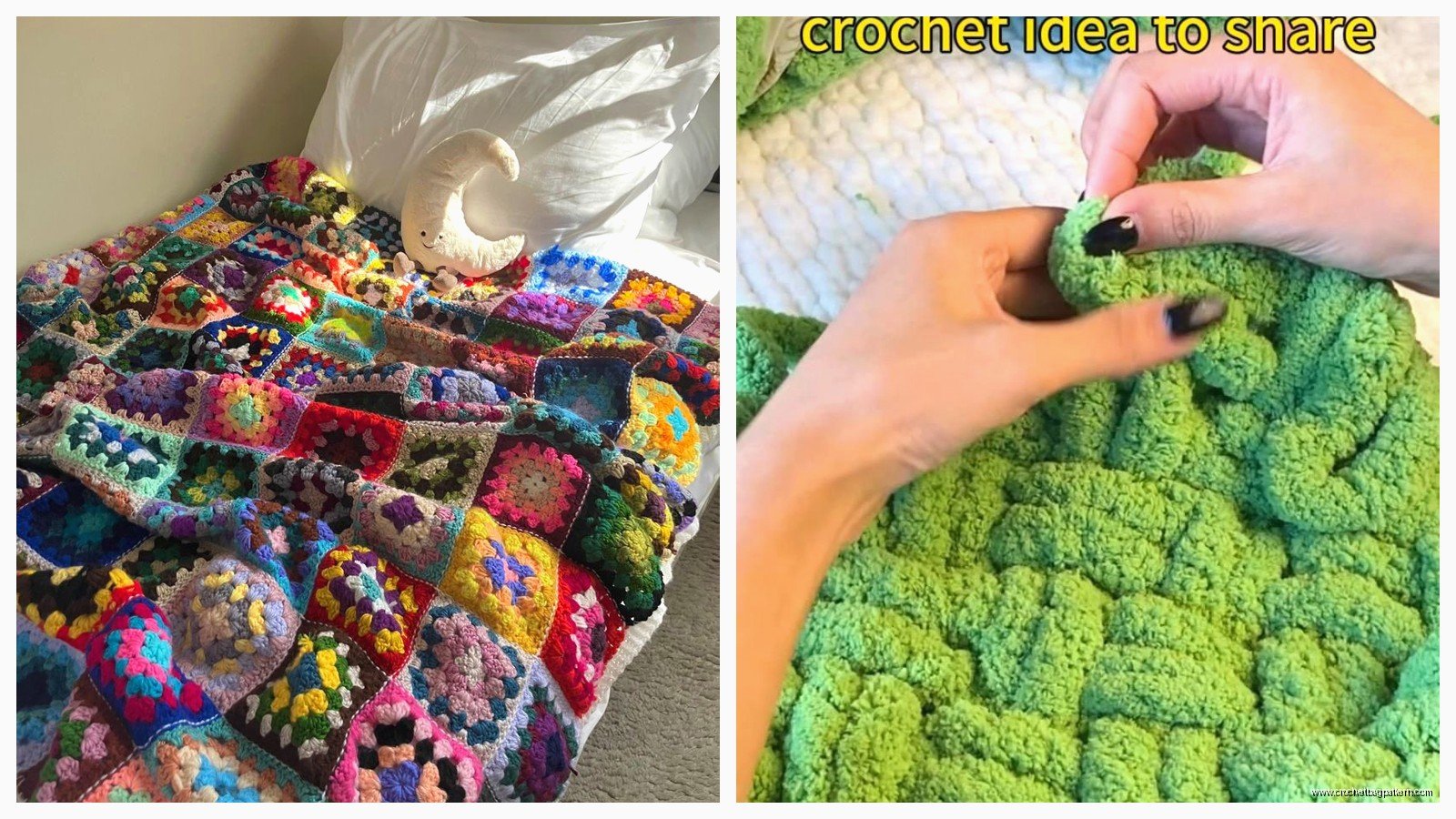
You can also make a giant blanket out of a bunch of granny squares joined together. This is nice because you can work on small portable pieces, but then you gotta join them all which is its own thing. I made one with like 30 squares once using Caron One Pound in different colors. The joining part took almost as long as making the squares.
For joining squares you can either:
- Whip stitch them together with a yarn needle
- Single crochet them together
- Do some kind of flat join as you go situation
I usually just whip stitch because it’s mindless and I can do it while watching TV.
The Border Question
Borders are optional but they do make it look more finished. A simple single crochet border around the whole thing helps keep the edges from curling. I usually do 2-3 rounds of single crochet.
In the corners, do 3 single crochets in the same stitch so it lays flat and doesn’t bunch up.
Washing These Things
Check your yarn label but most acrylic bulky yarn can go in the washing machine on gentle. I wash mine in cold water and then either lay it flat to dry or put it in the dryer on low. That Bernat Blanket yarn gets SO much softer after the first wash but it also sheds like crazy in the dryer so clean your lint trap.
Time Investment
A basic giant blanket in all double crochet with bulky yarn takes me maybe 15-20 hours total? I can knock out like 10-15 rows in an evening if I’m really going. The one I made in 2023 took about two weeks but I was crocheting like every single night because I needed something to do with my hands.
Variations If You Want Them
Stripes are easy—just change colors every few rows. You can carry the yarn up the side if you’re doing thin stripes (like every 2 rows) or cut it and weave in ends if you’re doing wider stripes.
Color blocking looks cool too. Like do a third of the blanket in one color, a third in another, whatever.
You can also do a planned pooling thing if you use variegated yarn but that requires actual planning and counting and I’ve never had the patience for it.
Hook Size Matters
The yarn label will tell you what hook size to use but you can go up a size or two if you want it more drapey and loose. I usually use a 10mm or 12mm hook for bulky yarn. Bigger hook = faster progress but looser fabric. Smaller hook = denser blanket but takes longer.
My hands start hurting if I crochet for too long with the giant hooks so I take breaks.
Common Problems
Your stitch count is gonna drift if you’re not careful. Like you’ll somehow gain or lose stitches without noticing. Count your stitches at the end of each row for the first few rows until you get in a rhythm. After that just eyeball it—if it starts looking wider or narrower you messed up somewhere.
Edges curling in means your tension is too tight. Edges flaring out means too loose.
If your blanket is twisting or not laying flat you might be turning the wrong direction or your foundation chain was twisted.
Is It Worth It
Giant blankets use a lot of yarn so they’re not cheap. Like you’re gonna spend $60-80 on yarn minimum, probably closer to $100 if you want nice yarn or a really big blanket. But it works up so much faster than using regular weight yarn that it’s actually satisfying? Like you can see progress every day instead of working on something for months.
The one I made during that weird winter is still the blanket I use most. It’s heavy and warm and basic but it does the job.
