
May
Bobble Stitch
So bobble stitch is like when you want those little puff balls all over your project and it’s actually way easier than it looks. I made this blanket in summer 2022 while binging Stranger Things season 4 and honestly the bobbles were perfect for mindless TV watching because once you get the rhythm you don’t really need to think.
Basically you’re gonna work multiple stitches into the same space but you don’t complete them all the way. Like you do a yarn over, insert hook, pull up a loop, yarn over and pull through two loops—but stop there. That’s one incomplete double crochet. Then you do that like 4 or 5 more times in the same stitch, so you’ve got all these loops hanging out on your hook. Then you yarn over and pull through ALL of them at once and it creates this little bubble that pops out from your work.
The annoying part is that your tension has to be consistent or some bobbles look sad and deflated while others are like aggressive little bumps. I used Red Heart Super Saver in that Tea Leaf color and it showed every mistake because it’s not a forgiving yarn at all.
How to Actually Do It
Chain your foundation whatever length. For the first row just do regular double crochet so you have something to work into. Then on the next row, this is where you add bobbles. Work a few regular double crochets, then when you want a bobble: yarn over, insert into stitch, pull up loop, yarn over and through 2 (so you’ve got 2 loops on hook). Do that same thing 4 more times in that same stitch. Now you should have 6 loops on your hook. Yarn over and pull through all 6. Chain 1 to close it off.
You can space them however—every other stitch, every third stitch, make a pattern or just random. I did mine in a diagonal line pattern which looked cool but also I got bored halfway through and just started putting them wherever.
Crocodile Stitch
Okay this one looks SO complicated when you see it but it’s really just working around posts of stitches and layering them. I learned this in spring 2024 when I was making a mermaid tail blanket for my niece and wanted scales.
You need to start with a row of double crochets, but you work them in groups. Like do 2 dc, skip 2 stitches, 2 dc, skip 2 stitches—across the whole row. Those pairs of double crochets are what you’re gonna work around to make the scales.
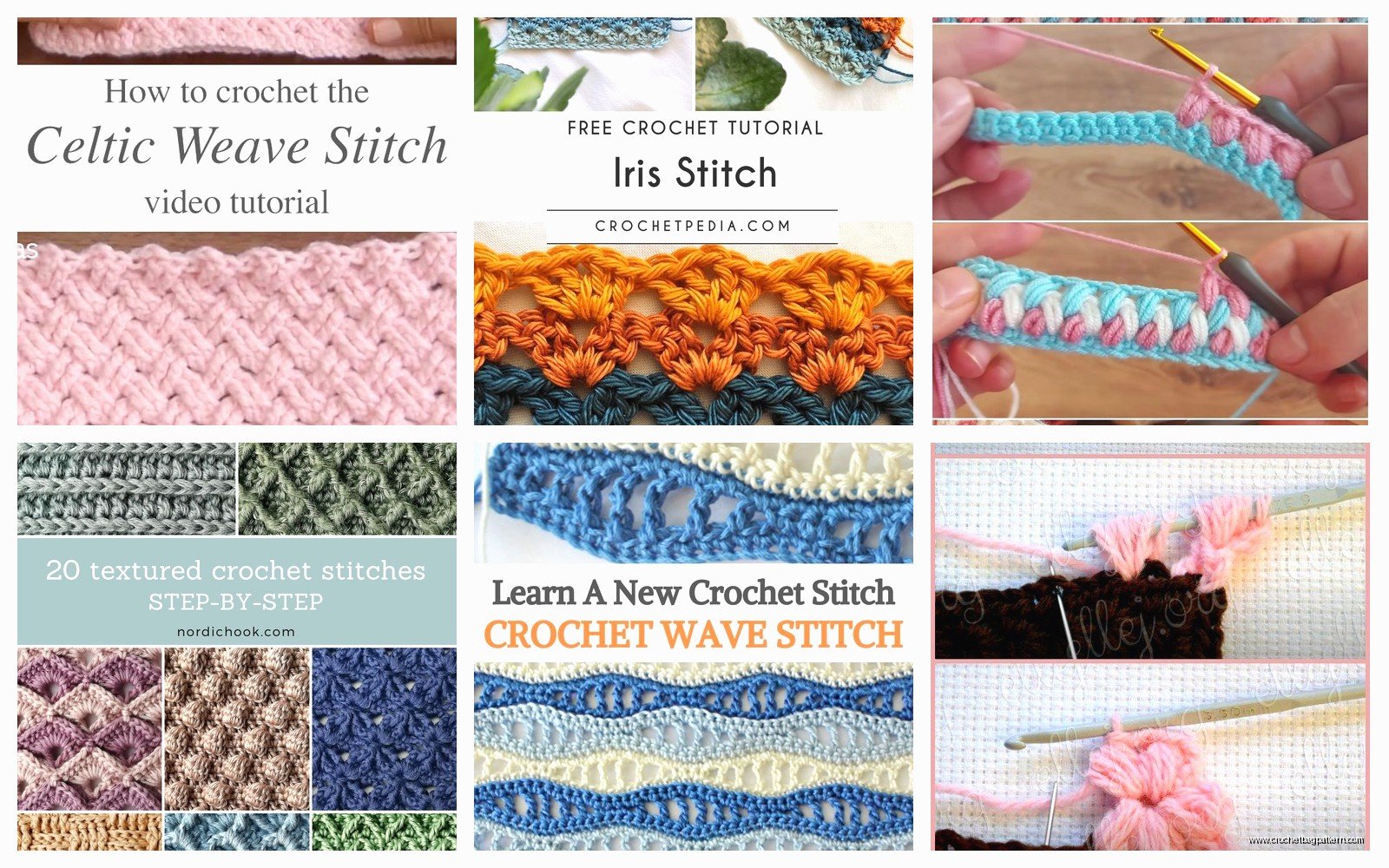
Turn your work and here’s the weird part: you’re working around the posts of those double crochets instead of into the top loops. Start with the second pair from your hook. Work 5 double crochets around the post of the first dc in that pair, going from top to bottom. Then work 5 double crochets around the post of the second dc in that pair, but this time you’re going from bottom to top. That makes one scale.
Skip the next pair and repeat on the pair after that. When you finish the row, chain and turn, then work into the spaces you skipped before. It creates this overlapping scale effect that’s really dimensional.
I used Caron Simply Soft in that Oceana color or maybe it was Ocean—whatever the teal blue one is. The thing that annoyed me was that my cat kept attacking the working yarn and I had to restart one scale like three times because she pulled it loose.
Waistcoat Stitch
This is my go-to when I want something that looks knitted but I don’t wanna actually knit. It’s also called the knit stitch which is confusing but whatever.
You’re basically working single crochet but instead of going under both loops or even just one loop, you insert your hook through the V of the stitch below. Like if you look at a single crochet from the side it makes a V shape—you put your hook through the center of that V instead of under the loops on top.
Foundation chain whatever, then sc across for your first row. Starting on row 2 is when you do the waistcoat thing. Look at each stitch and find that V, insert hook through it, pull up a loop, yarn over and pull through both loops. That’s it. Just keep doing that.
The fabric comes out really dense and smooth with no gaps, kind of stretchy too. I made a scarf with this in winter 2023 using Wool-Ease in Fisherman (the cream color) and it was actually warm unlike some crochet scarves that are basically just decorative holes.
One thing though—it eats up yarn like crazy because of how dense it is. I ran out halfway through and had to order more which delayed everything by like a week because shipping.
Puff Stitch
Similar idea to bobbles but softer and more… puffy I guess? You’re pulling up long loops instead of working incomplete stitches.
Yarn over, insert hook, pull up a loop but pull it up long like half an inch or so. Yarn over, insert in the same space, pull up another long loop. Do that 3-5 times depending on how puffy you want it. Then yarn over and pull through all the loops on your hook. Sometimes you chain 1 to close it, sometimes you don’t—depends on the pattern or just what feels right.
I made a baby blanket with puff stitches in spring 2022 during a really bad breakup and honestly just the repetitive motion was… anyway it was Bernat Baby Blanket yarn in that Seafoam Green color, super soft and the puffs looked like little clouds.
The annoying thing with puff stitch is keeping all those loops the same length. If one is shorter it gets lost in the puff and if one is longer it sticks out weird. You kinda gotta hold them with your finger while you work or they’ll tighten up on you.
Spike Stitch
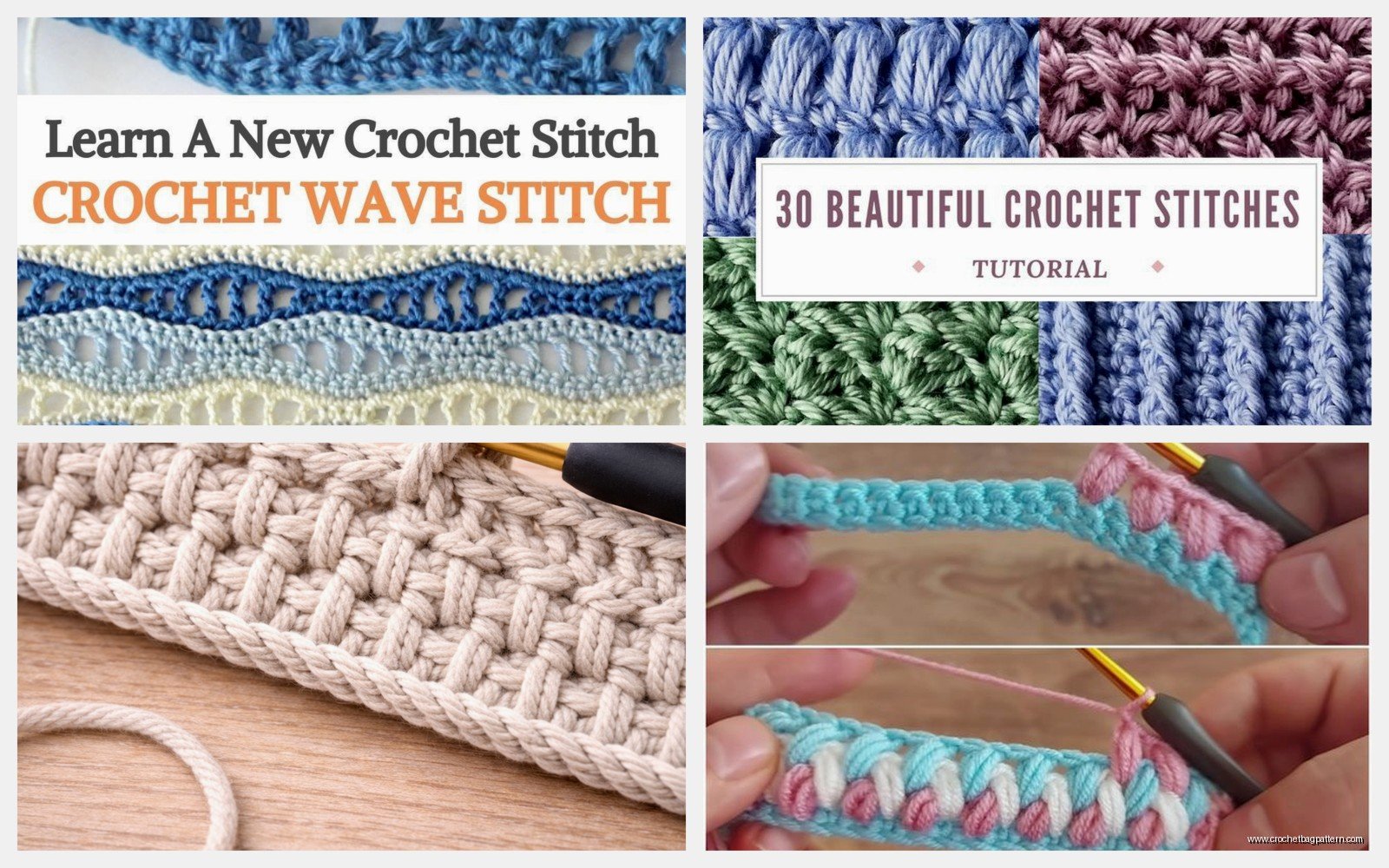
This is when you insert your hook into a row below the one you’re working on to create these long vertical stitches that “spike” through the fabric. Creates cool color patterns if you’re using multiple colors.
Work a few rows of regular single crochet first. Then when you want a spike, instead of working into the current row, insert your hook into a stitch one or two rows below. Pull up a loop—it’ll be longer than normal—then complete the single crochet like usual. The long stitch creates a vertical line through your work.
You can do single spikes randomly, or work whole rows where every stitch is a spike into the row below, or make patterns with them. I did this chevron thing once where the spikes created diagonal lines and it looked way more complicated than it was.
Used Lion Brand Vanna’s Choice in like three different colors—I think Mustard, Terracotta, and Cream? The color changes made the spikes really obvious which was the whole point.
Cluster Stitch
Opposite of bobbles kind of—instead of multiple stitches worked into one space, you’re working multiple stitches that all join together at the top into one stitch. Makes the fabric pull in and creates texture.
Start with a yarn over like you’re making a double crochet. Insert hook into the first stitch, pull up a loop, yarn over and pull through 2 loops. Stop there with 2 loops still on your hook. Do another incomplete dc in the next stitch, so now you’ve got 3 loops. Do one more incomplete dc in the third stitch—4 loops on hook. Then yarn over and pull through all 4 loops at once.
That’s a 3-dc cluster because it uses 3 stitches. You can make them bigger with more stitches or smaller with fewer, and you can use different stitch heights too like triple crochet clusters or whatever.
Made a market bag with these in summer 2024 and the clusters created this cool netted effect that stretched to hold stuff but looked structured when empty. Can’t remember what yarn though, something from my stash that was cotton or maybe—no it was definitely the Lily Sugar’n Cream in Hot Green.
Spacing Matters
When you’re working clusters you usually chain between them or they just become a blob. Like cluster, chain 2, skip a stitch, cluster, chain 2, skip a stitch. The chains create space so you can actually see each cluster as its own thing.
Popcorn Stitch
These are like aggressive bobbles that really pop out from your work. Work 4 or 5 complete double crochets into the same stitch. Take your hook out of the working loop—don’t worry it won’t unravel if you’re careful. Insert your hook into the top of the first dc you made in that group, then grab that working loop you dropped and pull it through. This folds all those stitches together and makes them pop forward.
Chain 1 to secure it and move on. The popcorns are really dimensional, like they stick out a lot more than bobbles do.
I put popcorns on a pillow cover once and it was a mistake because they’re not comfortable to lean against at all. Looked cool though. That was Red Heart With Love in Pewter—grey basically.
What annoyed me about popcorns is that dropping the loop and picking it back up breaks your rhythm. You get into this flow with crochet and then you gotta stop and do this fiddly thing with the hook and it’s just… but the texture is worth it I guess.
Front Post and Back Post Stitches
These aren’t really their own stitch but a way of working regular stitches to create texture. Instead of going under the loops at the top of a stitch, you work around the post (the vertical part) of the stitch.
Front post: yarn over, insert hook from front to back to front again around the post of the stitch, complete the dc normally. This makes the stitch push forward.
Back post: yarn over, insert hook from back to front to back again around the post, complete the dc. This makes the stitch recede.
You can do this with any stitch height but double crochet is most common. Alternating front post and back post creates ribbing that looks knitted. All front post makes ridges. You can make cables and braids and all sorts of stuff.
Made a hat with front post/back post ribbing in fall 2023 using Wool-Ease Thick & Quick in Wheat—it was actually stretchy enough to fit different head sizes which regular crochet usually isn’t.
Shell Stitch
Work multiple stitches into the same space but you complete them all, and they fan out to create a shell shape. Usually it’s like 5 double crochets into one stitch or space.
The basic pattern is: work a shell (5 dc in one stitch), skip a few stitches, single crochet, skip a few stitches, shell. This creates a scalloped edge effect that’s really pretty and classic looking.
You can stack shells on top of each other by working the next row’s shells into the middle stitch of the previous row’s shells, or offset them by working into the spaces between shells. Different arrangements create totally different looks.
I use shells a lot for blanket borders because they’re fancier than just a regular edge but not complicated. Last one I did was on a granny square blanket using Caron One Pound in Cream—needed something that would work up fast because I’d already spent forever on the squares themselves.
V-Stitch
Super simple—just a double crochet, chain 1, double crochet, all worked into the same stitch or space. Makes a V shape obviously.
The cool thing about V-stitch is that it works up fast because you’re skipping stitches between the Vs, but it still creates a nice fabric with some texture and visual interest. And the little chain space in the middle is perfect for working the next row’s V into, so it stacks in a really satisfying way.
Made a shawl with V-stitch in spring 2024 that actually turned out nice even though I was just using up leftover yarn. It was a bunch of different colors of Red Heart Super Saver—I know people hate on that yarn but it’s cheap and it works and it lasts forever. The color changes looked intentional with the V-stitch pattern even though I was literally just using whatever I had.
Nothing really annoyed me about V-stitch, it’s pretty straightforward and forgiving. I guess if you lose count of your chains between stitches it can get wonky but that’s true of anything.
Moss Stitch
Alternating single crochet and chain 1 across the row, then on the next row you single crochet into the chain spaces and chain over the single crochets. Creates this nice textured fabric that’s not too dense, has some drape to it.
Chain an even number, sc in 2nd chain from hook, chain 1, skip a chain, sc in next chain, chain 1, skip a chain—across the whole row. Next row: sc in the chain space, chain 1, sc in next chain space, chain 1. Just keep alternating.
The fabric has a nice hand to it, not stiff at all. I used this for a… what was I making… I think a bag or maybe a dishcloth? No wait it was a washcloth in that Sugar’n Cream cotton in Jute or something neutral like that. Works good for stuff that needs to be absorbent because the chain spaces let water through.
It’s one of those stitches that looks more complicated than it is, which is good when you want people to think you’re skilled but you don’t actually want to do complicated work.
