
May
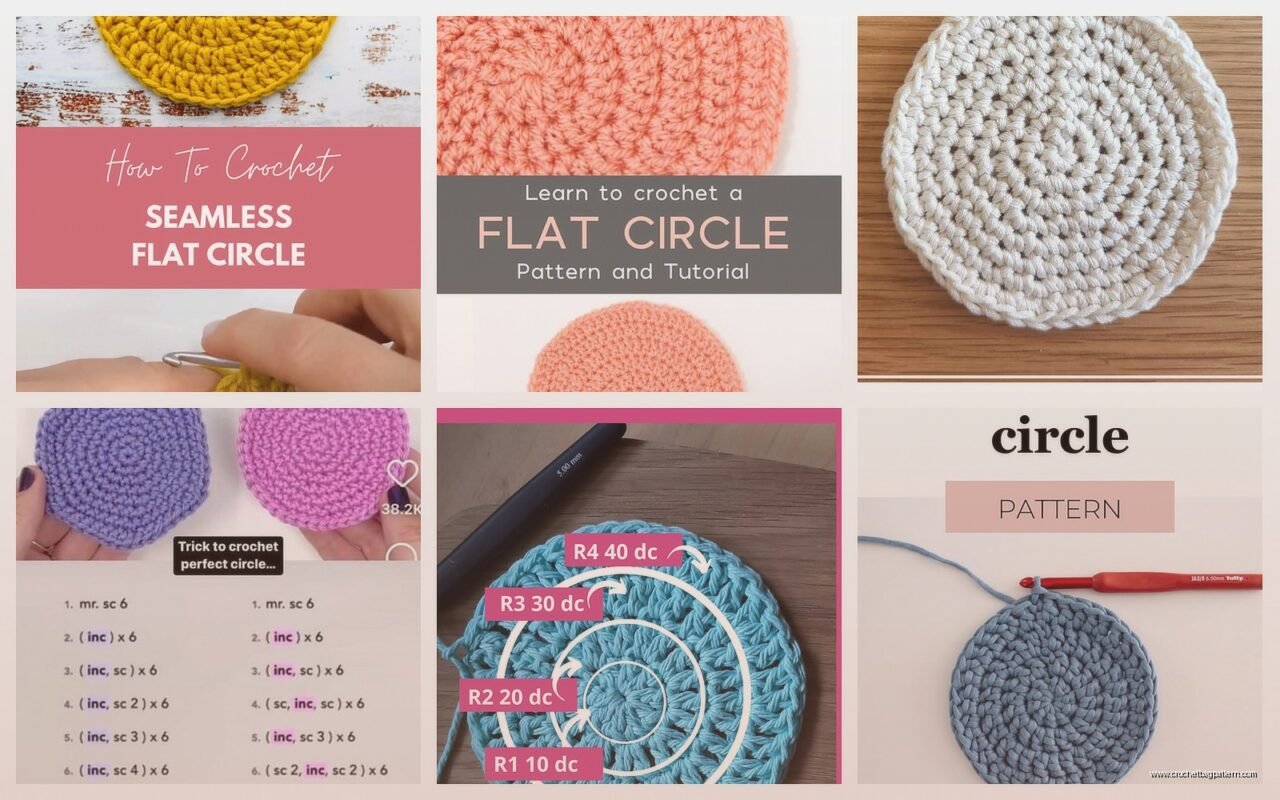
So you want to make a flat circle that actually stays flat
Okay so the main thing with crochet circles is they’re either gonna ruffle up like some weird lettuce situation or they’re gonna cup inward and turn into a bowl. I was making coasters last summer—August 2024 I think, it was ridiculously hot and my apartment doesn’t have AC—and the first three attempts literally would not lay flat no matter what I did. Super annoying.
The basic concept is you’re increasing stitches in a specific pattern. Start with a magic ring because slip knot circles are honestly terrible and leave that hole in the middle. If you don’t know magic ring just youtube it real quick, it’s one of those things that’s impossible to explain in text but makes sense when you see it.
The actual pattern formula
Round 1: Make 6 single crochet into the magic ring. Pull it tight. Some people do 8 or 12 but 6 is the standard and works for most yarn weights.
Round 2: Increase in every stitch. So you’ll have 12 stitches total.
Round 3: This is where people mess up. You do *1 sc, increase* around. That gives you 18 stitches.
Round 4: *2 sc, increase* around. 24 stitches.
Round 5: *3 sc, increase* around. 30 stitches.
See the pattern? Each round you’re adding one more single crochet between increases. Round 6 would be *4 sc, inc* and so on. The number of stitches increases by 6 each round when you start with 6 stitches in round 1.
The thing that actually matters
Gauge is everything here and nobody wants to hear it but it’s true. I was using Red Heart Super Saver for those coasters—the Shocking Pink color because I was going through a phase—and my tension was all over the place. When you crochet too tight, the circle cups. Too loose, it ruffles. It’s this annoying balance you gotta find.
What helped me was checking after every round. Like actually put it down on the table and look at it. Is it laying completely flat? If the edges are lifting up even a tiny bit, your increases are too frequent or your stitches are too loose. If it’s curling up in the middle like a sad taco, you need more increases or looser tension.
When the standard formula doesn’t work
Here’s what nobody tells you—that 6-stitch increase per round thing works for worsted weight yarn with a appropriately sized hook. I usually use a 5mm hook with worsted weight. But if you’re using chunky yarn or like… I tried making one with Bernat Blanket yarn once and the standard pattern made this ruffly mess. With bulky or chunky yarn you might need to do fewer increases.
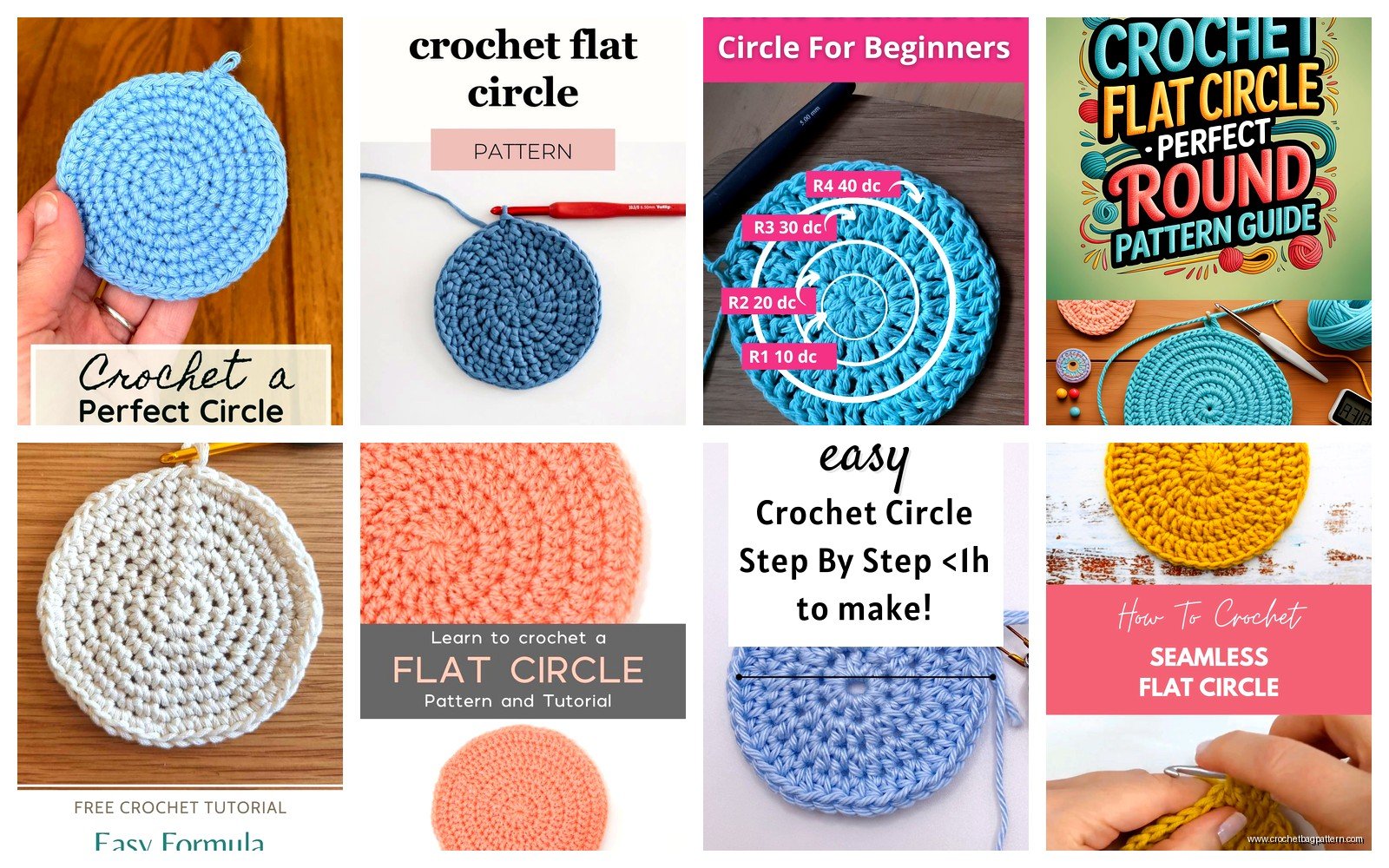
For chunky yarn I’ve had better luck starting with 8 stitches in the magic ring and increasing by 8 each round instead of 6. The math is the same concept, just scaled up. My cat kept trying to steal the yarn ball during this project which didn’t help.
For thin yarn like fingering weight or thread, sometimes you need MORE increases. I made a doily-ish thing with some Aunt Lydia’s crochet thread and had to start with 12 stitches in round 1, increasing by 12 each round.
The spiral vs joined rounds debate
You can work in a continuous spiral or join each round with a slip stitch. I usually do continuous spiral because I’m lazy and don’t want to deal with all those joins. But it creates this slight jog where the rounds spiral up. If that bothers you visually, join each round—slip stitch to first stitch, chain 1, start next round.
For joined rounds the formula is: slip stitch to first sc, chain 1 (doesn’t count as a stitch), then do your increases for that round, slip stitch to join. The chain 1 at the beginning doesn’t count as a stitch which trips people up sometimes.
Use a stitch marker either way. Those little plastic clips or even just a piece of different colored yarn. Mark your first stitch of each round or you’ll lose track and end up with weird stitch counts.
Troubleshooting the weird shapes
If your circle is ruffling: You’re increasing too much. Either skip a round of increases (like just do straight sc for one round) or check if you’re accidentally adding increases where they shouldn’t be. This happened to me constantly when I was watching The Bear season 2 and not paying attention—I’d just autopilot increase in random spots.
If it’s cupping: Not enough increases. Add an extra increase round or check your tension. Sometimes when I’m stressed I crochet really tight without noticing and everything cups inward. During that whole coaster situation in August I finally figured out I was pulling my working yarn too hard.
If it’s wonky and uneven: Your stitch tension is inconsistent. This is the most annoying problem because the only fix is practice and paying attention. Some stitches are tighter than others. I still struggle with this honestly, especially the first few stitches after an increase—they tend to be tighter for me.
Blocking fixes a lot of problems
If your circle is slightly off, blocking can save it. Get it wet, pin it flat to a blocking board or even just a towel on cardboard, let it dry completely. The yarn relaxes and evens out. I use Wool-Ease sometimes (the Fisherman color is nice) and it blocks really well. Acrylic yarn like that Red Heart doesn’t block quite as dramatically but it still helps.
You can also steam block acrylic but be careful—too much heat and you’ll melt it into a weird plasticky thing. Hover the iron or steamer above it, don’t actually touch the yarn.
Different stitches create different effects
This whole guide is about single crochet circles but you can use the same increase concept with other stitches. Half double crochet circles need more increases—usually starting with 8-10 stitches and increasing by 8-10 each round. The taller the stitch, the more increases you need to keep it flat.
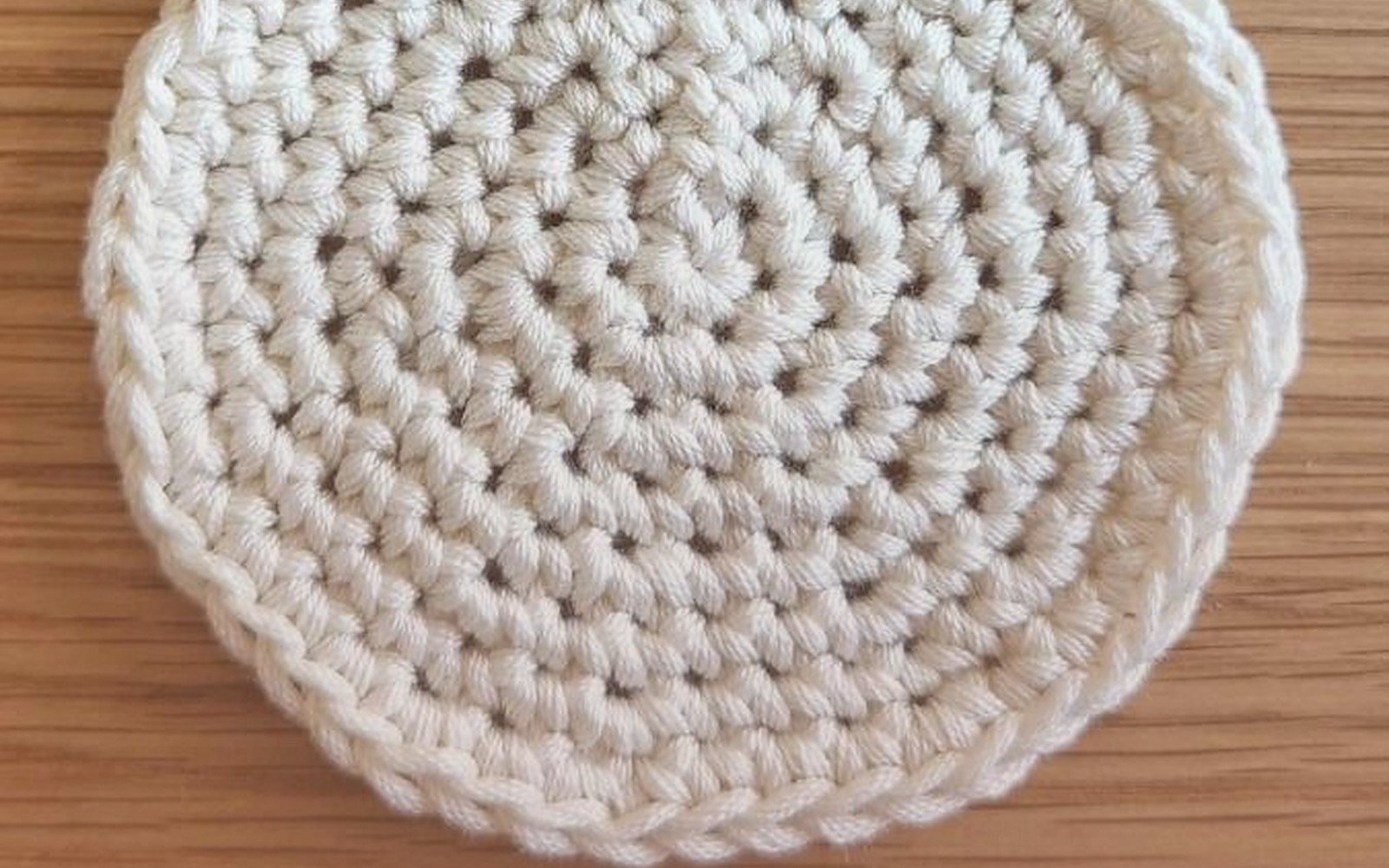
Double crochet circles are kinda tricky. Start with 12 dc in the magic ring, increase by 12 each round. But honestly dc circles are more prone to getting wonky because the stitches are so tall. I usually stick with sc or hdc for circles.
I tried making granny square circles once—they’re called granny rounds I guess—and those have their own pattern with clusters of dc separated by chains. Different concept entirely but also creates a flat circle shape.
Counting is important even though it’s boring
Count your stitches at the end of each round. I know it’s tedious but you’ll save yourself so much frustration. If you’re supposed to have 24 stitches and you count 25, you added an extra increase somewhere. If you only have 23, you skipped a stitch.
When I don’t count, I always end up with these slightly oval shapes instead of circles. It’s because I’m subconsciously adding or skipping stitches without noticing. The stitch count should increase by the same amount every round—that’s what keeps the circle symmetrical.
Real world applications and when to stop increasing
For coasters, I usually do about 8-10 rounds depending on yarn weight. That gives you roughly a 4-inch circle with worsted weight.
For placemats, keep going to 15-20 rounds. You’ll end up with something like 90-120 stitches in the final round.
For rugs or large projects… honestly I haven’t made a full rug yet because my hands would fall off from all the increases. But theoretically you just keep following the pattern until it’s the size you want.
When you reach your desired size, you can either bind off or stop increasing and work even rounds to create a shallow bowl shape. That’s useful for baskets or containers.
The yarn choice matters more than you think
Cotton yarn makes the stiffest circles—good for coasters or trivets that need to hold their shape. I used Lily Sugar’n Cream for dishcloths and they stay perfectly flat even after washing. The Hot Green color is surprisingly nice.
Acrylic is the most forgiving for beginners because it’s stretchy and hides tension issues better. But it also doesn’t block as well and can look kinda cheap depending on the brand.
Wool or wool blend has the best stitch definition and blocks beautifully but it’s more expensive. I save it for projects that actually matter.
The one thing that drove me absolutely crazy during those August coasters was the yarn splitting. Red Heart Super Saver splits constantly and my hook would catch individual plies instead of going through the whole stitch. I had to slow down so much and really watch where my hook was going or I’d end up with these weird split stitches that looked terrible.
Hook size experimentation
The yarn label tells you what hook size to use but sometimes going up or down a size helps with the flat circle issue. If your circle keeps cupping with the recommended hook, try going up half a size or a full size. Looser stitches mean the increases spread out more.
If it’s ruffling, try a smaller hook. Tighter stitches compress the increases.
I usually start with the recommended size and adjust after round 5 or 6 if I can see it’s not working. You can even change hook sizes mid-project—nobody will know and it doesn’t really affect the finished look that much.
Alternatives to the magic ring start
If magic ring makes you want to throw your project across the room (valid), you can chain 4 and join with slip stitch to form a ring. Then work your first round into the center of that ring. It leaves a bigger hole in the middle but some people prefer it.
Or chain 2 and work all your first round stitches into the second chain from hook. That’s actually how I learned originally before I knew magic ring existed. It works fine, just not as adjustable.
When perfectionism is the enemy
Look, most of my circles are like 85% round and that’s fine. Unless you’re making something that needs to be precisely circular—like I don’t know, a geometric wall hanging or something—slight wonkiness doesn’t matter. Coasters don’t need to be perfect circles. Neither do the bases of baskets or amigurumi bottoms.
I spent way too much time in August frogging and restarting those coasters trying to get them exactly right. Eventually I realized nobody who puts their coffee cup on a coaster is examining whether it’s a perfect geometric circle. They just want something to catch condensation.
The increased formula works. Count your stitches. Check if it lays flat every few rounds. Adjust tension or hook size if needed. That’s really all there is to it even though I just wrote like a million words about circles.
