
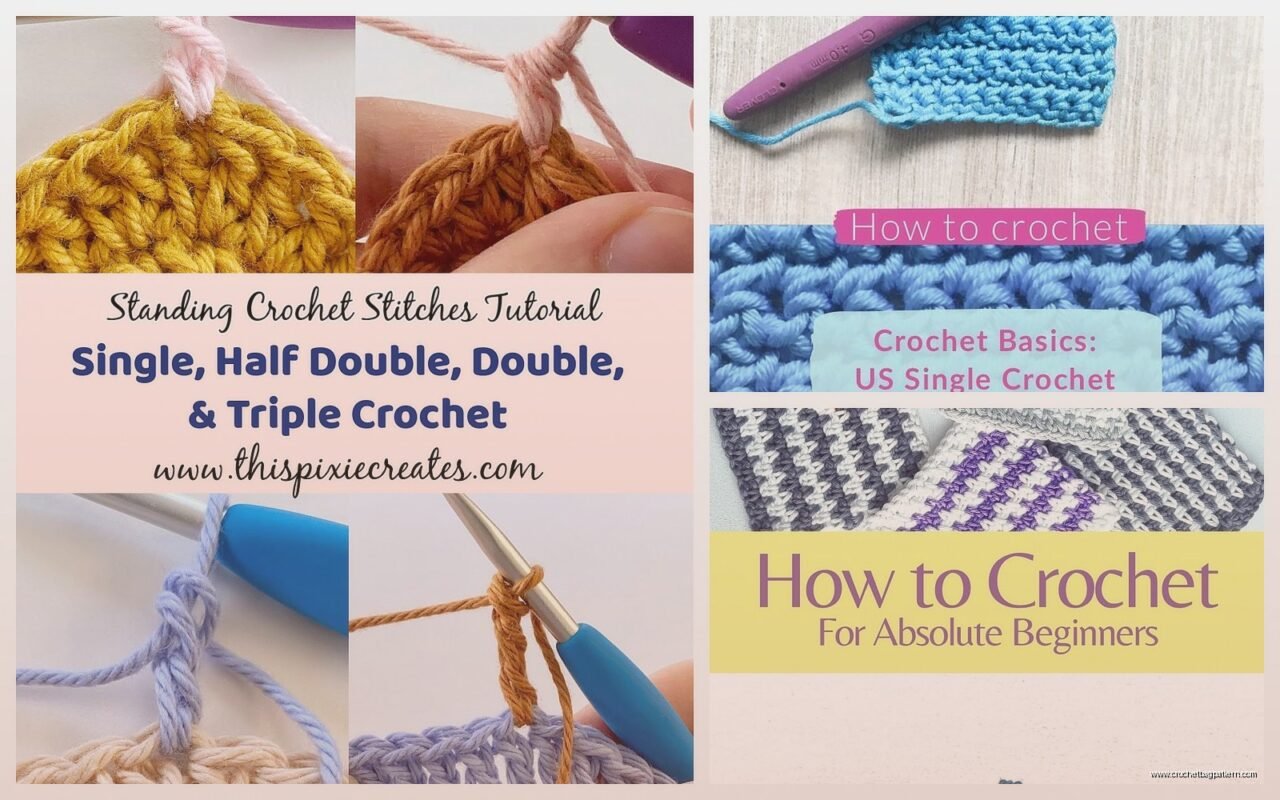
Apr
Right so the single crochet in UK terms which is actually double crochet
Okay so first thing you gotta know is that what Americans call single crochet is what we call double crochet in the UK and this confused the hell out of me for like two years because I kept looking at patterns online and nothing made sense. I made this massive blanket back in spring 2022 using literally just this stitch and some Stylecraft Special DK in like eight different colors and honestly it’s still on my couch right now.
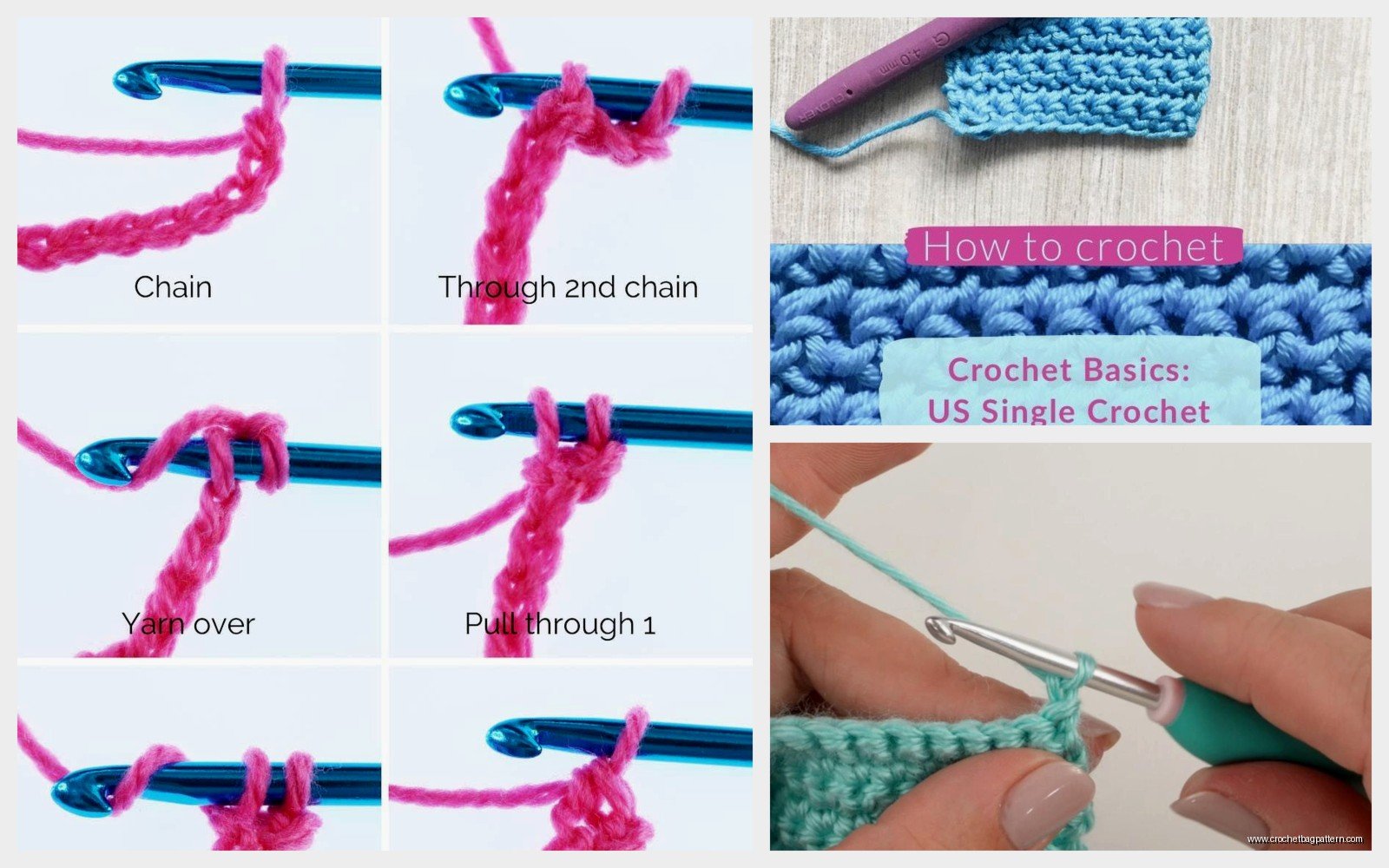
The basic motion is you insert your hook into the stitch, yarn over, pull through so you’ve got two loops on your hook, then yarn over again and pull through both loops. That’s it. That’s the whole stitch. But obviously there’s more to actually explain because if you’ve never done it before that sounds like gibberish.
Getting started with your foundation chain
You need a foundation chain first. Make a slip knot on your hook and then chain however many stitches you want your project to be wide. For practice just do like 20 chains or something. The annoying thing about foundation chains is they’re always either too tight or too loose and it affects everything else you do after. I tend to make mine too tight which means when I try to work into them for the first row it’s like trying to stab through concrete.
So you’ve got your chain. Now you’re gonna work your first double crochet into the second chain from your hook. Not the first one, the second one. That first chain you skip counts as… well it doesn’t really count as anything useful honestly but that’s just how it works. Some people say it counts as a turning chain but for double crochet I don’t even bother with turning chains most of the time.
Actually making the stitch
Insert your hook under both loops of that second chain. You’ll see the chain has like a V shape on top and a bump at the back. Most people go under both strands of the V. Push your hook through, yarn over by wrapping the yarn over your hook from back to front, then pull that wrapped yarn back through the chain stitch. Now you’ve got two loops sitting on your hook.
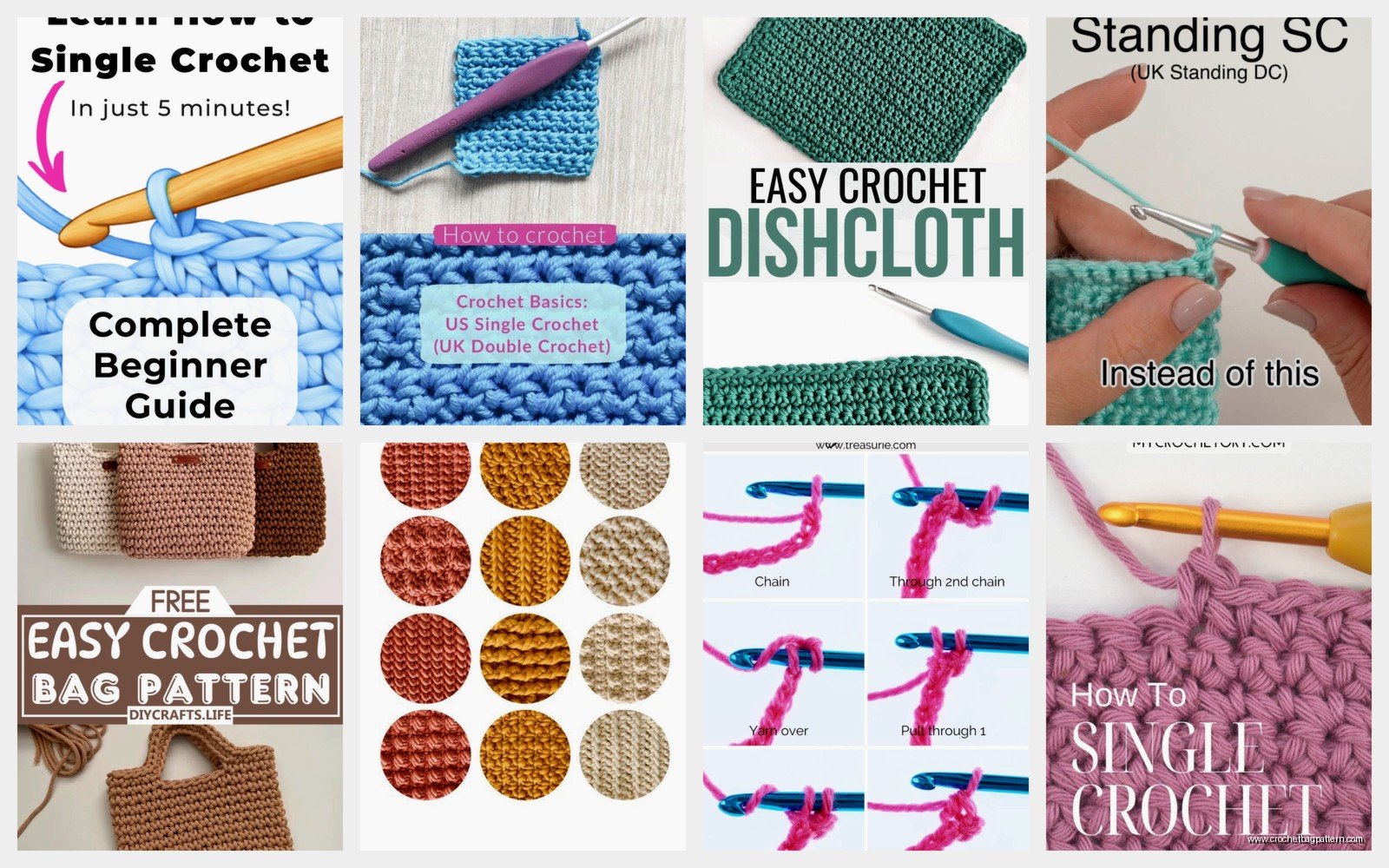
Yarn over again. Pull through BOTH loops at once. You should hear a little pop sound when you do it right or maybe that’s just me because I crochet too tight. Anyway now you’ve got one loop left on your hook and you just made your first double crochet.
Keep going across that foundation chain, one double crochet in each chain stitch. When you get to the end you’ll have this row of stitches that probably looks a bit wonky if you’re just starting out. That’s fine. My first attempts looked like a drunk caterpillar.
Turning and working back
So now you’re at the end of your row and you need to turn your work to go back the other direction. Just flip the whole thing over like you’re turning a page in a book. Some patterns tell you to chain one or two stitches before you start the next row but honestly for double crochet I just start working into the first stitch immediately.
Here’s where it gets slightly confusing – you need to identify where to put your hook. Each double crochet you made has two loops at the top forming a V shape. You’re gonna insert your hook under both of those loops for each stitch. The first stitch is right there at the edge where you just turned.
Work one double crochet into each stitch across the row. When you get to the end, you should have the same number of stitches you started with. I cannot tell you how many times I’ve somehow ended up with random increases or decreases because I missed a stitch or accidentally worked two into one spot.
What actually annoyed me
The thing that drove me absolutely mental when I was making that blanket in 2022 was keeping track of my stitch count. I’d be watching Love Island or whatever and just crocheting away and then suddenly realize I had like 47 stitches when I was supposed to have 52. Where did five stitches go? No idea. Had to frog back like three rows which if you don’t know means ripping out your work and frogging is what we call it because you rip it rip it get it yeah anyway.
I started using stitch markers at the beginning and end of each row which helped but also I kept forgetting to move them so then I’d have like six stitch markers all in random places telling me nothing useful.
Tension and how you hold everything
Right so everyone holds their yarn differently and there’s no wrong way but you need some kind of tension system or your stitches will be all over the place. I wrap the yarn around my left pinky finger, then over my ring finger, under my middle finger, and over my index finger. The yarn feeds through all those fingers and my index finger is what actually controls the tension when I yarn over.
Some people wrap it around their whole hand differently or use their middle finger instead or whatever works. The point is the yarn needs to have some resistance when you pull it or you can’t control your stitch size.
Your hook hand just holds the hook like a pencil or a knife, either grip works. I switch between them depending on if my hand gets tired. You use that hand to manipulate the hook through the stitches and do the actual yarn overs and pulling through.
Common problems you’ll probably have
Your edges are gonna be a mess at first. Either you’ll miss the last stitch on the row and slowly decrease without meaning to, or you’ll accidentally work into the turning chain or some weird spot and increase. The best way to avoid this is to really look at your work and count your stitches every few rows until you get the hang of recognizing what a stitch looks like.
Another thing is your tension will probably be inconsistent. Some stitches tight, some loose, the whole thing looks lumpy. This just takes practice honestly. I must’ve made like four practice swatches before things started looking even remotely consistent and even now if I’m tired or distracted my tension goes weird.
Oh and your hands will probably hurt at first. Take breaks. I gave myself like repetitive strain issues in my right wrist back in summer 2024 when I was making dishcloths as gifts using that Lily Sugar’n Cream cotton yarn and I just went too hard for too many hours because I was trying to finish them before someone’s birthday and yeah don’t do that.
Working in rounds vs rows
Everything I’ve described so far is working in rows back and forth. You can also work double crochet in the round for things like hats or amigurumi. For rounds you make a slip stitch to join the end of the round to the beginning, then chain one and start your double crochets.
When working in rounds you’re always working with the right side facing you which is nice because you can see what your stitches look like as you go. With rows you’re alternating between right side and wrong side rows.
For a circle you start with a magic ring or a chain 4 joined into a ring, then work like 8 double crochets into the ring. Each round you increase by working two stitches into some of the stitches from the previous round following a pattern so it lays flat.
Yarn choices and hook sizes
I’ve used double crochet with basically every yarn weight. That Stylecraft Special DK I mentioned before is probably my most-used yarn because it’s cheap and comes in a million colors and it’s acrylic so you can just chuck stuff in the washing machine. I use a 4mm hook with it usually.
For chunkier stuff like blankets I’ve used King Cole Big Value Chunky with a 6mm or 6.5mm hook. Works up faster obviously but your hand gets more tired because the hook is heavier and thicker.
The Lily Sugar’n Cream cotton I used for dishcloths is really stiff and hard on your hands honestly but it makes good kitchen stuff because it’s absorbent and durable. I think I used a 4.5mm hook with that but I can’t remember exactly.
For baby blankets I’ve used James C Brett Baby DK which is this really soft acrylic that’s nice for small people who put everything in their mouths or… wait do babies still do that or is that just a thing people say? Anyway it’s soft.
When double crochet is actually useful
It’s the most basic stitch so you’d think it’s boring but actually it’s really versatile. It makes a tight dense fabric which is good for things that need structure like bags or baskets. I made a storage basket for my cat’s toys using Hoooked Zpagetti which is that t-shirt yarn stuff and just worked in continuous rounds of double crochet increasing until it was the size I wanted then working straight up for the sides.
It’s also good for amigurumi because the tight stitches mean stuffing doesn’t show through. Though honestly I don’t have the patience for amigurumi because all that increasing and decreasing and counting just makes my brain hurt.
For blankets it takes longer than using taller stitches like trebles but you get a really solid fabric that doesn’t have gaps. That blanket from 2022 is properly heavy and warm because it’s just solid double crochet.
Reading patterns that use this stitch
In UK patterns it’ll say dc for double crochet. In US patterns it’ll say sc for single crochet but it’s the same stitch. This is why you always need to check if a pattern is UK or US terms before you start or you’ll end up making something completely wrong.
Patterns will tell you things like “dc in each st across” which means work one double crochet in every stitch going across the row. Or “2dc in next st” which means work two double crochets into the same stitch, that’s an increase.
Sometimes they’ll say “dc2tog” which means double crochet two together, that’s a decrease. You insert your hook in the first stitch, yarn over and pull through so you have two loops, then insert your hook in the next stitch, yarn over and pull through so now you have three loops on your hook, then yarn over and pull through all three loops at once.
Fixing mistakes without ripping everything out
If you notice you missed a stitch like two rows back, you can sometimes just work an increase in the current row to get your stitch count back on track. This only works if it’s something like a blanket where precision doesn’t really matter. For garments you probably need to actually fix it properly.
If you’ve got an extra stitch you can work a decrease to get rid of it. Again, only if you’re making something casual where it won’t be noticeable.
The proper way to fix mistakes is to rip back to where the mistake is, fix it, and continue. But sometimes you just cannot be bothered and you work around it creatively.
Making swatches and why I never do it even though I should
Patterns tell you to make a tension swatch which is like a 10cm by 10cm square so you can count how many stitches and rows you get and make sure it matches what the pattern says. This matters for garments because if your tension is off your jumper will be the wrong size.
I literally never make swatches for blankets or scarves or whatever because who cares if it’s slightly bigger or smaller than planned. But I should probably do it for actual fitted things except I still don’t because I’m impatient and want to just start the actual project.
The way tension works is if you crochet tighter than the pattern expects, you’ll get more stitches per 10cm and your finished item will be smaller. If you crochet looser you’ll get fewer stitches per 10cm and it’ll be bigger. You can adjust by using a different hook size – bigger hook for looser tension, smaller hook for tighter tension.
Joining new yarn and weaving in ends
When you run out of yarn or want to change colors you just start using the new yarn. I usually do it at the end of a row. Work your last stitch with the old color until you have two loops on the hook, then use the new color to do the final yarn over and pull through. That way the new color is already on your hook ready to start the next row.
Leave like 10cm tails of both the old and new yarn hanging. Later you’ll weave these in using a tapestry needle by threading them through the backs of stitches so they’re hidden and secure.
Weaving in ends is boring and I always have like a million ends to weave in because I get too enthusiastic about color changes and then I’m stuck spending an hour just doing ends which is so tedious but necessary or everything unravels.
Some people crochet over the yarn tails as they go to hide them but I find that makes the fabric bulky and you can see weird lumps where the tails are so I just deal with weaving them in properly at the end.
What you can make once you’ve got this down
Literally anything honestly. I’ve made blankets obviously, dishcloths, scarves, a really ugly bag that I still use for groceries, coasters, a bath mat using that chunky chenille yarn which was West Yorkshire Spinners Aire Valley Chunky I think and it’s so soft but also it sheds everywhere.
You can combine double crochet with other stitches for texture. Like alternating rows of double crochet and treble crochet gives you a striped texture effect. Or working double crochets in the back loop only creates ridges.
Back loop only means you only insert your hook under the back strand of the V at the top of each stitch instead of under both strands. Front loop only is the opposite, you only go under the front strand. This changes how the fabric looks and feels.
I made a cushion cover using back loop only double crochet and it had this really nice ribbed texture that looked more complicated than it actually was which is always good because then people think you’re really skilled when actually you just did the same basic stitch slightly differently.
Anyway that’s basically everything about double crochet or single crochet if you’re American or whatever. Just practice and eventually your hands will know what to do without you thinking about it and you can crochet while watching TV or listening to podcasts or arguing with your cat about why she can’t sit on your yarn because she keeps getting tangled in it but she doesn’t care she just wants to be involved.
