
Mar
okay so solid granny squares
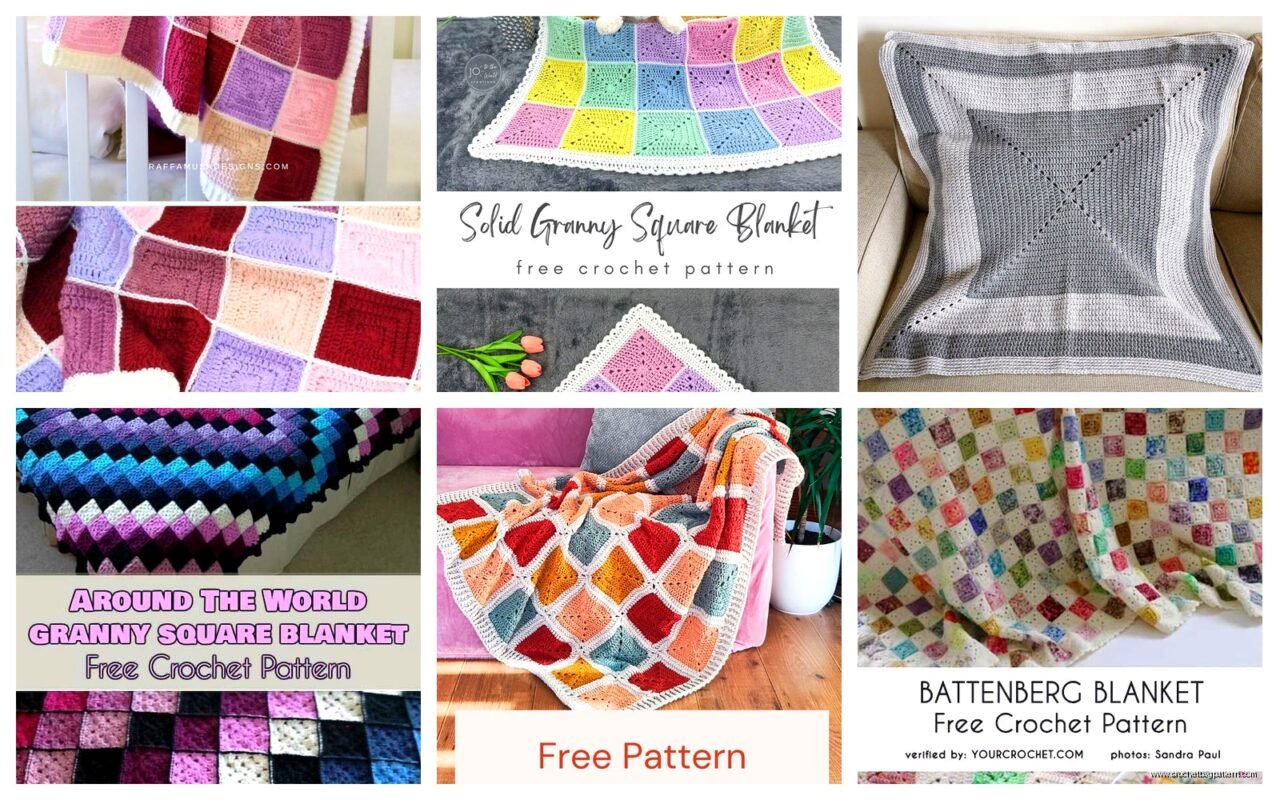
I made one of these blankets in spring 2022 when I was basically just trying to keep my hands busy after my breakup with Jason and honestly it was the perfect project because you can just zone out and make square after square without thinking too much. The solid granny square is literally the most forgiving pattern because there’s no color changes to worry about and you can make it as big or small as you want.
So the basic setup is you’re gonna make a bunch of individual squares and then join them together. Each square starts with a magic ring or you can just chain 4 and slip stitch to form a ring if you hate magic rings like I used to. I actually used Red Heart Super Saver in that grey color called I think Pewter? for my breakup blanket because it was cheap and I needed like 12 skeins of something.
the actual square construction
Round 1 is chain 3 which counts as your first double crochet, then you make 2 more double crochets into the ring. Chain 2 for the corner space. Then you do 3 double crochets, chain 2, and repeat that two more times so you have four groups of 3-dc separated by chain-2 spaces. Slip stitch to the top of your starting chain-3 to close the round.
Round 2 starts with slip stitching into the corner space or you can just chain 3 and start there depending on how you like to work. Chain 3, 2 dc, chain 2, 3 dc all in that first corner space. That makes your corner cluster. Then chain 1 and in the next corner space you do the same thing – 3 dc, chain 2, 3 dc. Keep going around all four corners with that chain-1 between each corner cluster.
Round 3 is where it starts to actually look like something. You slip stitch to the corner space again, do your starting chain-3 and 2 dc, chain 2, 3 dc in the corner. Chain 1, then 3 dc in that chain-1 space from the previous round, chain 1 again, and then do your corner cluster in the next corner space. So now you have two groups of 3-dc on each side instead of just one.
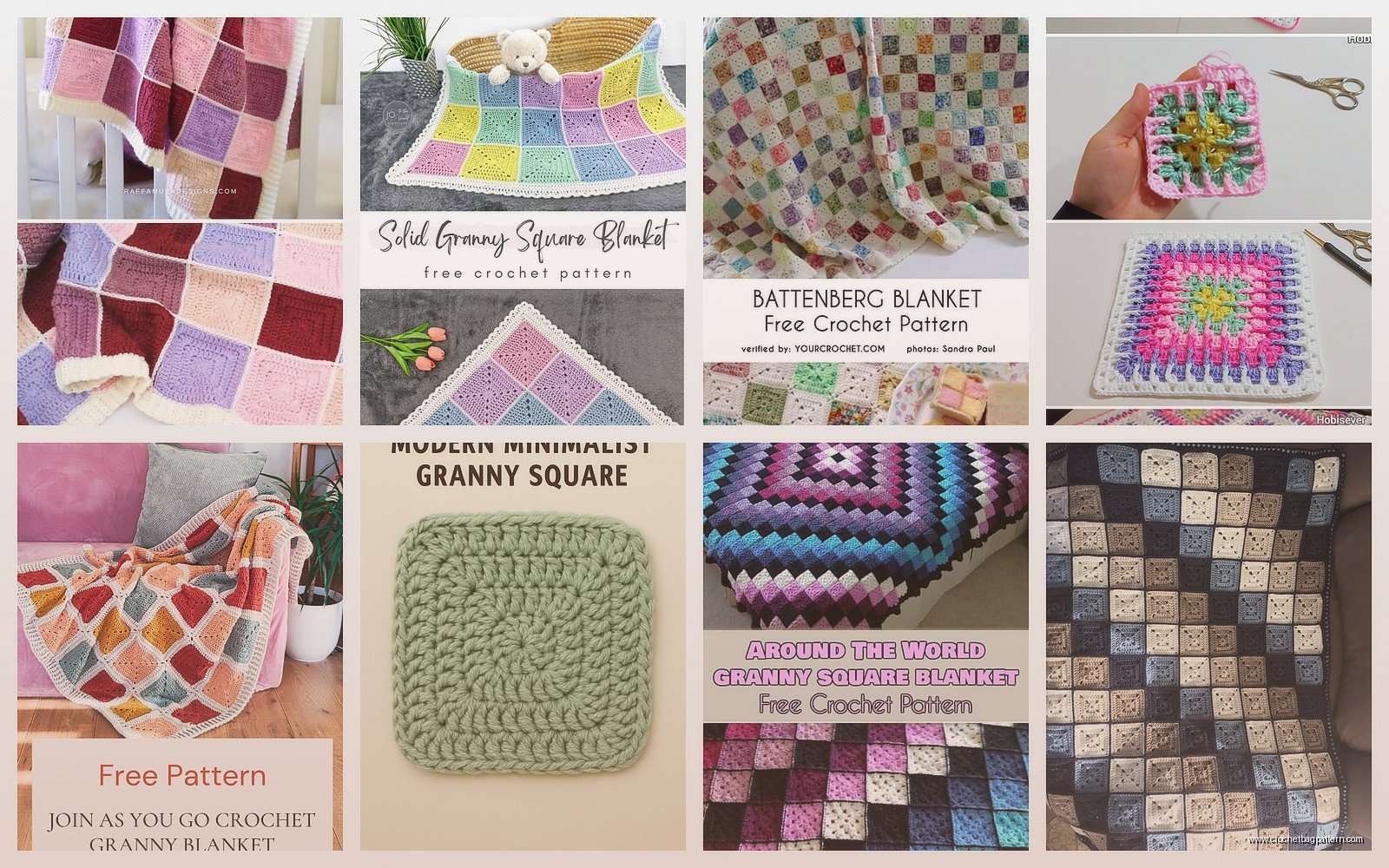
You keep building out like this for as many rounds as you want. I usually do 5 or 6 rounds to make decent sized squares that aren’t too tiny but also don’t take forever. The one thing that really annoyed me about this whole process was weaving in all the ends later because even though there’s no color changes, you still have starting and ending tails for every single square and when you make like 50 squares that’s 100 ends to weave in which is absolutely mind-numbing.
yarn choices and amounts
For a throw blanket size you’re looking at needing somewhere between 2000-3000 yards depending on how big you make your squares and how many rounds each. I’ve used Caron One Pound in Cream which was actually really nice and soft after washing. Also used Lion Brand Vanna’s Choice in that Mustard color for a different blanket and it held up pretty well.
The hook size matters more than people think. I usually go with a 5mm or 5.5mm hook with worsted weight yarn. If you use a smaller hook your squares will be stiffer and denser which isn’t bad necessarily but makes for a heavier blanket. Bigger hook gives you a more drapey flexible fabric but you might get gaps between stitches.
One thing about solid color blankets is they show every mistake so if you’re the type who cares about that maybe don’t use white or cream for your first one. My dog Murphy actually pulled one of my in-progress squares off the couch once and I found it with teeth marks but the yarn held up fine so that’s a testament to something I guess.
how many squares you actually need
This depends entirely on your square size but let’s say you make 6-inch squares. For a lap blanket that’s like 40×50 inches you need about 7 squares across and 8 squares down so that’s 56 squares. For a twin bed size you’re looking at more like 80-100 squares. I know that sounds like a lot but you can bang out one square in maybe 15-20 minutes once you get the rhythm down.
I usually make all my squares first before joining any of them because then you can lay them all out and make sure they’re relatively the same size. They won’t be perfect and that’s fine but if one is noticeably bigger or smaller you can add or remove a round.
the joining methods
There’s like five different ways to join granny squares and everyone has opinions about which is best. The slip stitch method is fastest where you just hold two squares wrong sides together and slip stitch through both loops all the way across. It creates a ridge on the right side which some people like for the texture.
Whip stitch is what I usually do because I find it the most invisible. You line up your squares right sides together and use a yarn needle to whip stitch through the back loops only going under one strand from each square. It lays really flat and you barely see the join.
The join-as-you-go method is where you actually attach squares while you’re making them by slip stitching or single crocheting into the previous square’s edge. I’ve tried this and honestly it’s more confusing than helpful unless you’re really good at planning your layout ahead of time.
There’s also the flat braid join which looks really cool and decorative but takes longer. And the zipper join which I’ve never actually done because it seems complicated.
blocking your squares or not
Some people are really intense about blocking every single square before joining and look I’m sure that creates a more uniform finished product but I’ve literally never blocked a granny square in my life and my blankets turn out fine. If your squares are really wonky or curling then yeah maybe steam block them or pin them out but for most yarn types it’s not necessary.
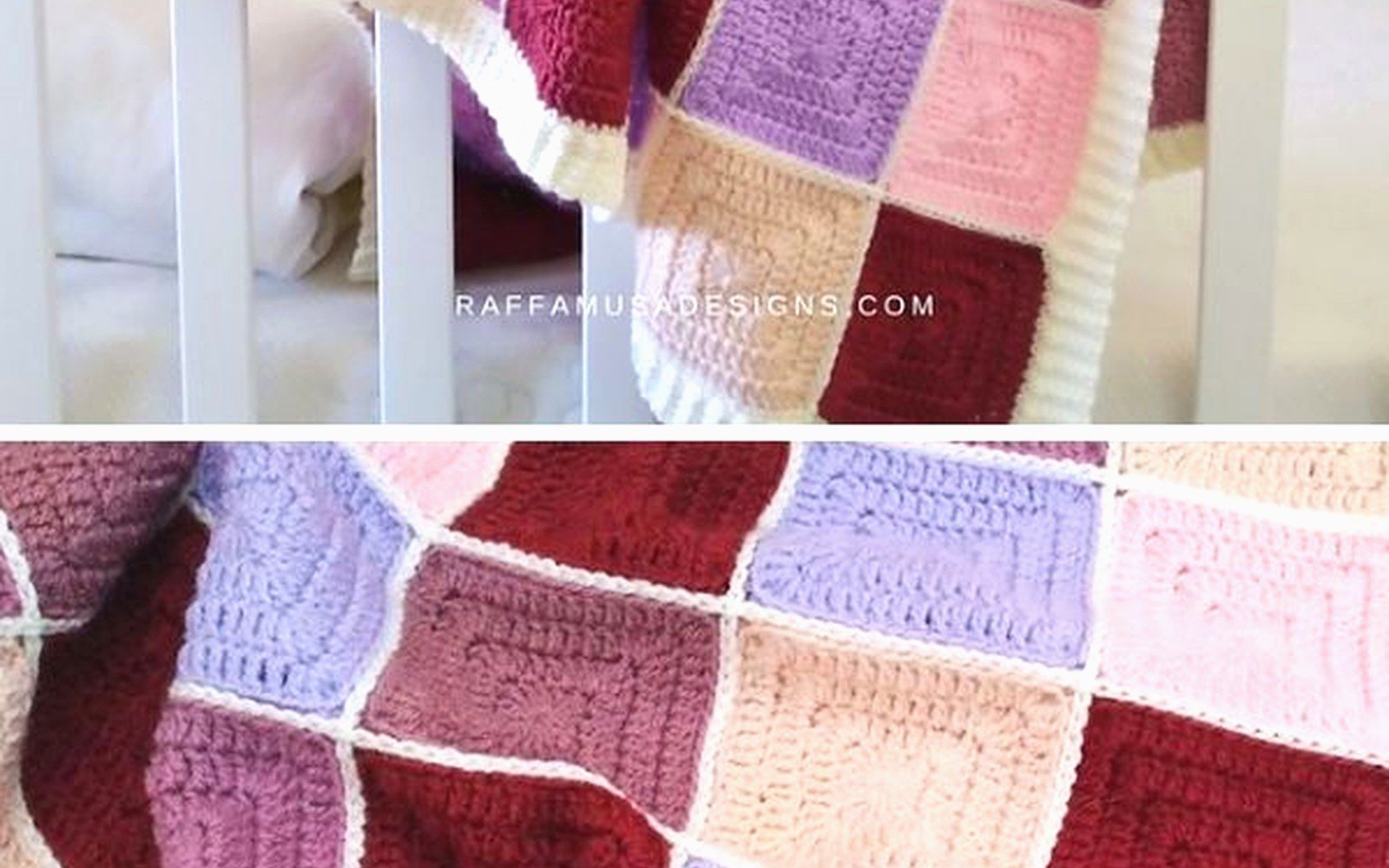
The exception is if you’re using cotton yarn like Lily Sugar’n Cream or something because cotton squares can get weirdly shaped and blocking helps them hold their shape better. But acrylic yarn which is what most people use for blankets doesn’t really need it.
the border situation
After you join all your squares you’re gonna want to add a border around the whole blanket otherwise it looks unfinished. I usually do at least 2-3 rounds of single crochet around the entire perimeter. In each corner you do 3 single crochets in the same stitch to turn the corner smoothly.
You can also do a round of half double crochet or double crochet if you want a wider border. Or get fancy with a shell stitch border or picot edge but honestly a simple single crochet border is classic and clean looking.
The corners of your blanket are gonna be a little bulky where all the squares meet and that’s just how it is. You can try to distribute the bulk by working your border stitches carefully but there’s always gonna be more thickness there.
tension and gauge stuff
Your tension is gonna change as you make 50+ squares over several weeks and that’s normal. I notice my squares from the beginning of a project are usually slightly tighter than the ones I make later when I’m in the zone and my hands are more relaxed. It doesn’t matter that much for a blanket because slight size variations get absorbed when you block or just naturally even out when you wash the finished blanket.
If you’re switching between squares while watching TV versus working on them while it’s quiet you might notice tension differences there too. I was watching Succession while making my spring 2022 blanket and I swear the squares I made during stressful episodes came out tighter than the other ones.
color planning even though it’s solid
Even with a solid color blanket you gotta think about whether you want a true solid or if you’re gonna do different shades of the same color. I’ve seen people do an ombre effect with granny squares going from light grey to dark grey which looks really sophisticated. You could also do random placement of a few different shades for a subtle variegated look.
The nice thing about making individual squares is you can change your mind about layout up until you actually join them. I laid out my squares like four different ways before I decided on the final arrangement.
actual working tips nobody tells you
Keep all your finished squares in a big bag or bin so they don’t get stretched out or dusty sitting around. I use those big Ziploc bags that blankets come in.
Count your stitches on the first few squares until you have the pattern memorized. Each side should have the same number of 3-dc clusters and it’s way easier to fix a mistake while you’re working than to realize later that one square has an extra cluster.
The starting chain-3 never looks as good as a real double crochet and there’s always gonna be a little gap there. Some people do a standing double crochet instead which looks better but is more fiddly. I just accept the gap.
If you’re making a really big blanket like king size or whatever consider doing a join-as-you-go method or joining in sections because trying to handle a giant pile of 200 loose squares is actually impossible. Join them into strips of like 8-10 squares and then join the strips together.
washing and care after it’s done
I throw all my acrylic blankets in the washing machine on gentle cycle with cold water and tumble dry low. They come out fine and actually get softer after the first wash. If you used wool or cotton you gotta be more careful obviously.
The blanket might shed a little bit of lint the first few washes especially if you used Red Heart Super Saver which is notorious for that. It stops after a few washes though.
One thing I learned is don’t wash a granny square blanket with your clothes that have velcro or zippers because it can catch on the open stitches and pull them. Wash it with other blankets or towels.
time investment reality check
A full size blanket is gonna take you anywhere from 40-80 hours depending on your speed and how many squares you need. That sounds like a lot but spread over a few weeks or months it’s totally doable. I worked on my breakup blanket for probably 2-3 hours most evenings and finished it in about six weeks.
The joining takes longer than you think it will. Like way longer. Budget at least 8-10 hours just for joining and adding the border because it’s tedious and you have to pay attention to make sure everything lines up correctly.
Weaving in ends is another 3-4 hours minimum unless you’re one of those people who weaves in as you go which I can never remember to do.
when things go wrong
Sometimes you’ll finish a square and realize you skipped a chain-1 space or added an extra one. For a blanket it honestly doesn’t matter that much. If it’s really obvious you can frog it and redo that round but if it’s just slightly off I say leave it because nobody’s gonna notice except you.
If your squares are coming out different sizes the problem is usually inconsistent tension or you’re accidentally doing different numbers of rounds. Make sure you’re counting and that each square has the same total rounds.
Running out of yarn partway through is the worst. Always buy extra because dye lots change and you might not be able to get the exact same color later. I learned this the hard way on a blanket where I ran out and had to use a slightly different shade of blue for the last ten squares and you can totally tell which ones they are.
If your blanket is coming out wonky shaped or not laying flat it’s usually because the border is too tight. Take out the border round and redo it with looser tension or a bigger hook.
random specifics that might help
The foundation chain-4 ring method is actually more stable than a magic ring for granny squares because the magic ring can come loose over time especially with acrylic yarn. But magic rings look neater so it’s a trade-off.
You can use the same pattern to make dishcloths or potholders with cotton yarn just stop after 3 or 4 rounds. Makes good gifts.
If you want your blanket to have more drape use a bigger hook than recommended for your yarn weight. Like use a 6mm hook with worsted weight instead of the usual 5mm.
Variegated or self-striping yarn doesn’t work that well for solid granny squares because the color pooling gets weird in the circular rounds. Stick with solid colors or heathered yarns.
Some people add a round of single crochet around each individual square before joining them which creates a really defined grid pattern in the finished blanket. It’s extra work but looks cool.
The blanket will grow on you as you make it. Like at first you’re just making endless squares and it feels pointless but once you join even half of them and see it coming together it gets exciting again. Just push through the boring middle part.
