
Feb
Making Your First Sea Creature
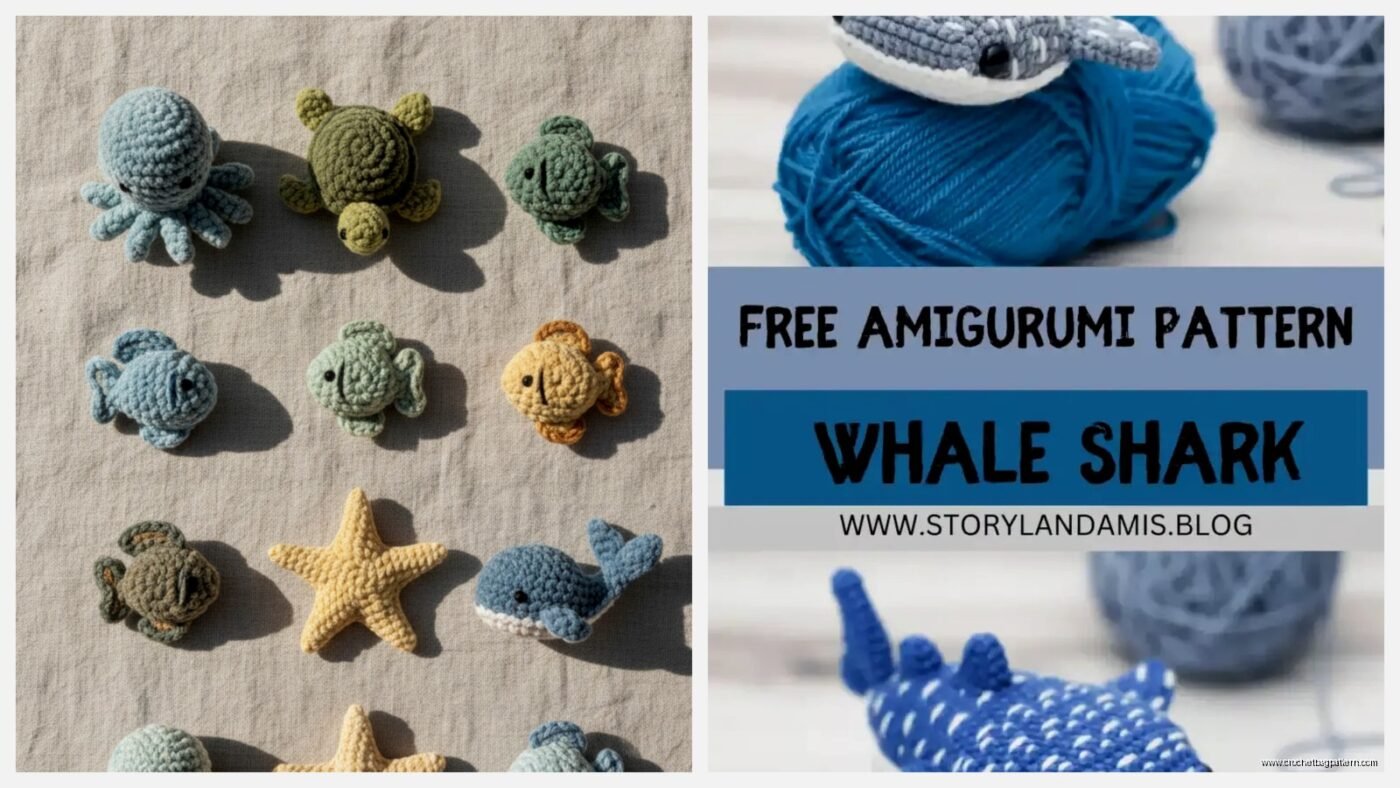
So last spring I made this octopus while binge-watching The Bear and honestly it turned out way better than I expected. I used Red Heart Super Saver in like a dusty purple color because that’s what I had sitting around, and the whole thing took maybe three evenings? The main body is just a basic sphere which you probably already know how to do if you’ve made any amigurumi before.
Start with a magic ring and work in continuous rounds. You’re gonna increase every other round until you get the size you want for the head. For an octopus I did maybe 8-9 rounds of increases before working even rounds for the body. The annoying part is stuffing it while you’re decreasing because you have to keep pausing and adding more fiberfill and it never feels like enough until suddenly it’s too much.
The Tentacles Situation
Okay so tentacles. I made eight obviously because octopus, and each one is just a long tube that gets slightly narrower as you go. Start with like 6 or 8 stitches in a ring and just keep going. I didn’t decrease at all for the first several inches, then did a couple decreases spread out toward the end so they look more tapered.
The thing that really annoyed me was trying to make them all the same length. I kept losing count of my rounds and some ended up longer than others. Just measure as you go if you actually care about uniformity, which I didn’t really until I was attaching them and realized how obvious it was.
For attaching tentacles to the body, I just sewed them on with a yarn needle in a circle around the bottom. Space them evenly or don’t, nobody’s gonna measure your octopus.
Fish Are Actually Easier
I made a clownfish in summer 2024 for my niece and it was way simpler than the octopus. Two flat ovals crocheted together and stuffed, basically. You work in rows instead of rounds if you want that flat fish shape.
Chain like 12 or whatever size you want, then single crochet back and forth, increasing at the ends to make it oval shaped. Do two identical pieces. The fins are just… okay so I kinda winged this part but I did single crochet triangles? Just chain a few stitches, turn, decrease every row until you have a point. Make a bunch of those in different sizes for the different fins.
I used Caron Simply Soft for the clownfish because I wanted it to be softer for a kid. The orange was called “Pumpkin” I think. Added white stripes by switching colors mid-row which is messier than it sounds but it works. My cat kept trying to steal the fish while I was working on it which was super annoying.
Whale and Dolphin Basics
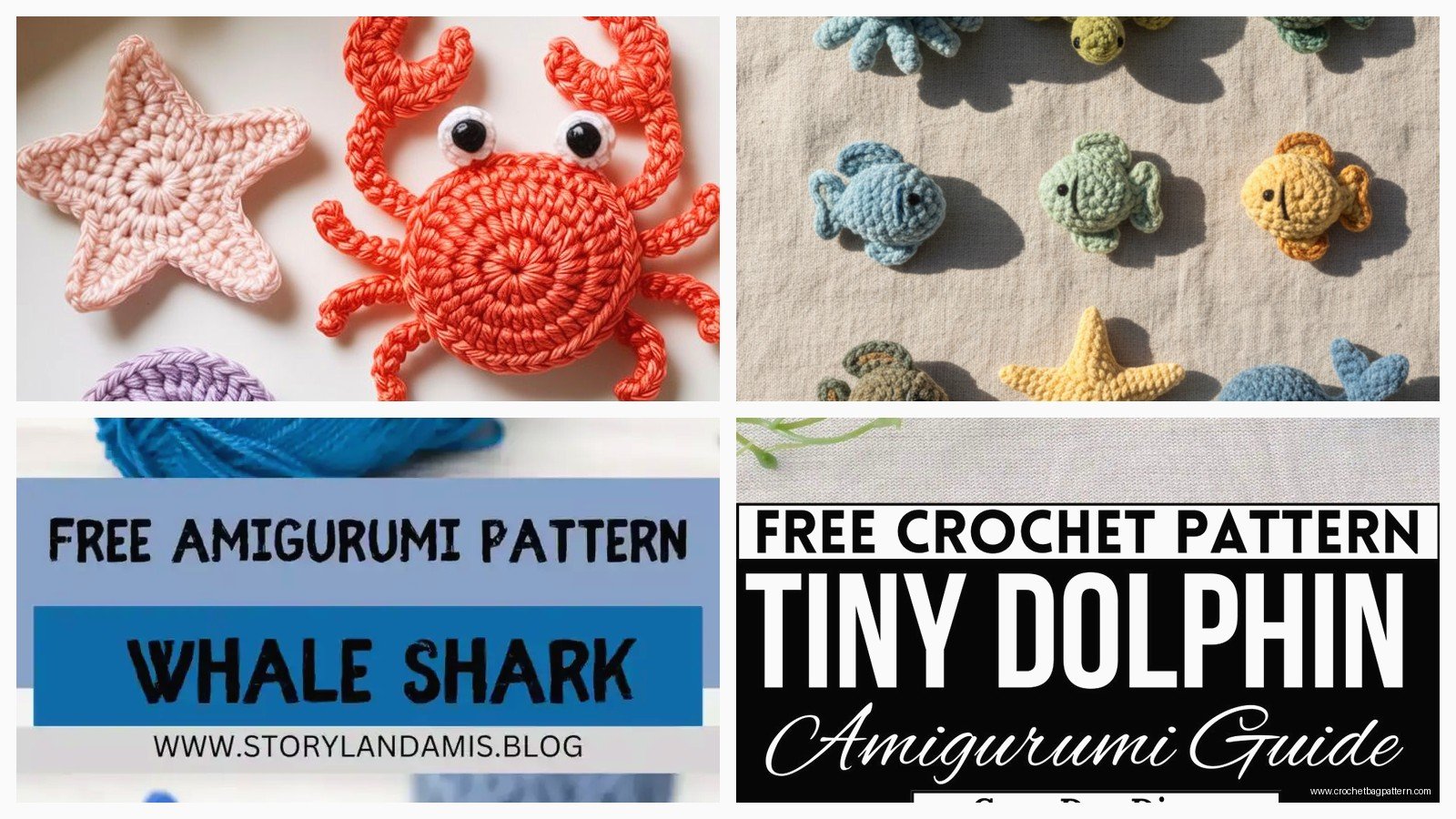
These are pretty similar to each other honestly. Start with the same sphere technique as the octopus but make it more elongated. So you do your increases, then work a bunch of even rounds to make the body longer, then decrease more gradually than you would for a ball shape.
The tail is the part that takes some figuring out. I made a flat piece that’s kinda heart-shaped or like… two triangles connected? Chain however wide you want the tail, then work in rows but do increases on both edges for a few rows, then decreases to bring it back to points on each side.
Attach it perpendicular to how you’d think if you’ve made like a cat or dog before, because whale tails go horizontal not vertical. This seems obvious but I literally had to look it up because I second-guessed myself.
The Flipper Problem
Flippers or fins on the side of the body are just small ovals or leaf shapes. Chain a few, single crochet back along the chain, do a few stitches in the end stitch to round it out, continue back up the other side. They’re small enough that you don’t really need to overthink it.
Sew them onto the sides of the body kind of where you’d expect flippers to go. I always attach them too far back or too far forward on the first try.
Jellyfish Are Surprisingly Fun
Made one of these during a really boring work conference last year. The top dome is just a half-sphere so you do your increases but stop before you start working even rounds. Don’t close it up at the bottom obviously.
The tentacles are where you can get creative and not in an annoying inspirational way, just like… they can be different lengths and thicknesses and it actually looks better that way. I did some with just chains, some with single crochet tubes like the octopus, and some with this loopy thing where you chain extra stitches between each stitch in the previous round so it gets all curly.
Attach them all around the opening of the dome. I used some sparkly yarn I found at Joann’s, maybe it was Bernat Satin? It gave the jellyfish a nice shiny look that seemed ocean-appropriate.
Color Choices and Yarn Weight
Most of these I’ve made with worsted weight yarn because that’s what I usually have around. You can use whatever though. Thicker yarn means a bigger creature and fewer stitches to get the same size, thinner yarn means more detail is possible but also way more work.
For colors I usually just go with what seems right but honestly sea creatures can be any color. Nobody’s checking if your whale is the exact right shade of grey. I made a bright pink dolphin once and it was fine, looked kinda cool actually.
If you want that slightly fuzzy look for certain fish, try a yarn with some texture to it. I haven’t experimented with this much but I bet it would work.
Eyes and Details
Safety eyes are easiest if you’re making these for kids. Push them through the fabric before you finish stuffing and close up the body. They’re hard to position correctly though and once they’re in you can’t move them without destroying your work, so… maybe mark where you want them with pins first or something.
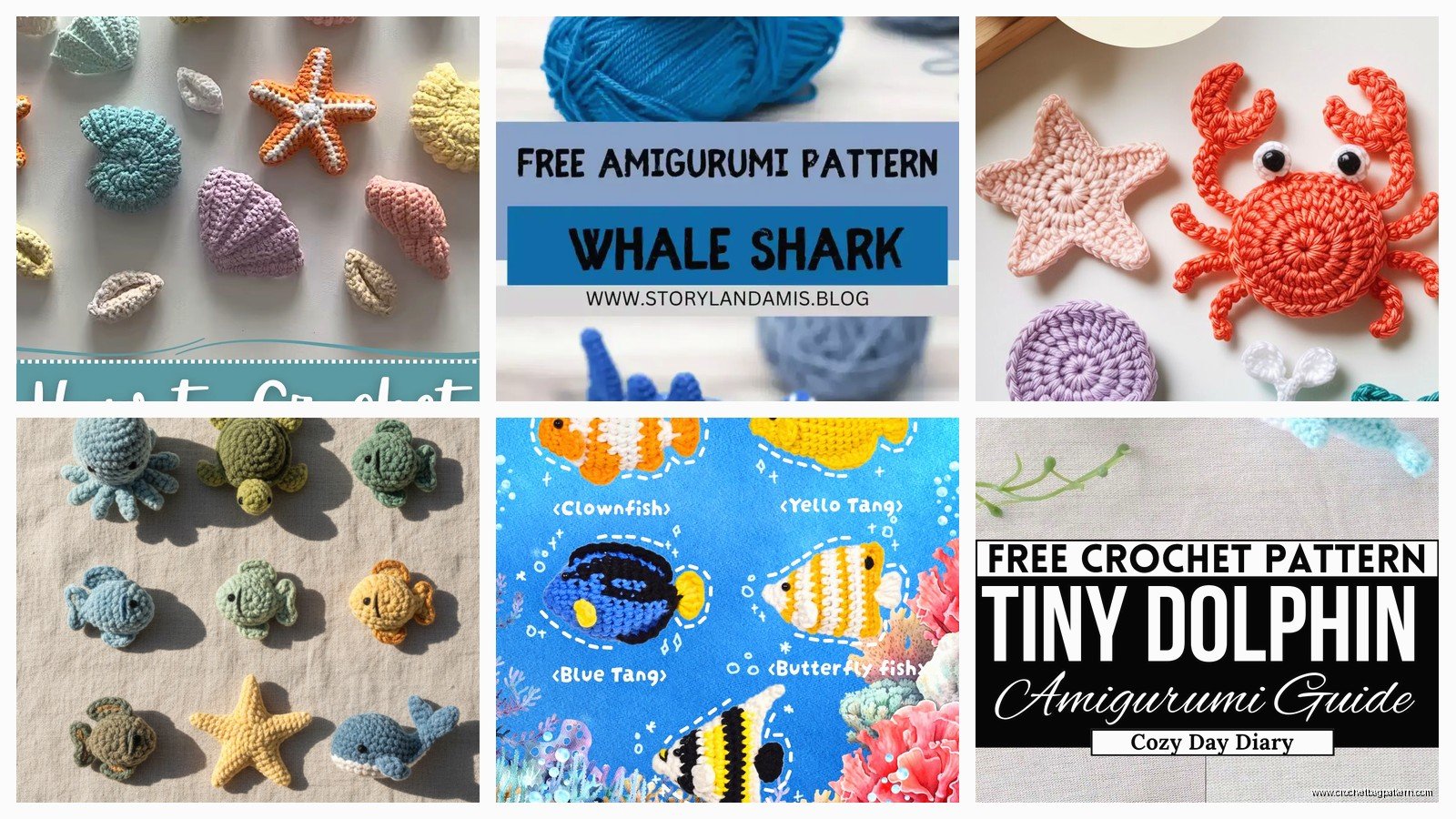
I usually just embroider eyes with black yarn because I never remember to buy safety eyes. Two little circles or ovals with a needle and yarn. Sometimes I add a white highlight stitch to make them look more alive or whatever.
For mouths you can embroider those too. A simple curve for dolphins and whales, a straight line for fish. Honestly optional though, plenty of my sea creatures don’t have mouths and they still look like what they’re supposed to be.
Stingray Pattern Approach
This one’s different because it’s mostly flat. Start with a small circle for the body, then increase unevenly so it becomes more diamond-shaped. Keep increasing on the sides more than the front and back.
The tail is just a long thin tube or even just a braided cord if you don’t wanna crochet another tube. Attach it to the back point of the diamond body.
I haven’t actually finished a stingray yet because I got distracted making other stuff but the concept is solid.
Size Considerations
You can make these any size by using different yarn weights and hook sizes. I usually use a 5mm hook with worsted weight and get creatures that are maybe 6-8 inches depending on the animal.
Smaller versions work as keychains if you attach a little ring. Bigger versions are like actual stuffed animals. Just multiply or divide your stitch counts proportionally, or don’t and just see what happens.
