
Feb
Getting Started With Your First Crochet Curtain
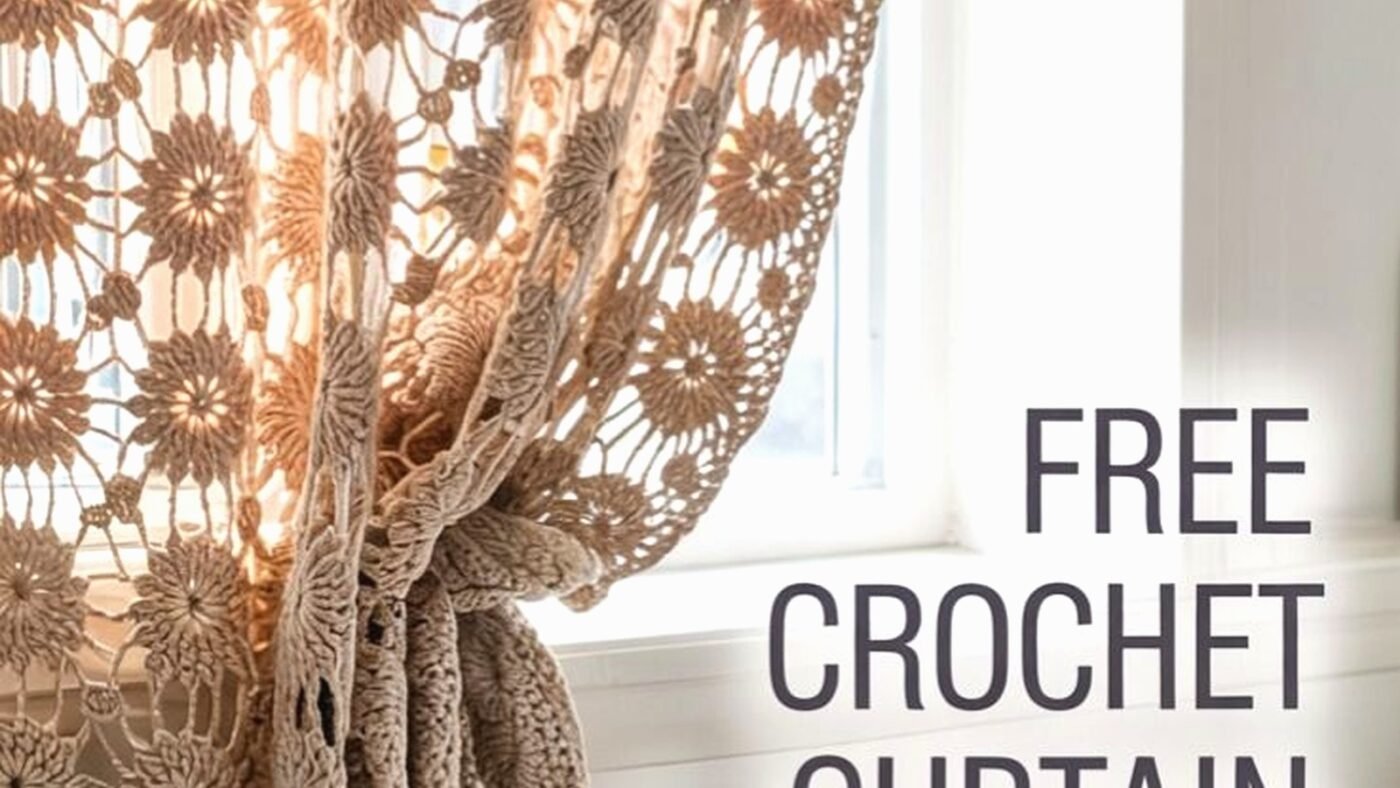
So I made my first actual crochet curtain in spring 2022 when I desperately needed something for my kitchen window and honestly couldn’t find anything I liked at the stores. Everything was either too expensive or looked cheap, you know? I’d been crocheting for years but mostly just blankets and scarves, nothing this big or functional.
The first thing you gotta figure out is what kind of coverage you actually want. Like, do you need full privacy or just something decorative? Because that changes everything. For my kitchen window I just wanted something that looked nice and filtered light but I didn’t care about people seeing in because it faces my backyard anyway.
Measuring Your Window Space
Measure your window width and add like 4-6 inches on each side if you want it to look full. For length, measure from wherever you’re gonna hang it down to where you want it to end. I use a tension rod usually because drilling into walls is annoying and my landlord would probably have something to say about it.
Here’s what annoyed me the most about this whole process – the amount of yarn you need is WAY more than you think. I ran out of yarn twice on my first curtain and had to go back to the craft store, which was frustrating because I thought I’d calculated everything perfectly.
Picking Your Yarn
I used Red Heart Super Saver for my first curtain in that off-white color (Aran I think?). It’s cheap and holds up well to washing which matters for curtains because they get dusty. Some people are snobby about Red Heart but honestly it works fine for this kind of project.
For a lighter, more delicate look I’ve also used Caron Simply Soft which is nicer to work with – less squeaky if that makes sense. The white color is actually white and not cream-ish. Lion Brand 24/7 Cotton is good too if you want something that breathes better for summer windows.
You’re probably gonna need like 8-12 skeins depending on your window size. Maybe more. Just buy extra, you can always return unopened ones or use leftovers for dishcloths or whatever.
Hook Size and Gauge
I use a 5.5mm hook for most curtain projects with worsted weight yarn. The thing is, you don’t want your stitches too tight because then it’ll be heavy and stiff, but you also don’t want huge gaps unless that’s specifically the look you want. I usually do a test swatch first but like, I know that’s boring and most people skip it.

My gauge is pretty loose naturally from how I learned to crochet (basically watching my aunt and copying her, no real instruction) so my curtains tend to be more open and drapey.
Simple Patterns That Actually Work
Basic Filet Crochet Curtain
This is probably the easiest one to start with. You’re literally just doing double crochets and chain stitches in a grid pattern. Chain a multiple of 3 plus 1 for your starting chain – so like if your window is 30 inches wide and you’re getting about 3 stitches per inch, you need around 90 chains, so do 91.
Row 1: Double crochet in 4th chain from hook, then *chain 1, skip 1 chain, double crochet in next chain* repeat across.
Row 2: Chain 3, turn, *double crochet in next double crochet, chain 1* repeat across, end with double crochet in top of turning chain.
Just keep repeating row 2 until it’s as long as you need. You can make designs by filling in some of those chain spaces with extra double crochets to create blocks instead of holes but honestly I never bother with that.
Shell Stitch Curtain
This one looks fancier but isn’t really harder. Chain a multiple of 6 plus 1.
Row 1: Single crochet in 2nd chain from hook, *skip 2 chains, 5 double crochet in next chain (that’s your shell), skip 2 chains, single crochet in next chain* repeat across.
Row 2: Chain 3, turn, 2 double crochet in first single crochet, *single crochet in center stitch of next shell, 5 double crochet in next single crochet* repeat across, end with 3 double crochet in last single crochet.
The shells create this nice scalloped texture that catches light really well. I made one of these in summer 2024 for my bedroom and it was actually really pretty, though my cat kept trying to climb it the first week which was—anyway, the pattern held up fine.
Making Panels vs One Big Piece
I usually make two panels for each window instead of one wide piece. It’s easier to handle while you’re working and you can tie them back if you want. Plus if you mess up one panel you don’t have to redo the entire thing.
For hanging, I just make a simple casing along the top. After you finish your last row, don’t fasten off. Instead, fold over about 2 inches of the top edge and single crochet through both layers to create a tube for your rod to slide through. Make sure you test it with your actual rod before you fasten off because there’s nothing worse than finishing and realizing the rod doesn’t fit.
The Granny Square Method
Okay so this is more time-consuming but it looks really cool – make a bunch of granny squares and join them together. I did this once and it took forever but the result was pretty unique. You need all your squares to be exactly the same size which is harder than it sounds because tension varies.
I made like 48 squares for one window panel using Lily Sugar’n Cream in white (yeah that’s usually for dishcloths but whatever, it worked). Each square was 4 rounds and came out to about 4 inches. Then I joined them with slip stitches in a 6×8 layout.
The annoying part was weaving in all those ends. So many ends. I was watching The Office for the millionth time while doing it and still got bored.

Dealing With Length Issues
If your curtain ends up too short you can add a border along the bottom. I usually do like 3-4 rounds of single crochet or a simple shell edging. If it’s too long you can either frog back some rows or just fold up the bottom and tack it with some stitches – nobody’s gonna look that closely.
For curtains that need to be really specific lengths like if you’re trying to match existing ones or something, work up your pattern swatch and actually measure how many rows you get per inch. Then do the math before you start. I know that sounds obvious but I definitely didn’t do that on my first attempt and ended up with a curtain that was like 8 inches too long.
Color and Design Choices
White or off-white is classic and works with everything. I’ve done cream colored ones with Bernat Super Value in Linen which came out nice and neutral.
If you want color, go for it, but remember you’re gonna be looking at this every day and it needs to work with your room. I tried making a bright yellow curtain once thinking it would be cheerful and it was just… too much. Ended up giving it to my sister.
Stripes are easy – just change colors every few rows. Ombre effects look cool too where you gradually shift from one color to another, though that requires planning your yarn purchase ahead of time to make sure you have enough of each shade.
Adding Weight to the Bottom
Lightweight cotton curtains tend to blow around if you have any air movement. You can sew a line of stitching along the bottom hem and insert some pennies or fishing weights, or just use a heavier yarn for the last few rows. I’ve done the penny thing and it works but it’s tedious.
Care and Maintenance
These curtains get dusty fast depending on where you live. I usually just take mine down every couple months and throw them in the washing machine on gentle cycle with cold water. Air dry them flat or hang them up wet – don’t put them in the dryer unless you want them to shrink and get weird.
If you used acrylic yarn they’re basically indestructible. Cotton ones can fade over time if they’re in direct sunlight but that takes years.
Troubleshooting Common Problems
If your curtain is getting wider as you go, your tension is getting looser. Try to pay attention to how tight you’re pulling your yarn. If it’s getting narrower, you’re tensing up – happens to me when I’m stressed or watching something intense on TV.
Wavy edges usually mean you’re adding stitches accidentally or your foundation chain was too tight. Count your stitches every few rows to make sure you’re maintaining the same number.
If the whole thing is twisting or curling, that’s usually a tension issue too or you’re working in the wrong loops. Make sure you’re going through both loops of each stitch unless the pattern specifically says otherwise.
When to Give Up on a Project
Look, sometimes a curtain just isn’t working out. Maybe the yarn was wrong or the pattern doesn’t suit your window or you just hate looking at it. I’ve frogged entire curtains after getting like 75% done because I realized I didn’t actually like how it was turning out. It’s fine to start over or abandon it completely and try something different.
The yarn from my abandoned projects just goes back in my stash for other stuff. Nothing’s wasted really.
Variations and Modifications
You can add ribbon woven through the holes in filet crochet for extra decoration. Or attach little tassels along the bottom edge, though personally I think that’s kinda much.
For a cafe curtain style that only covers the bottom half of your window, just make your panel shorter – like 24 inches instead of full length. These are good for bathrooms or kitchen windows where you want light from the top but coverage at the bottom.
Valances are another option if you just want something decorative across the top. Same patterns work, you just make them like 12-15 inches long instead of floor length. Way faster to finish too.
I’ve seen people do really elaborate lace curtains with pineapple stitches and all kinds of complicated stuff but that’s beyond what I usually attempt. The simple patterns look just as good for regular everyday use anyway.
