
Feb
Starting With The Right Pattern For Your Skill Level
Okay so if you’re gonna make a cute crochet top for summer you really need to be honest about what you can actually handle. I made this whole mistake last year in like March 2023 when I thought I could just jump into this super intricate halter top pattern I found on Etsy and it was a disaster. I was watching The Last of Us at the time and literally frogged the whole thing three times before I accepted I needed something simpler.
For beginners you want patterns that are mostly just rectangles sewn together. Seriously. A basic crop top is just two rectangles for front and back, maybe some straps. You can make it cute with the yarn choice and don’t need all those complicated shaping techniques. If you’ve been crocheting for a bit, you can try stuff with granny squares or simple mesh patterns.
Rectangular Tops That Don’t Look Boring
The easiest summer top I ever made was literally just a long rectangle that I folded and seamed at the sides. Left holes for arms. Used this really soft cotton blend from Lion Brand called Coboo and it actually looked intentional, not like a beginner project. The drape of the yarn does half the work for you.
You can also do two rectangles with different stitch patterns – like a solid double crochet for the bust area and then switch to a lacy V-stitch or something for the bottom. It gives visual interest without making you learn actual garment construction.
Yarn Choices That Won’t Make You Sweaty
This is huge and nobody talks about it enough. I made a top with Red Heart Super Saver once because it was cheap and I had a ton of it, and wearing it in summer was like wrapping yourself in a plastic bag. Acrylic does NOT breathe.

For summer tops you want:
- Cotton – Lily Sugar n Cream works but it’s kinda stiff
- Cotton bamboo blends – that Coboo I mentioned or Caron Simply Soft Eco
- Linen blends if you can find them
- Lightweight mercerized cotton
I really like We Are Knitters Pima cotton but it’s pricey. Hobbii has some good cotton options that are cheaper. The thing with cotton is it has no stretch so you gotta make your top a bit bigger than you think or it’ll be tight and weird.
Weight Matters More Than You Think
Use fingering or sport weight for something actually wearable in heat. DK weight can work for a loose mesh design. Anything bulkier and you’re making a winter top whether you planned to or not. I learned this the hard way with a pattern that didn’t specify and I used worsted weight and… yeah it was basically a sweater.
Sizing Is Gonna Be Your Biggest Problem
Okay this is the thing that annoyed me SO MUCH about making wearable tops. Gauge swatches are annoying but you actually have to do them for garments. I know, I know. But crochet fabric stretches weird and if you don’t check your gauge you’ll end up with something that fits like a potato sack or can’t get over your shoulders.
Most patterns give you measurements for the finished garment. You need to measure yourself – bust, waist, length from shoulder to where you want it to end. Then compare to the pattern measurements. Crochet tops usually need 2-4 inches of positive ease (meaning the garment is bigger than your body) for cotton since it doesn’t stretch much.
If the pattern is sized like S/M/L instead of actual measurements, be suspicious. Everyone’s sizes are different and unless they give you the actual finished dimensions you’re guessing.
Adjusting Patterns On The Fly
Sometimes you start a pattern and realize halfway through it’s not gonna fit right. You can add rows for length pretty easily. Width is harder but if you’re doing a simple stitch you can just add or remove stitches in increments that match the pattern repeat.
I was making this crop top in December 2023 – terrible timing but whatever, I was going through a breakup and needed the distraction – and realized it was way too short. Just added like 8 more rows before starting the ribbing. Turned out fine.
Construction Methods That Actually Work
There’s basically three ways to make a crochet top and they’re all annoying in different ways.
Seaming Pieces Together
This is what I do most because I’m not great at following complicated patterns. You make flat pieces – front panel, back panel, maybe sleeves or straps – then sew them together. Use mattress stitch or slip stitch seams. Weaving in ends on seamed garments is tedious as hell though. My cat knocked over my yarn bowl in the middle of seaming once and I almost gave up on the whole project.
Working In The Round
Some tube top patterns have you work in the round from top to bottom or bottom to top. This avoids seaming which is nice but you need to be good at maintaining tension and not twisting your work. Also if you mess up the sizing you don’t realize until you’re done.
Top Down Or Bottom Up Construction
Fancier patterns use increases and decreases to shape the garment as you go. This is how you get fitted tops with actual structure. Harder to do but the results look more professional and less… homemade I guess?
Specific Pattern Types For Summer
Here’s what actually works for hot weather:
Mesh And Lacy Tops
These are great because the open stitches let air through. Solomon’s knot (also called lover’s knot) makes a really pretty mesh. V-stitch, shell stitch, any pattern with chain spaces. You’ll need a camisole under it usually unless you’re braver than me.
The annoying thing about mesh patterns is they grow. Like you finish it and it’s the right size but after wearing it for two hours it’s stretched out and saggy. Cotton does this less than acrylic but it still happens.
Granny Square Tops
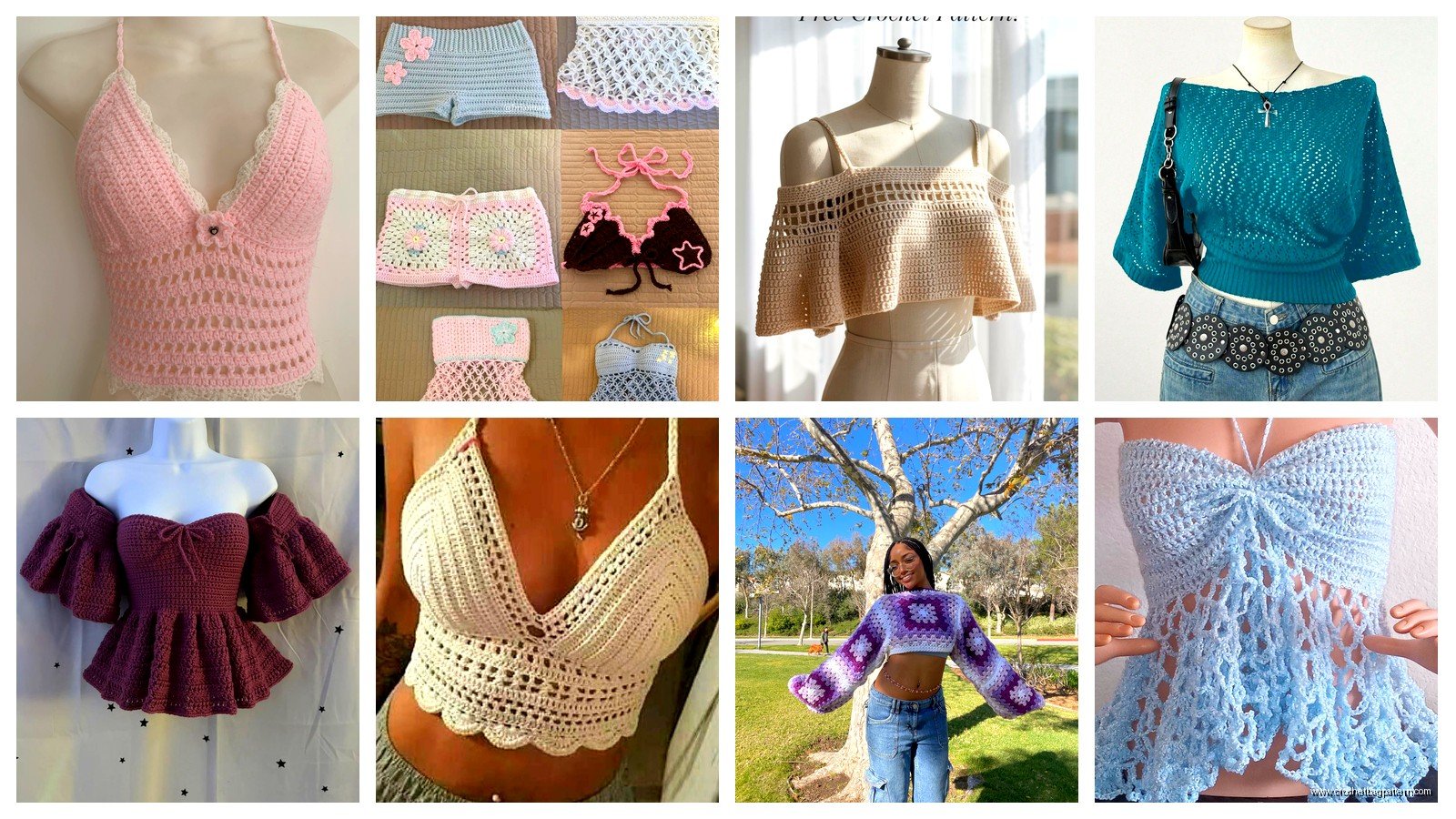
Very trendy right now and honestly easier than they look. You make a bunch of squares and join them. The hard part is making enough squares – it takes forever and gets boring. I made one with like 30 squares and wanted to die by square number 15.
Use different colors or all one color. Join as you go methods save time. You can follow a layout pattern or just wing it and sew them together however.
Striped Tank Tops
Simple stripes in single crochet or half double crochet work up fast. Use two or three colors. Stripes are forgiving for tension issues because the color changes hide minor unevenness. I made one with Paintbox Yarns cotton DK in like a weekend while binging some cooking show, it was pretty mindless.
Crop Tops With Ties
These are flattering because the ties let you adjust the fit. Make the body of the top and add long chains or braided yarn for ties at the back or sides. Wrap style crop tops are similar and very forgiving for sizing issues.
Details That Make It Look Intentional
The difference between a homemade-looking top and something that looks like you could’ve bought it is in the finishing.
Edging matters. Add a row of single crochet around armholes and neckline to clean up the edges. Crab stitch (reverse single crochet) gives a nice border. Picot edging if you want it feminine and delicate.
Strap width changes the whole vibe. Thick straps are casual and comfortable. Skinny straps look dressier but dig into your shoulders if the top is heavy. I usually do straps that are 1-2 inches wide in half double crochet.
Ribbing at the bottom or neckline adds structure. You can do ribbing by working in back loops only or front loops only, or use the actual ribbed stitch pattern. It keeps the edges from rolling and looks finished.
Common Problems You’ll Run Into
Your first crochet top will probably have issues and that’s normal. Here’s what usually goes wrong:
Uneven edges: This happens when you don’t maintain stitch count or your tension changes. Count your stitches at the end of each row. Use stitch markers.
Twisted seams: When you sew pieces together and the seam spirals instead of laying flat. Make sure you’re matching up rows properly and not pulling the yarn too tight while seaming.
Neckline too tight: So common. The neckline needs to be bigger than you think to get over your head comfortably. I’ve had to cut necklines and re-do the edging more than once.
Armholes cutting in: If the armholes are too small or too far forward they’ll be uncomfortable. You need enough room to move your arms without the whole top riding up or the armhole fabric bunching.
The whole thing stretches out: Cotton stretches with wear and washing. Make it slightly smaller than you want or accept that you’ll need to block it back into shape occasionally. Blocking is just wetting it and pinning it to the right dimensions while it dries, not complicated but time consuming.
Washing And Care
Hand wash your crochet tops or put them in a lingerie bag on delicate cycle. Cotton can usually handle the washing machine but the construction might not. Lay flat to dry always. Hanging them while wet stretches them out.
If your top gets stretched out you can block it back to size. Pin it to a blocking mat or towel at the right measurements, spray with water, let dry. Works pretty well.
Some cotton yarns get softer with washing which is nice. Others get a bit stiffer or the stitches tighten up. That’s just how it goes I guess, can’t really predict it.
